- Reykjavik sits at 64°08′ N, making it the world's northernmost capital and the hub for most Iceland excursions
- The Golden Circle loop covers about 300 kilometres and includes Þingvellir, Gullfoss and Strokkur geyser, which erupts every 5-10 minutes
- Summer brings nearly permanent daylight from 20 May to 24 July. Winter days drop below five hours between 2 December and 10 January.
- The Ring Road is 1,309 kilometres long and passes through almost all areas except the Westfjords
Iceland Tour Families: What You Can Book from Reykjavik
Most excursions start in Reykjavik, a city of around 140,000 on the southern shore of Faxaflói bay. The surrounding Capital Region accounts for approximately 64% of Iceland's population, making it the natural base for exploring the island.
Tour categories include day trips along the Golden Circle and south coast expeditions. Others cover glacier hikes, geothermal lagoon transfers and northern lights hunts. Many combine two or three stops in a single day.
Day trips from Reykjavik cover the most popular loops. Multi-day packages follow the Ring Road, which is 1,309 kilometres long and completed in 1974. The route passes through almost all areas of the country, excluding the Westfjords.
Keflavik International Airport is located around 40 km southwest of the city. Reykjavik airport transfer services connect arrivals to the city centre, and over 98% of visitors to Iceland arrive through Keflavik.
Iceland Tours from Reykjavik
More on GetYourGuide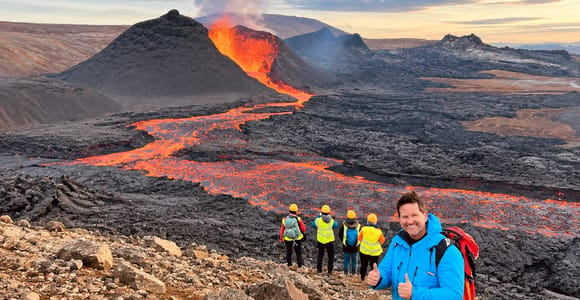 Top ratedDay trip · 4 - 6 hoursFagradalsfjall Volcano Hike: The Original Local Experience★ 4.9 740 reviews✓ Free cancellationfrom €137 per personSee availability →
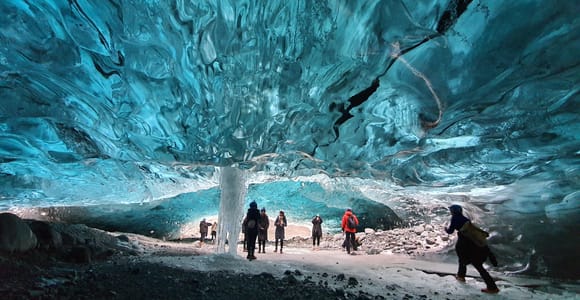 Multi-day trip · 3 daysFrom Reykjavik: 3-Day South Coast Winter Tour with Ice Cave★ 4.8 209 reviews✓ Free cancellation✓ Pickup availablefrom €829 per personSee availability →
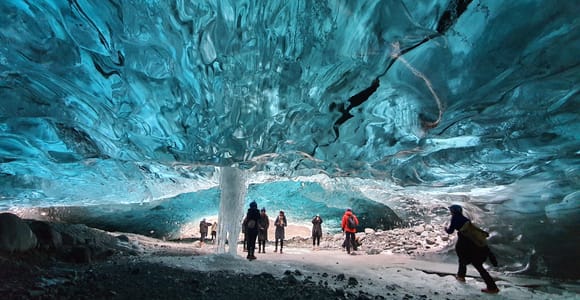 Multi-day trip · 2 daysFrom Reykjavik 2-Day South Coast Tour with Blue Ice Cave★ 4.7 263 reviews✓ Free cancellation✓ Pickup availablefrom €639 per personSee availability →
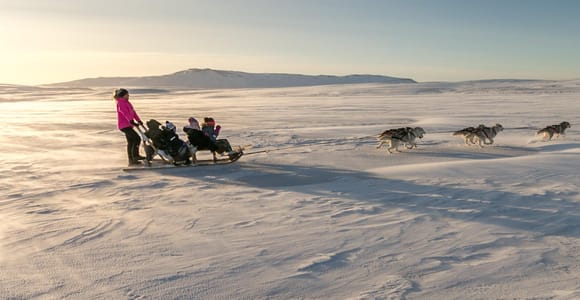 Guided tour · 1 hourNear Reykjavik: Winter Dog Sledding for at Least 4 km★ 5.0 10 reviewsfrom €347 per personSee availability →
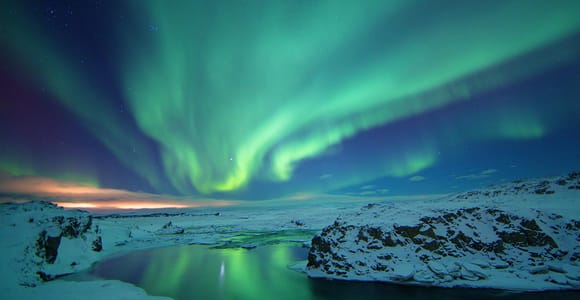 Multi-day trip · 7 daysFrom Reykjavík: 7-Day Around Iceland Ring Road & Snæfellsnes★ 4.7 82 reviews✓ Free cancellation✓ Pickup availablefrom €2,000 per personSee availability →
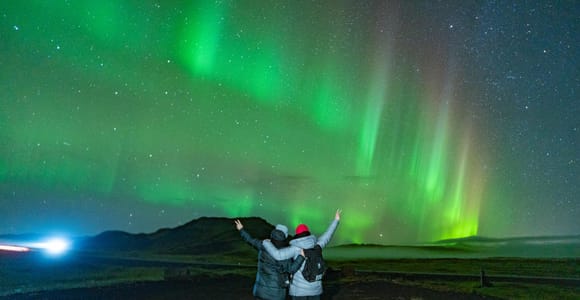 Day trip · 12 hoursReykjavík: Golden Circle & Northern Lights with Hot Cocoa★ 4.5 40 reviews✓ Free cancellation✓ Pickup availableAvailable tomorrowfrom €127 per personSee availability →
The Golden Circle: Iceland's Signature Day Trip
The Golden Circle is a loop of about 300 kilometres from Reykjavik into the southern uplands and back. The three primary stops are Þingvellir National Park, Gullfoss waterfall and the geothermal area in Haukadalur.
Haukadalur contains the geysers Geysir and Strokkur. Geysir has been mostly dormant for many years, but Strokkur erupts every 5-10 minutes.
Other common stops include Kerið volcanic crater, Brúarfoss and Faxi waterfalls, and the town of Hveragerði. Skálholt cathedral and the Nesjavellir and Hellisheiðarvirkjun geothermal power plants are also on the route. Golden Circle tour options range from express loops to full-day itineraries with extra sights.
Many combine the loop with a lagoon visit. Golden Circle and Secret Lagoon tour packages add a geothermal bathing stop in one trip.
- Keflavik International Airport is located around 40 km southwest of the city, with over 98% of visitors arriving there
- The Capital Region holds around 252,000 people, roughly 64% of Iceland's population, making logistics straightforward
- Day trips cover major sights within 300 kilometres of the city, including the entire Golden Circle route
- Tours run year-round, with summer offering nearly 24-hour daylight and winter providing northern lights opportunities
- ICE-SAR's 4,500 volunteers provide search and rescue services day and night across the island
- Reykjavik averages 147 days of rain (more than 1mm) per year, so weather can disrupt outdoor plans
- Day length drops to less than five hours in midwinter, limiting sightseeing time between December and January
- Weather and road conditions change fast; always check safetravel.is and road.is before departing
- Northern lights are natural phenomena and cannot be guaranteed
South Coast Excursions: Waterfalls, Beaches and Glaciers
The south coast runs east from Reykjavik along Route 1. Jökulsárlón glacier lagoon is easily accessible from the Ring Road.
South coast tours Iceland vary in length and destinations. Some trips include waterfall stops, others continue to glacier lagoons or black sand beaches.
Glacier hike Iceland excursions provide crampons and ice axes, and guides lead groups across crevassed ice.
Check safetravel.is before visiting coastal areas. Weather and road conditions in Iceland can change fast.
Ice Caves: Winter-Only Glacier Interiors
Natural ice caves form inside glaciers when meltwater carves tunnels through the ice. These caves depend on winter ice conditions.
Ice cave Iceland tours operate at various glaciers. Access requires specialized vehicles, and guides assess safety daily. Never enter a natural ice cave without a certified guide.
Man-made tunnels at some glaciers are open year-round. Into the Glacier Iceland offers a carved tunnel experience inside Langjökull glacier.
Always confirm the tour type and check current conditions before booking.
Northern Lights: What Tours Can and Cannot Promise
Reykjavik sits at 64°08′ N within the aurora zone. Solar activity and cloud cover determine whether you see the lights.
Northern lights tour Iceland operators drive away from city light pollution. They monitor the northern lights forecast Iceland issued by the Icelandic Met Office. No tour can guarantee a sighting, as the aurora is a natural phenomenon.
Check the specific rebooking policy before you book, as terms vary by operator.
Day length drops to less than five hours between 2 December and 10 January, providing maximum darkness. From 20 May to 24 July, daylight is essentially permanent.
Geothermal Lagoons: Blue Lagoon, Sky Lagoon and Alternatives
The Blue Lagoon is a geothermal spa in southwestern Iceland. The spa is located in a lava field 5 km from Grindavík on the Reykjanes Peninsula. The Blue Lagoon is located in front of Mount Þorbjörn. The Blue Lagoon is approximately 20 km from Keflavík International Airport.
Blue Lagoon Iceland requires advance booking. Blue Lagoon transfer services connect the spa to Reykjavik and the airport.
Blue Lagoon vs Sky Lagoon is a common comparison. Both are geothermal facilities that require tickets.
Other options include various Iceland hot springs around the country. Check individual site requirements before visiting.
Seasonal Differences: Summer Light and Winter Darkness
Iceland receives the highest number of tourists during summer (June-August). In 2014, around 42% of visitors arrived in those three months. Daylight lasts nearly 24 hours from late May to late July during this period.
Winter brings short days and northern lights visibility. Day length drops below five hours from early December to mid-January. Iceland winter tours access landscapes and aurora opportunities unavailable in summer.
Reykjavik averages 147 days of rain (more than 1mm) per year, spread across all seasons. Weather and road conditions in Iceland can change fast, so pack waterproof layers regardless of the month.
Check safetravel.is and road.is before every trip. Conditions shift without notice.
Tour Formats: Group Size, Transport and Pick-Up Logistics
Iceland small group tours use smaller vehicles. Iceland bus tours operate with larger coaches and cover the same routes.
Iceland private tours dedicate a vehicle and guide to a single party, allowing custom itineraries and stops. Super jeep Iceland excursions reach highland F-roads and glacier access points that standard vehicles cannot enter.
Pick-up locations in Reykjavik vary by operator. Confirm your exact meeting point when you book.
| Tour Format | Vehicle Type | Access Level |
|---|---|---|
| Standard coach | Large bus | Paved roads only |
| Small group | Minivan | Paved roads, some gravel |
| Super jeep | Modified 4x4 | Highland F-roads, glaciers |
| Private | Varies | Depends on vehicle choice |
Iceland self drive tours provide a rental car and itinerary, leaving navigation to you. This format suits travellers who want full schedule control and are comfortable driving in variable conditions.
Practical Planning: Booking, Timing and What to Bring
Book early during summer, when demand peaks. In 2025, the tourism industry accounted for 8.8% of Iceland's GDP.
Pack snacks, water and layered clothing. Weather and road conditions can shift quickly, and wind is common year-round.
Mount Esja, at 914 metres, is the highest mountain near Reykjavik and visible from the city.
ICE-SAR, the Icelandic Association for Search and Rescue, is a non-profit with over 4,500 volunteers available day and night year-round. Their safetravel.is site publishes real-time alerts.
Check FAQ for common questions about tour combinations. Reykjavik shore excursions cater to cruise passengers with tight schedules.
Iceland tours from Reykjavik cover nearly every landscape type within a 300-kilometre radius. The trade-off is weather: with 147 rain days per year and fast-changing conditions, flexibility matters more than a fixed plan.
Compare prices, reviews and free-cancellation options before you book.
Check availability →Frequently asked questions
How far is Keflavik Airport from Reykjavik?
Keflavik International Airport is located around 40 km southwest of the city.
When is the best time to see northern lights in Iceland?
Northern lights require dark nights. Day length drops to less than five hours between 2 December and 10 January, offering maximum darkness. From 20 May to 24 July, daylight is essentially permanent, and no aurora is visible.
How long is the Golden Circle tour?
The Golden Circle is a loop of about 300 kilometres from Reykjavik into the southern uplands and back. The three primary stops are Þingvellir National Park, Gullfoss waterfall and the geothermal area in Haukadalur.
Can I visit an ice cave in summer?
Natural ice caves depend on winter ice conditions. Man-made tunnels at some glaciers operate year-round. Check tour details before booking.
How many tourists visit Iceland each year?
Iceland received just under 2.3 million foreign overnight visitors in 2025. In 2025, the tourism industry accounted for 8.8% of Iceland's GDP.