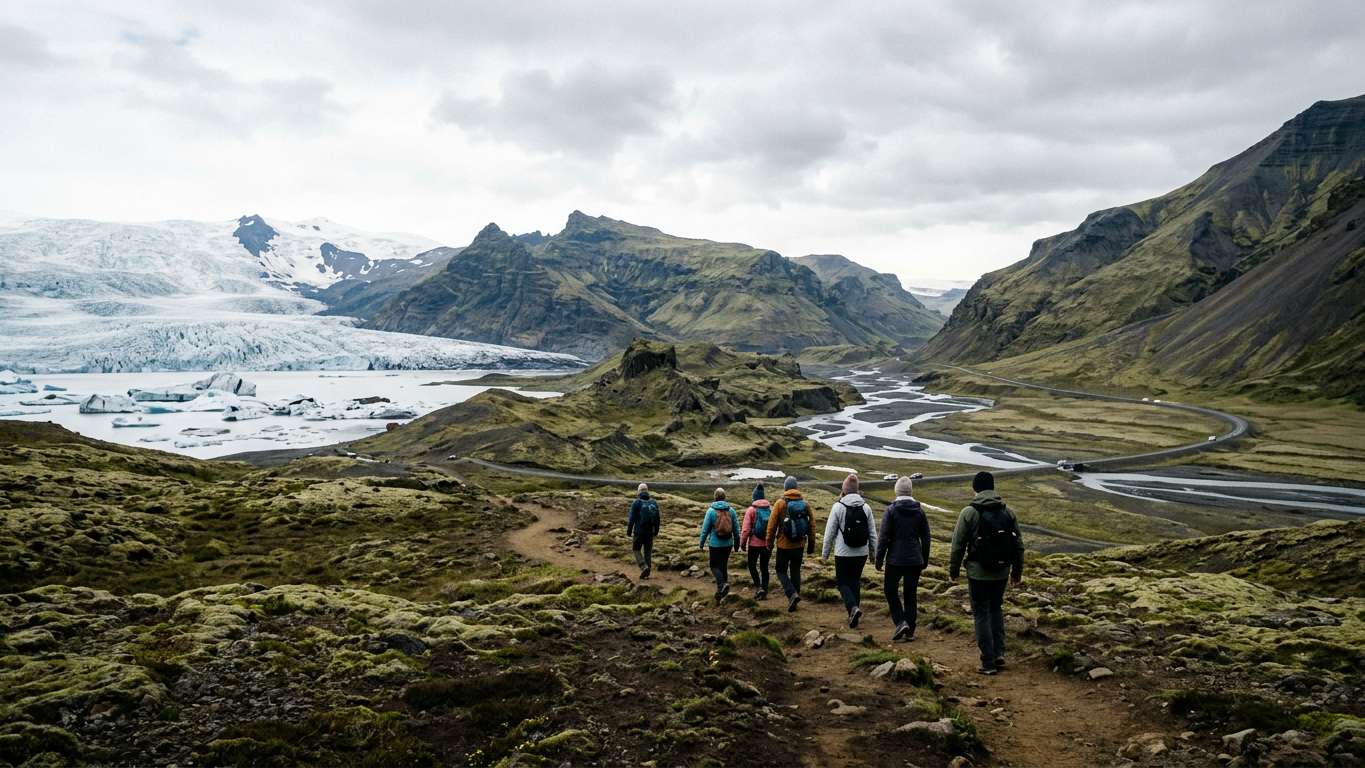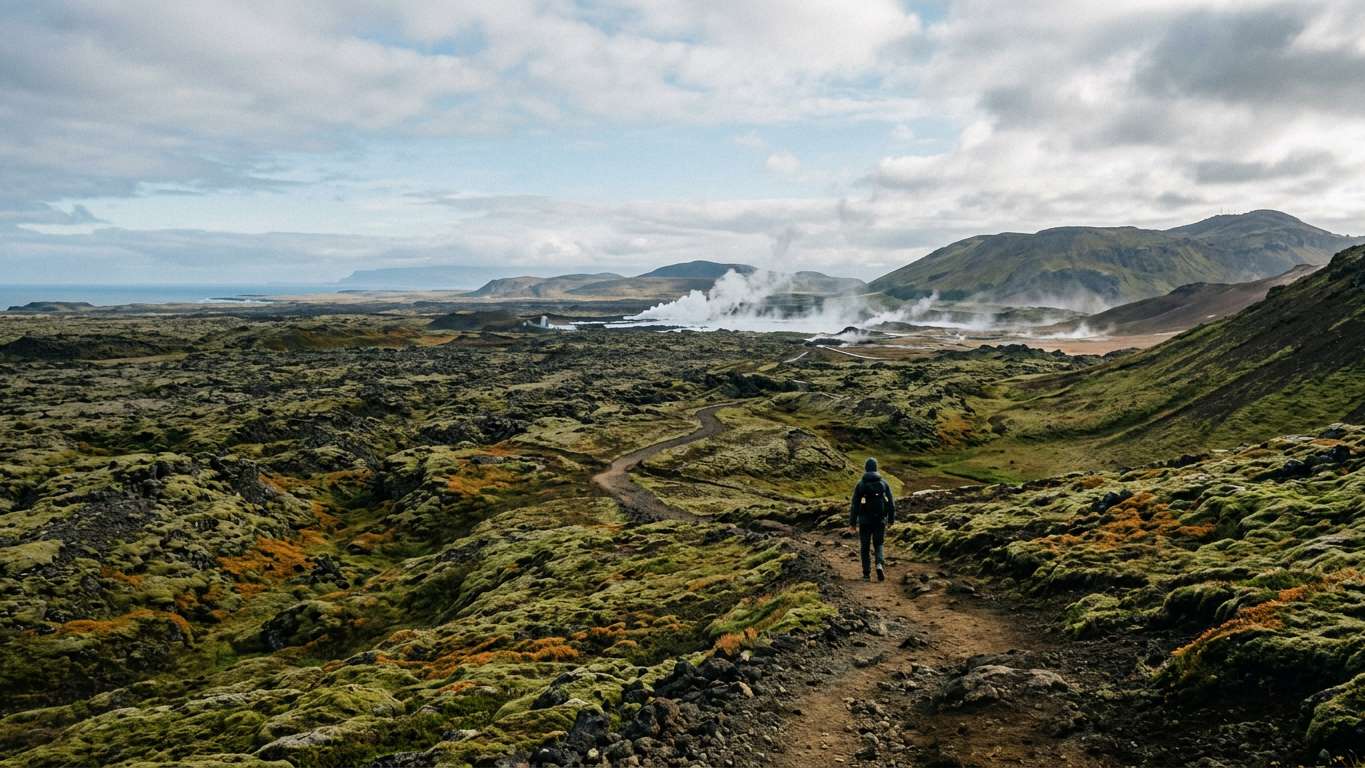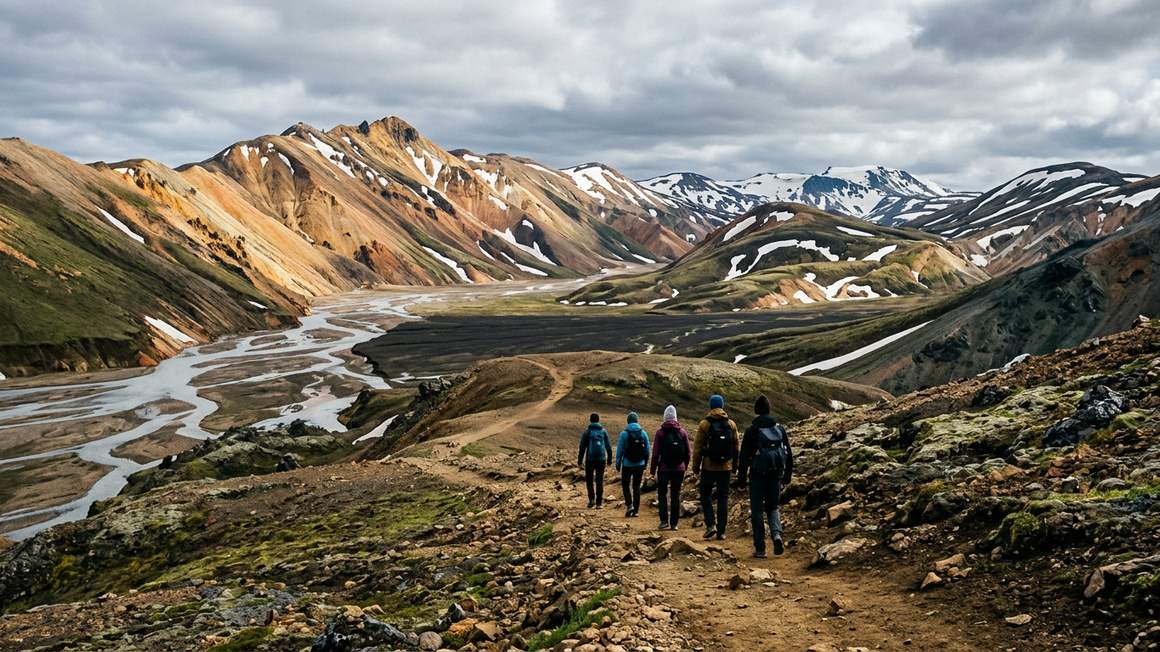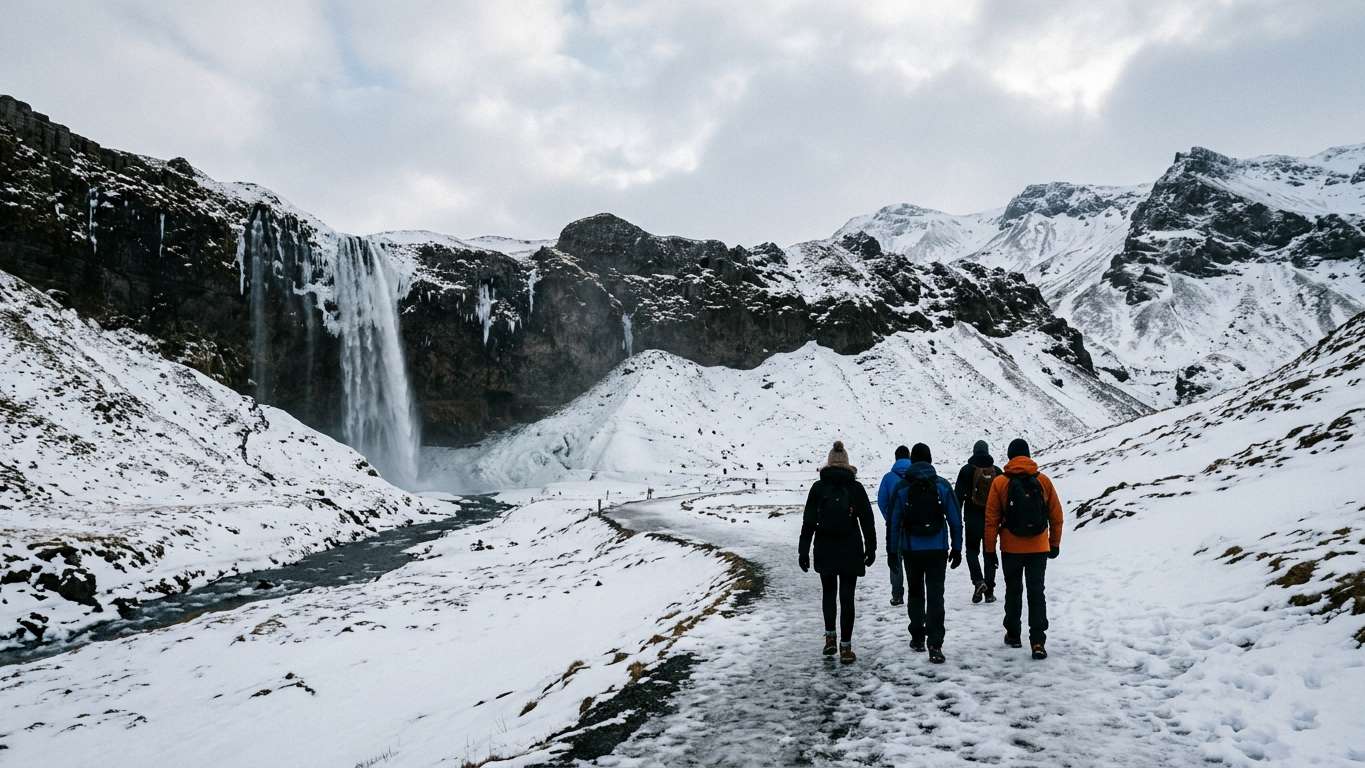
- Winter in Iceland brings mild coastal temperatures but dramatic weather changes that can shift visibility and conditions fast
- The aurora borealis is often visible at night during winter. Sightings depend on solar activity and cloud cover and are never guaranteed.
- Ice cave tours, snowmobile excursions and glacier hikes run during winter, with natural caves accessible only in this season
- Road conditions change rapidly in winter. Check safetravel.is and road.is before departure for closures and weather warnings.
Daylight and Weather in Winter
The country has around two weeks of continuous daylight during the summer. Winter offers the opposite, with limited daylight hours concentrating tour activity into midday windows.
The Icelandic winter is relatively mild for its latitude. This is owing to maritime influence and proximity to the warm currents of the North Atlantic Gyre. The southerly lowlands of the island near the coast average around 1°C in winter. The northern lowland coast averages around -1°C in winter.
Iceland is frequently subject to abrupt and dramatic changes in weather. These can sharply reduce visibility and rapidly increase wind speed and precipitation. Wind speed in the lowlands reaches 65 km/h on 10 to 20 days per year.
Check safetravel.is before you go. The site is run by ICE-SAR, a non-profit volunteer organisation with over 4,500 members. ICE-SAR specialises in search and rescue services day and night, year-round.
Winter Tours in Iceland
More on GetYourGuide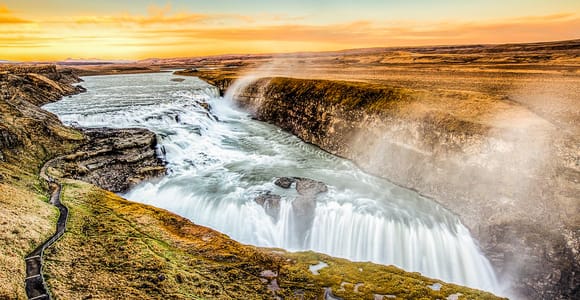 Top ratedBestsellerDay trip · 7 - 8.5 hoursReykjavik: Golden Circle Full-Day Tour with Kerid Crater★ 4.8 27 830 reviews✓ Free cancellation✓ Pickup availableBooked 77 times yesterdayfrom €79 per personSee availability →
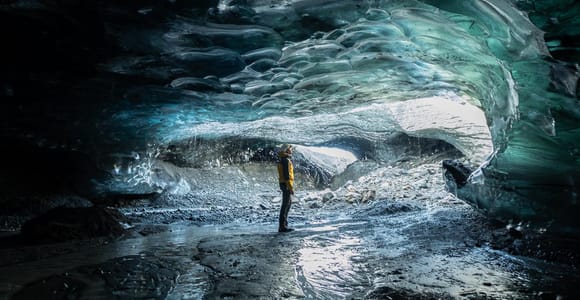 Guided tour · 3 hoursJökulsárlón: The Original Ice Cave Tour on Vatnajökull★ 4.5 1 217 reviews✓ Free cancellationfrom €152 per personSee availability →
 Day trip · 3 hoursFrom Jökulsárlón: Vatnajökull Glacier Blue Ice Cave Tour★ 4.6 972 reviews✓ Free cancellationfrom €158 per personSee availability →
Ice Cave Tours and Glacier Access
Natural ice caves form inside glaciers during winter when meltwater freezes. Tours operate during winter, with access dependent on guide assessments of stability and safety.
The Vatnajökull ice cave tour departs from the Jökulsárlón area and involves a super jeep transfer to the cave entrance. The Katla ice cave lies beneath Mýrdalsjökull glacier near Vík and is accessible year-round because it formed from geothermal activity.
Check road.is before booking glacier excursions. Highland routes close during winter, and eruptions or storms can shut access with little notice.
Man-made ice tunnels like Into the Glacier at Langjökull remain open regardless of season. They offer a controlled alternative when natural caves are unstable.
- Season to combine ice cave exploration with northern lights viewing in a single trip
- Coastal areas stay relatively mild for the latitude, with southern lowlands averaging 1°C in winter
- Whale watching continues through winter from Reykjavík and Húsavík
- Snow cover makes <a href="/snowmobile-tours/">snowmobile tours</a> and <a href="/super-jeep-tours/">super jeep excursions</a> accessible across highland routes
- Winter offers unique glacier and northern lights opportunities
- Weather in Iceland can change abruptly during winter, sharply reducing visibility and increasing wind speed and precipitation
- Wind speed in lowlands reaches 65 km/h on 10 to 20 days per year. Highland areas exceed 50 days annually.
- Northern inland temperatures can drop to -25°C to -30°C, with a record low of -39.7°C
- Heavy dust storms generated by glacial winds are frequent in highland areas, particularly north of Vatnajökull
- Tours to ice caves and remote sites may close with little notice. Always verify current conditions before travelling.
Northern Lights Viewing
The aurora borealis is often visible at night during the winter. Sightings depend on solar activity, cloud cover and darkness, so no tour operator can guarantee a show.
Northern lights tours depart from Reykjavík and drive to areas with minimal light pollution. Some operators offer rebooking if the aurora does not appear, but policies vary. Check the rebooking terms before you book.
You can monitor solar activity and cloud forecasts on the northern lights forecast page. Clear skies and high geomagnetic activity improve your chances, but conditions change fast.
Boat-based northern lights tours depart from Reykjavík harbour and combine aurora viewing with a coastal perspective. Check tour details on GetYourGuide for duration information.
Jökulsárlón and Diamond Beach in Winter
Jökulsárlón glacier lagoon remains accessible in winter, though boat tours pause when ice blocks the water. Amphibious vehicles sometimes continue into late autumn depending on conditions.
Diamond Beach lies directly across the road from Jökulsárlón. Icebergs wash ashore year-round, creating photographic opportunities against black sand and snow.
Check road.is before departure. Winter conditions can extend travel time, and some south coast tours include overnight stops to manage daylight and safety.
Check road.is before departure. Coastal Route 1 stays open most of the winter, but storms and ice can force temporary closures.
Compare prices, reviews and free-cancellation options before you book.
Check availability →Whale Watching in Winter
Whale watching continues during winter from Reykjavík and Húsavík. Minke whales, humpbacks and dolphins appear in Faxaflói Bay and Skjálfandi Bay during this season.
Tour frequency drops compared to summer, and departures depend on sea conditions. Wind speed and swell can cancel trips with short notice.
Reykjavík whale watching boats depart from the old harbour. Húsavík tours require travel from Reykjavík by road or domestic flight.
Dress in layers and bring windproof clothing. Temperatures on the water feel colder than on land, even when coastal averages hover around 1°C.
Private Winter Tours
Private tours allow you to adjust itineraries when weather closes roads or reduces visibility. Guides can reroute to alternative sites or extend time at locations when conditions allow.
Private winter itineraries often combine Golden Circle landmarks with glacier activities or northern lights viewing. Flexible departure times help you work around short daylight windows.
Super jeep and modified four-wheel-drive vehicles handle snow and ice better than standard coaches. Smaller groups move faster and adapt to changing forecasts.
Check tour availability and booking requirements with operators directly.
Road Conditions and Cancellations
Weather and road conditions in Iceland can change fast. Tour operators monitor forecasts and close departures when safety risks rise.
The strongest gust is 267 km/h. Heavy dust storms generated by strong glacial winds are frequent in highland areas north of Vatnajökull. Coastal routes also face ice, snow and reduced visibility.
Cancellations are typically announced the evening before or early the morning of departure. Refund and rebooking policies vary by operator, so confirm terms when you book.
For health issues, travellers can call 00354 5131700. Safetravel.is provides real-time alerts and safety guidance.
Compare prices, reviews and free-cancellation options before you book.
Check availability →Winter Tour Types Comparison
| Tour Type | Season | Typical Duration | Weather Dependency |
|---|---|---|---|
| Ice Cave Tours | Winter months | Check tour details | High - closures depend on cave stability and road access |
| Northern Lights Tours | Winter season | Check tour details | Very high - clouds and solar activity determine visibility |
| Glacier Hiking | Year-round | Check tour details | Moderate - guides assess ice conditions daily |
| Whale Watching | Year-round | Check tour details | Moderate - sea state affects departures |
| Horse Riding | Year-round | Check tour details | Low - horses handle snow and cold well |
All winter tours depend on current conditions. Check safetravel.is and road.is before you go, and confirm departure status with your operator the day before travel.
Winter tours in Iceland offer the opportunity to visit natural ice caves and see the aurora borealis. Weather changes rapidly and cancellations are common. Plan flexible itineraries, monitor road.is and safetravel.is daily, and book tours with clear rebooking policies.
More tours to compare
More on GetYourGuide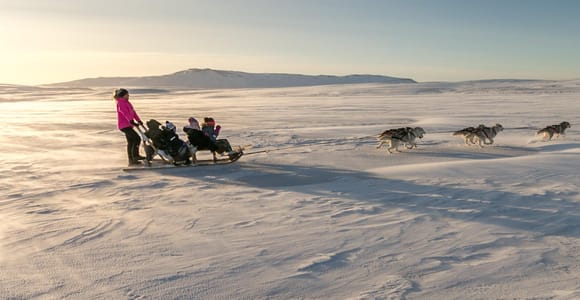 Guided tour · 1 hourNear Reykjavik: Winter Dog Sledding for at Least 4 km★ 5.0 10 reviewsfrom €347 per personSee availability →
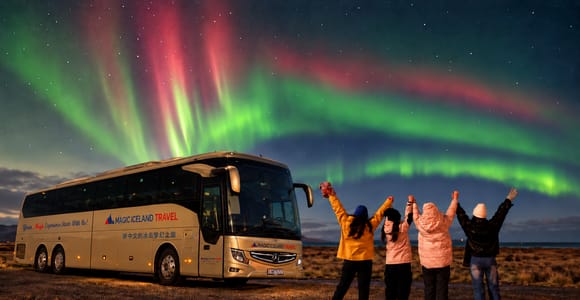 Day trip · 4 hoursReykjavik: Northern Lights Coach Tour with Local Hunters★ 4.4 506 reviews✓ Free cancellation✓ Pickup availableAvailable today and tomorrowfrom €72 per personSee availability →
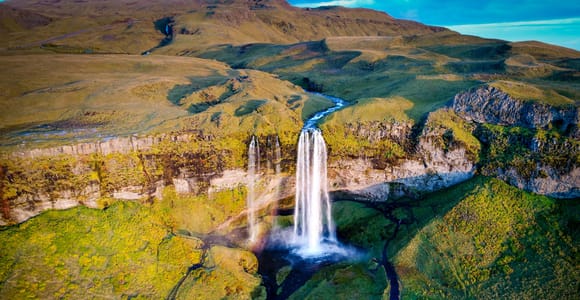 BestsellerDay trip · 10 hoursReykjavík: South Coast Waterfalls, Black Sand & Glacier Tour★ 4.8 12 900 reviews✓ Free cancellation✓ Pickup availableBooked 52 times yesterdayfrom €104 per personSee availability →
Frequently asked questions
What are the temperatures in Iceland during winter?
The southerly lowlands of the island near the coast average around 1°C in winter. The northern lowland coast averages around -1°C in winter. The lowest temperatures in the northern inland part of the island range from around -25 to -30°C. The lowest temperature on record is -39.7°C.
Can you see the northern lights in winter in Iceland?
The aurora borealis is often visible at night during the winter. Sightings depend on solar activity, darkness and cloud cover, so no tour can guarantee a display.
When do ice caves open in Iceland?
Natural ice caves are accessible during winter when meltwater freezes inside glaciers. Check safetravel.is before you go, as access depends on guide assessments and road conditions.
Is whale watching possible in Iceland during winter?
Whale watching tours operate from Reykjavík and Húsavík during winter. Departures depend on sea conditions, and wind or swell can cancel trips with short notice.
How often do winter tours get cancelled in Iceland?
Weather and road conditions in Iceland can change fast. Iceland is frequently subject to abrupt changes that reduce visibility and increase wind speed. Cancellations are announced based on current forecasts. Confirm departure status with your operator the day before travel.