- Natural ice caves in Vatnajökull change location annually due to glacier movement
- Katla ice cave sits beneath an active, intensively monitored volcano covered by 200-700 metres of ice
- Man-made tunnels in Langjökull offer year-round access without depending on natural ice formation
Natural Ice Caves in Vatnajökull Glacier
Vatnajökull is the largest and most voluminous ice cap in Iceland, covering 7,700 km² in the south-east. The ice averages 380 m thick, reaching 950 m at its deepest point. Around 30 outlet glaciers flow from the ice cap. Natural ice caves form where meltwater carves tunnels through these glaciers.
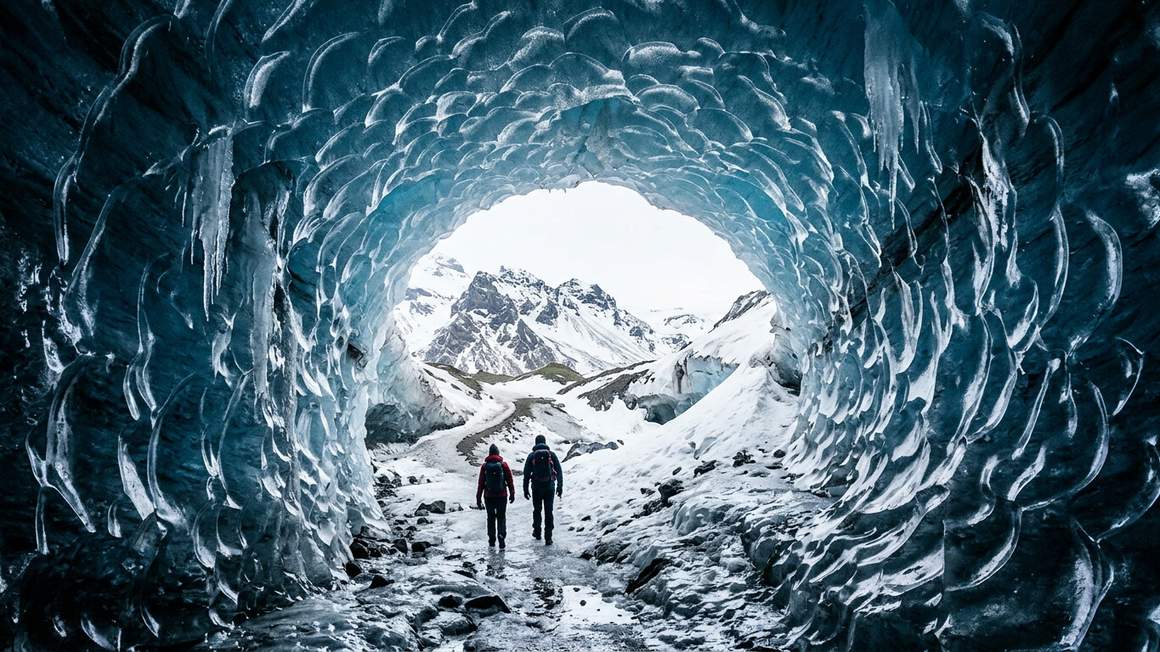
These caves appear blue because dense ice absorbs all colours except blue wavelengths. The colour intensity increases with ice thickness and compression. Each winter brings different cave formations as glaciers shift and melt patterns change. Caves accessible one season may collapse or become unstable the next.
Iceland's highest peak, Hvannadalshnjúkur at 2,109.6 m, sits in Vatnajökull's southern periphery near Skaftafell. The ice cap became part of Vatnajökull National Park on 7 June 2008. Tours typically combine glacier hiking with cave exploration. Many visitors pair them with Jökulsárlón glacier lagoon on south coast day trips.
Check safetravel.is before booking, as cave access depends on glacier stability and weather.
Ice Cave Tours in Iceland
More on GetYourGuide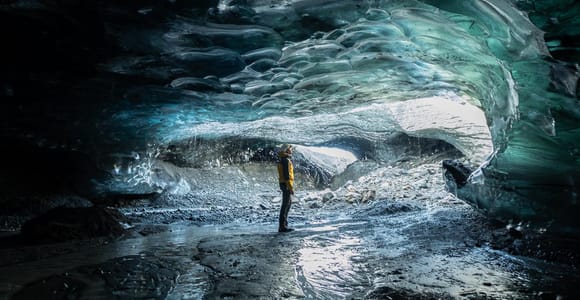 Top ratedGuided tour · 3 hoursJökulsárlón: The Original Ice Cave Tour on Vatnajökull★ 4.5 1 217 reviews✓ Free cancellationfrom €152 per personSee availability →
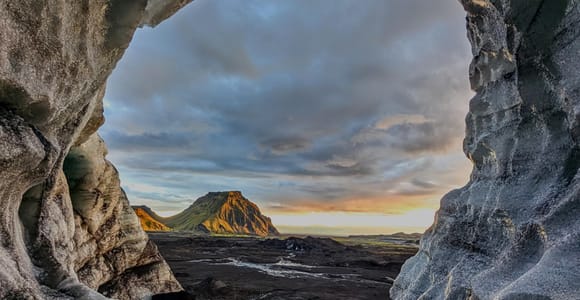 Day trip · 3 hoursFrom Vik: Katla Ice Cave Small-Group Tour★ 4.4 1 417 reviews✓ Free cancellationAvailable tomorrowfrom €158 per personSee availability →
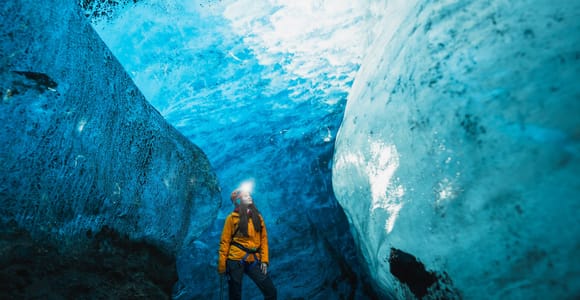 Day trip · 4 hoursSkaftafell: Blue Ice Cave & Glacier Hike on Vatnajökull★ 4.6 943 reviews✓ Free cancellationfrom €140 per personSee availability →
Katla Ice Cave Beneath Mýrdalsjökull
Katla is an active subglacial volcano in southern Iceland, situated north of Vík í Mýrdal and east of Eyjafjallajökull. The volcano's peak reaches 1,512 metres and sits partially beneath Mýrdalsjökull glacier. Its caldera spans 10 km in diameter, covered by 200-700 metres of ice.
The Katla ice cave formed where geothermal heat from the volcano melts the overlying glacier ice. Volcanic ash from past eruptions creates black layers within the blue ice, producing distinctive striped patterns. At least 20 ice cauldrons exist within the caldera, linked to geothermal areas beneath the ice.
Katla volcano is intensively monitored due to eruption risk. Continuous monitoring includes seismic flood tremor, water gauges, and water conductivity measurements. The 1918 eruption started on 12 October and lasted 24 days. Before the Ring Road was constructed in 1974, people feared traversing the plains ahead of the volcano. Frequent jökulhlaup (glacial lake outburst floods) made the crossing dangerous.
Tours operate when safe. Check tour details for departure points. On 9 July 2011, a glacier flood destroyed the bridge across Múlakvísl and damaged sections of Route 1. Check road.is for current road conditions before travelling.
- Natural caves in Vatnajökull showcase vivid blue ice formed by centuries of compression
- Katla ice cave features volcanic ash layers within glacier ice, creating unique black and blue patterns
- Man-made tunnels provide controlled, stable environments regardless of weather or season
- Vatnajökull National Park, established 7 June 2008, protects Iceland's largest ice cap
- Tours operate with experienced guides familiar with glacier conditions
- Natural ice caves can close without notice due to glacier instability or weather changes
- Katla's volcanic activity requires continuous monitoring of seismic tremor, water gauges, and conductivity
- Tours depart from distant locations, requiring full-day commitment
- Winter ice cave availability depends on glacier melt patterns that vary year to year
- Check safetravel.is before departure, as conditions can change rapidly
Into the Glacier Man-Made Tunnel
The Into the Glacier tunnel is carved into Langjökull glacier, Iceland's second-largest ice cap. Unlike natural caves, this tunnel remains accessible year-round because its structure does not depend on seasonal melt patterns. The man-made design includes reinforced walls and lighting throughout the passage.
Engineers excavated the tunnel to allow safe access deep into the glacier. The stable construction removes the uncertainty of natural cave formations. Visitors walk through corridors that reveal glacier ice layers accumulated over centuries. The tunnel reaches sections where ice thickness and compression create vivid blue hues.
Check tour details for departure points and access information. The journey to the glacier requires modified vehicles capable of crossing rough terrain. Some tours combine the tunnel visit with snowmobile rides on the glacier surface.
This option suits travellers visiting outside the winter ice cave season or those preferring guaranteed access. The controlled environment removes weather-related cancellations that affect natural cave tours.
Winter Ice Cave Season and Stability
Natural ice caves in Vatnajökull form during summer melt and stabilise when winter temperatures freeze meltwater flow. Guides assess cave stability throughout the season, monitoring cracks, ceiling thickness, and temperature changes. Ice movement continues even in winter, so caves deemed safe one week may close the next.
Several volcanoes sit beneath Vatnajökull ice cap. Eruptions from these volcanoes have led to large pockets of water beneath the ice, which may cause jökulhlaup. These outburst floods can alter glacier structure and affect cave accessibility. Safetravel.is provides updates on volcanic activity and glacier conditions.
ICE-SAR, the Icelandic Association for Search and Rescue, runs safetravel.is. This non-profit, volunteer-based organisation has over 4,500 volunteers specialising in search and rescue services. ICE-SAR is available day and night, year-round. Check the site before departure and follow guide instructions during tours.
Winter weather brings additional challenges: reduced daylight hours, road closures, and sudden storms. Check tour details for availability and capacity information.
Compare prices, reviews and free-cancellation options before you book.
Check availability →Comparing Ice Cave Options
| Cave Type | Location | Season | Formation |
|---|---|---|---|
| Natural blue caves | Vatnajökull outlet glaciers | Check tour details | Meltwater tunnels through compressed ice |
| Katla ice cave | Mýrdalsjökull, above Katla volcano | Check tour details | Volcanic heat melting glacier base |
| Into the Glacier | Langjökull glacier | Check tour details | Man-made tunnel carved into ice cap |
Natural caves offer the most dramatic blue ice but depend on stable winter conditions. Katla provides access but sits above an active, monitored volcano. The man-made tunnel guarantees access regardless of natural ice conditions.
Vatnajökull tours often combine caves with visits to Skaftafell or Diamond Beach. Katla tours pair with stops at Reynisfjara beach or Skógafoss waterfall. Langjökull tunnel tours can include Golden Circle attractions on return journeys to Reykjavík.
Departure Points and Journey Times
Check tour details for departure points and journey times for natural ice cave tours in Vatnajökull. Tours typically require a full day commitment from Reykjavík. Most tours include transport from nearby towns or require you to meet at glacier base camps.
Check tour details for Katla ice cave tour departure points and times. Some tours offer pickup from accommodation or require you to drive to a meeting point along Route 1. Modified vehicles then transport you from the paved road to the glacier.
Check tour details for Into the Glacier departure points and journey times. Modified vehicles transport you on unpaved routes to the glacier tunnel entrance. Tours operate on timetables that account for travel time on mountain tracks.
Plan a full day for any ice cave tour. Weather can extend journey times, and glacier access roads may close temporarily. Check road.is before self-driving to glacier areas.
Safety and Glacier Conditions
Glacier environments carry inherent risks: crevasses, unstable ice, sudden weather changes, and hidden meltwater channels. Professional guides assess conditions daily. Tours cancel if conditions become unsafe, prioritising visitor protection over schedule adherence.
Volcanic activity beneath Vatnajökull creates additional hazards. Eruptions can trigger jökulhlaup that flood areas near outlet glaciers without warning. A large eruption from Katla would likely cause jökulhlaup flowing from Kötlujökull outlet glacier over Mýrdalssandur toward the sea. This could potentially affect Vík. Continuous monitoring systems track seismic activity, ground deformation, and meltwater changes.
Dress in waterproof layers and insulated clothing. Glacier temperatures remain near or below freezing year-round, and cave interiors amplify the cold. Sturdy boots with ankle support are essential for walking on uneven ice. Check tour details for equipment provided during tours.
ICE-SAR volunteers respond to emergencies across Iceland's wilderness areas. Their expertise covers glacier rescue, mountain search, and extreme weather recovery. The organisation's availability day and night reflects the unpredictable nature of Icelandic conditions. Follow guide instructions, stay within designated areas, and never enter ice caves without professional supervision.
Compare prices, reviews and free-cancellation options before you book.
Check availability →Combining Ice Caves with Other Experiences
Many visitors pair ice cave tours with nearby attractions to maximise their journey from Reykjavík. Vatnajökull ice cave tours often include Jökulsárlón boat tours through the glacier lagoon, where icebergs calve from Breiðamerkurjökull outlet glacier. The lagoon sits adjacent to Diamond Beach, where ice chunks wash onto black sand.
Katla ice cave tours combine well with south coast attractions. These include Seljalandsfoss waterfall, Reynisfjara black sand beach, and coastal cliffs near Dyrhólaey. Some tours include stops at Fjaðrárgljúfur canyon or the plane wreck at Sólheimasandur. The proximity to Vík allows efficient routing along Route 1.
Winter visitors can book tours combining ice caves with northern lights tours in the same trip. After returning from glacier areas, evening tours depart from Reykjavík to dark-sky locations. Check the northern lights forecast to time your visit, though aurora sightings are never guaranteed.
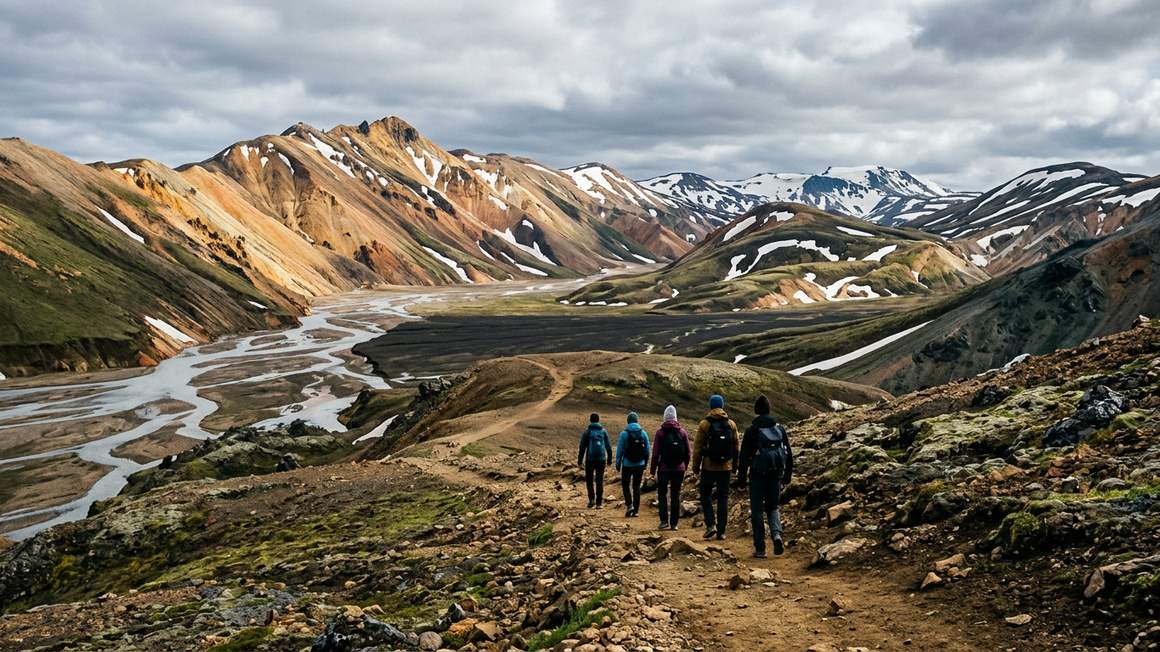
Summer visitors without access to natural ice caves can explore alternatives. Lava tunnels or the Inside the Volcano tour offer underground experiences. Multi-day tours allow more flexibility to include ice caves alongside other regions like Landmannalaugar or the Snæfellsnes peninsula.
Natural ice caves in Vatnajökull deliver the most striking blue ice formations. They require winter travel and carry cancellation risk due to glacier instability. Katla offers access beneath an active volcano with unique ash-striped ice. Man-made tunnels guarantee stable conditions. Choose based on your travel dates, tolerance for weather-dependent plans, and willingness to commit a full day to glacier areas.
More tours to compare
More on GetYourGuide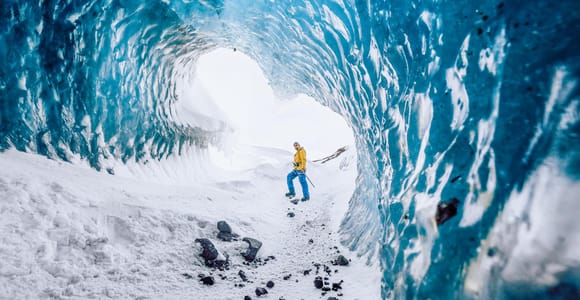 BestsellerDay trip · 4 hoursSkaftafell: Ice Cave Tour and Glacier Hike★ 4.6 2 021 reviews✓ Free cancellationfrom €140 per personSee availability →
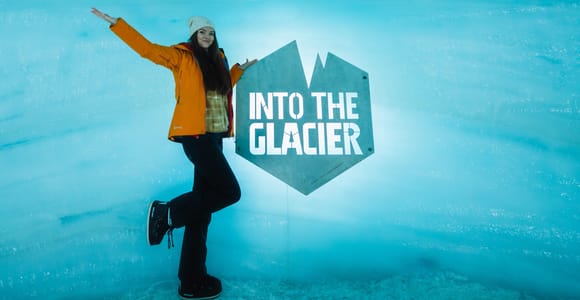 Day trip · 4 hoursFrom Húsafell: Into the Glacier Ice Cave Adventure★ 4.6 876 reviews✓ Free cancellationAvailable tomorrowfrom €179 per personSee availability →
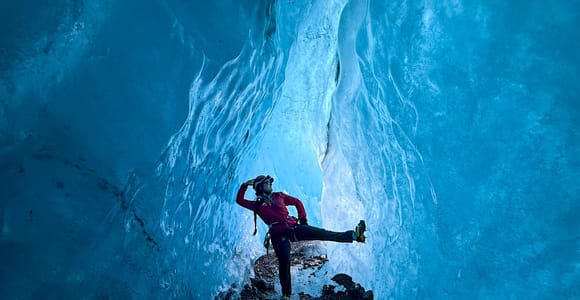 Day trip · 3 - 4.5 hoursSkaftafell: Blue Ice Glacier Hike & Winter Ice Cave Option★ 4.7 600 reviews✓ Free cancellationfrom €92 per personSee availability →
Frequently asked questions
When can I visit natural ice caves in Vatnajökull?
Natural ice caves in Vatnajökull form when meltwater freezes and glacier conditions stabilise. Check safetravel.is before booking, as cave access depends on weather and glacier stability. Tours operate only when guides confirm caves are safe to enter.
Is Katla ice cave safe to visit?
Katla volcano is intensively monitored with continuous seismic tremor tracking, water gauges, and conductivity measurements. Tours operate when conditions are deemed safe. Check safetravel.is and road.is before departure, as volcanic activity and glacier floods can affect access.
What is the difference between natural and man-made ice caves?
Natural ice caves form through meltwater carving tunnels in glaciers and change location annually. Man-made tunnels like Into the Glacier are carved into ice caps with reinforced structures. Natural caves offer vivid blue ice, while man-made tunnels provide year-round access.
How long does it take to reach ice caves from Reykjavík?
Check tour details for journey times to ice cave departure points. Tours typically require a full day commitment from Reykjavík. Travel times vary depending on weather and road conditions.
Can I visit ice caves in summer?
Check tour details for seasonal availability of ice caves. Katla ice cave and Into the Glacier man-made tunnel may operate year-round when conditions are safe. Check with tour operators before booking, as access depends on glacier stability and weather.