- Sneaker waves at Reynisfjara are unpredictable and have led to six deaths since 2007. Three fatalities occurred at Hálsanefshellir Cave.
- A warning system with lights and multilingual signs marks safety zones during hazardous conditions. The cave closes during Red Warnings.
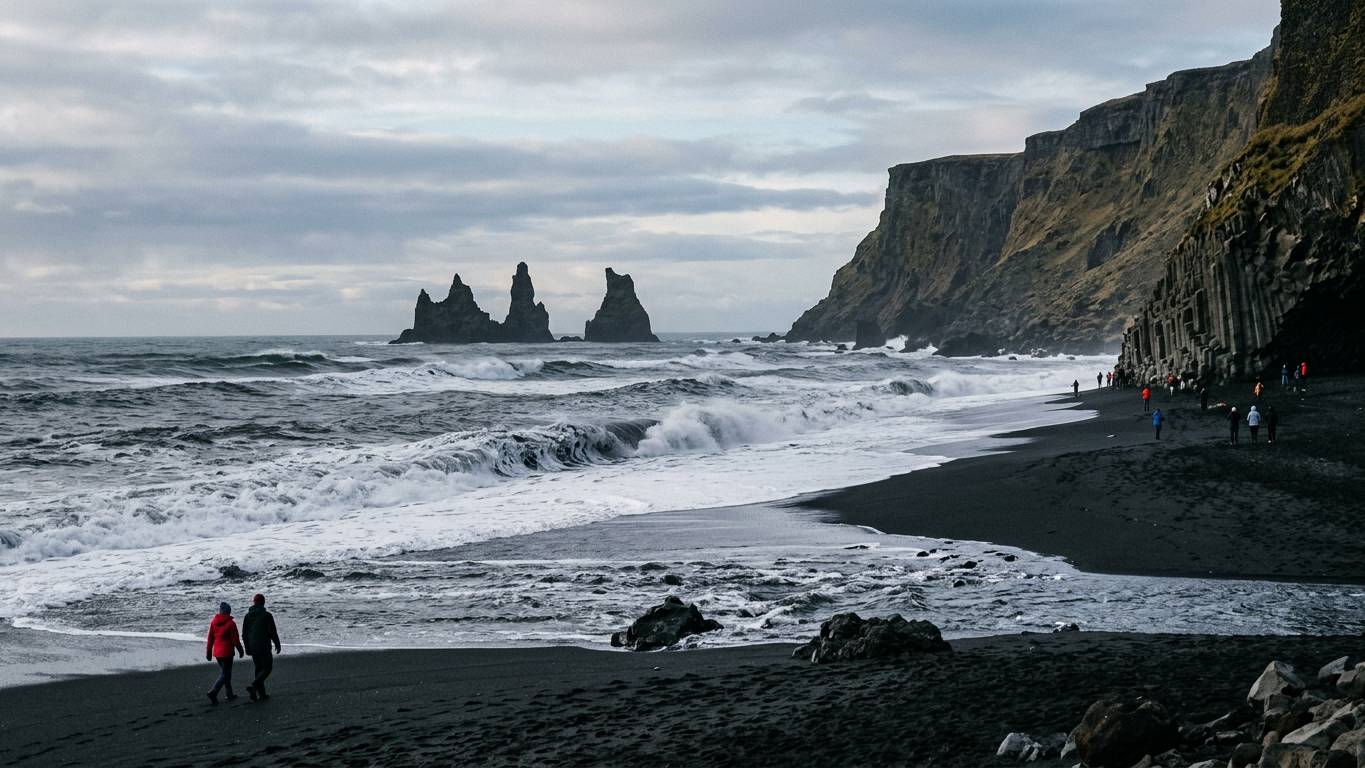
- The beach sits within Katla UNESCO Global Geopark and offers views of Reynisdrangar sea stacks, Dyrhólaey promontory, and Eyjafjallajökull volcano
Understanding the Sneaker Wave Danger
Powerful waves at Reynisfjara are generated by the convergence of swell trains over a submerged offshore ledge. These sneaker waves surge far inland without warning and have led to six fatalities between 2007 and 2025.
The most recent death occurred in August 2025 when a visitor was swept out from Hálsanefshellir Cave. The Coast Guard arrived 30 to 40 minutes after the incident. The two preceding fatalities also happened at the cave.
Following the August 2025 incident, Hálsanefshellir Cave and its basalt columns now close during Red Warnings. Never turn your back on the ocean and maintain awareness of the water at all times.
Check current conditions on safetravel.is before you go. The site is run by ICE-SAR, a non-profit volunteer organisation with over 4500 members providing year-round search and rescue services.
Tours Stopping at Reynisfjara Beach
More on GetYourGuide Top ratedBestsellerDay trip · 10.5 hoursSouth Coast Classic: Full-Day Tour from Reykjavik★ 4.6 2 669 reviews✓ Free cancellation✓ Pickup availableAvailable tomorrowfrom €112 per personSee availability →
 Day trip · 6 hoursSeyðisfjörður: Puffins, Reindeer, & Waterfall Tour★ 4.8 36 reviews✓ Free cancellationfrom €220 per personSee availability →
 Day trip · 11 hoursFrom Reykjavik: Snæfellsnes Full-Day Tour with Homemade Meal★ 4.8 532 reviews✓ Free cancellation✓ Pickup availablefrom €200 per personSee availability →
The Warning System and Safety Measures
A warning system with condition-dependent safety zones was installed following fatal accidents at the beach. Highly visible multilingual signs with pictograms mark areas based on current wave conditions.
A real-time wave forecasting system links to warning lights that indicate hazard levels. Red Warnings now trigger closure of Hálsanefshellir Cave and the basalt column area where three deaths occurred.
In February 2026, Minister of Industries Hanna Katrín Friðriksson foreshadowed new legislation to address safety at popular tourist sites. Reynisfjara is included in the planned measures. Authorities are considering daily visitor allowances and nominal entrance fees to fund additional safety infrastructure.
Conditions on the beach vary greatly and can change quickly. Always observe warning signs and stay within marked safety zones.
- Black sand beach with basalt column formations at Hálsanefshellir Cave
- Reynisdrangar sea stacks alongside views of Eyjafjallajökull volcano and Dyrhólaey promontory
- Warning system with real-time wave forecasting and condition-dependent safety zones helps visitors assess risk
- Many <a href="/south-coast-tours/">south coast tours</a> include stops here alongside <a href="/skogafoss/">Skógafoss</a> and <a href="/seljalandsfoss/">Seljalandsfoss</a>
- Part of Katla UNESCO Global Geopark with geological significance
- Sneaker waves surge far inland without warning due to swell convergence over a submerged offshore ledge
- Six people have died and twelve more required emergency rescue between 2007 and 2025
- Part of the iconic basalt columns collapsed in February 2026 following weeks of strong waves and easterly winds
- Hálsanefshellir Cave now closes during Red Warnings after three fatalities occurred at that location
- Conditions vary greatly and change quickly, with authorities considering visitor allowances and entrance fees for safety infrastructure
Basalt Columns and the February 2026 Collapse
Hálsanefshellir Cave with its basalt columns sits at the eastern end of Reynisfjara. These formations are one of Iceland's most photographed geological features.
In February 2026, part of the iconic basalt columns collapsed along with significant beach erosion. Weeks of strong waves and easterly winds caused the damage. The appearance now differs from photos taken before the event.
The collapse demonstrates the dynamic nature of Iceland's coastline. Erosion continues to reshape the beach, and what you see may differ from images taken in previous years.
Reynisfjara is part of the Katla UNESCO Global Geopark on privately owned land. The geopark designation recognises the area's geological importance and volcanic heritage.
Reynisdrangar Sea Stacks and Surrounding Views
The Reynisdrangar sea stacks are located at Reynisfjara. These pointed rock formations rise from the ocean off the shore.
Dyrhólaey promontory lies to the west of the beach. The headland provides a contrasting landscape feature visible from the black sand.
Eyjafjallajökull volcano is visible from Reynisfjara on clear days. The ice-capped volcano is a prominent feature of the south coast skyline.
The combination of black sand, sea stacks, and distant glacier creates a stark landscape. Many visitors arrive as part of day trips from Reykjavík that cover multiple south coast attractions.
Compare prices, reviews and free-cancellation options before you book.
Check availability →Tours That Stop at Reynisfjara
Reynisfjara appears on many south coast tours alongside waterfalls and glacier sites. Tours often combine the beach with stops at Seljalandsfoss waterfall and Skógafoss waterfall.
Some itineraries continue to Vík or Jökulsárlón glacier lagoon as part of longer routes. Small group tours may allow more time at locations compared to larger coaches.
Private tours offer flexibility to adjust your beach visit based on weather and wave conditions. Guides on organised tours can provide safety briefings specific to Reynisfjara's hazards.
Check tour details on GetYourGuide or with your tour operator. Check safetravel.is for beach warnings before any visit.
Visiting in Different Seasons
Sneaker waves remain a year-round hazard at Reynisfjara. Wave conditions depend on offshore weather systems rather than the season on land.
Reynisfjara is accessible throughout the year. However, wind can be severe in any month, and conditions change quickly regardless of the forecast.
Many winter tours combine Reynisfjara with northern lights viewing on evening returns. Standing near the water at night increases risk.
Check road.is and safetravel.is before departing. Weather that seems calm inland can produce dangerous waves on the exposed south coast.
Compare prices, reviews and free-cancellation options before you book.
Check availability →Practical Information for Your Visit
Reynisfjara sits near Vík í Mýrdal on Iceland's south coast. Most visitors arrive by car or on guided tours.
Self-drive tours give you independence to visit when conditions suit, while bus tours provide transport and local knowledge.
Dress in windproof layers and waterproof outerwear regardless of the forecast. Wind speeds are often higher on the beach than inland, and spray from waves can soak clothing.
Allow time to observe wave patterns before approaching the sand. Keep watching the ocean and never turn your back on the water, even briefly.
Combine your visit with nearby attractions such as Fjaðrárgljúfur canyon or continue east toward Skaftafell and glacier sites. The south coast offers multiple stops within a single day's drive.
Reynisfjara offers dramatic volcanic landscapes with basalt columns, sea stacks, and black sand shaped by Iceland's geological forces. The main trade-off is between visual spectacle and genuine danger: sneaker waves have killed six people since 2007, and conditions change without warning even when the ocean appears calm.
More tours to compare
More on GetYourGuide
Frequently asked questions
How many people have died at Reynisfjara beach?
Six people have died from sneaker waves at Reynisfjara between 2007 and August 2025. At least twelve others required emergency rescue during the same period. Three of the fatalities occurred at Hálsanefshellir Cave, which now closes during Red Warnings.
What happened to the basalt columns at Reynisfjara?
Part of the iconic basalt columns collapsed in February 2026 following weeks of strong waves and easterly winds. The collapse also caused significant beach erosion, altering the appearance of the site.
What are sneaker waves at Reynisfjara beach?
Sneaker waves are powerful surges generated by swell trains converging over a submerged offshore ledge. These waves surge far inland without warning and have caused all six fatalities at Reynisfjara.
Is Hálsanefshellir Cave closed at Reynisfjara?
Hálsanefshellir Cave and the basalt columns close during Red Warnings at the beach. This closure began after the August 2025 fatality, the third death to occur at that location.
Where can I check current conditions at Reynisfjara?
Check safetravel.is before you go. ICE-SAR runs the site and provides current warnings for Reynisfjara and other Icelandic locations. ICE-SAR is a volunteer search and rescue association with over 4500 members.