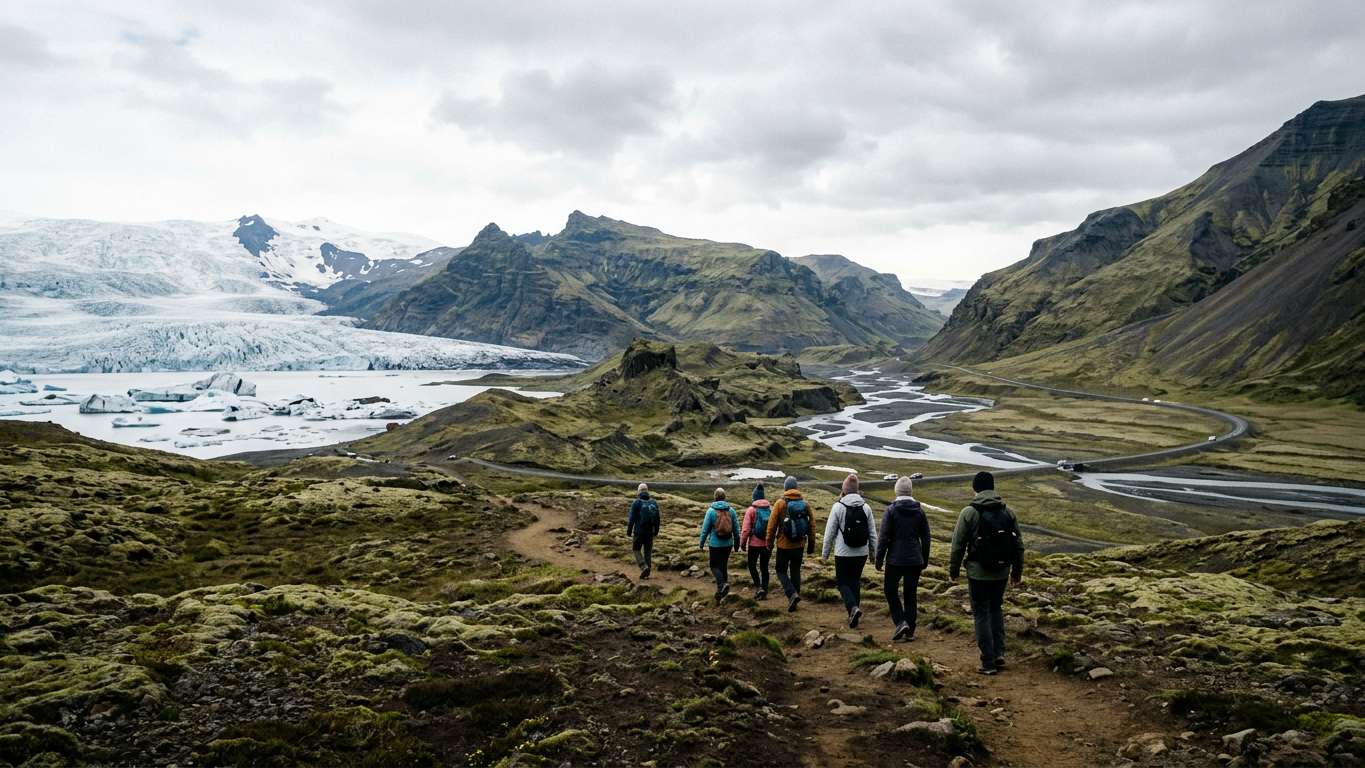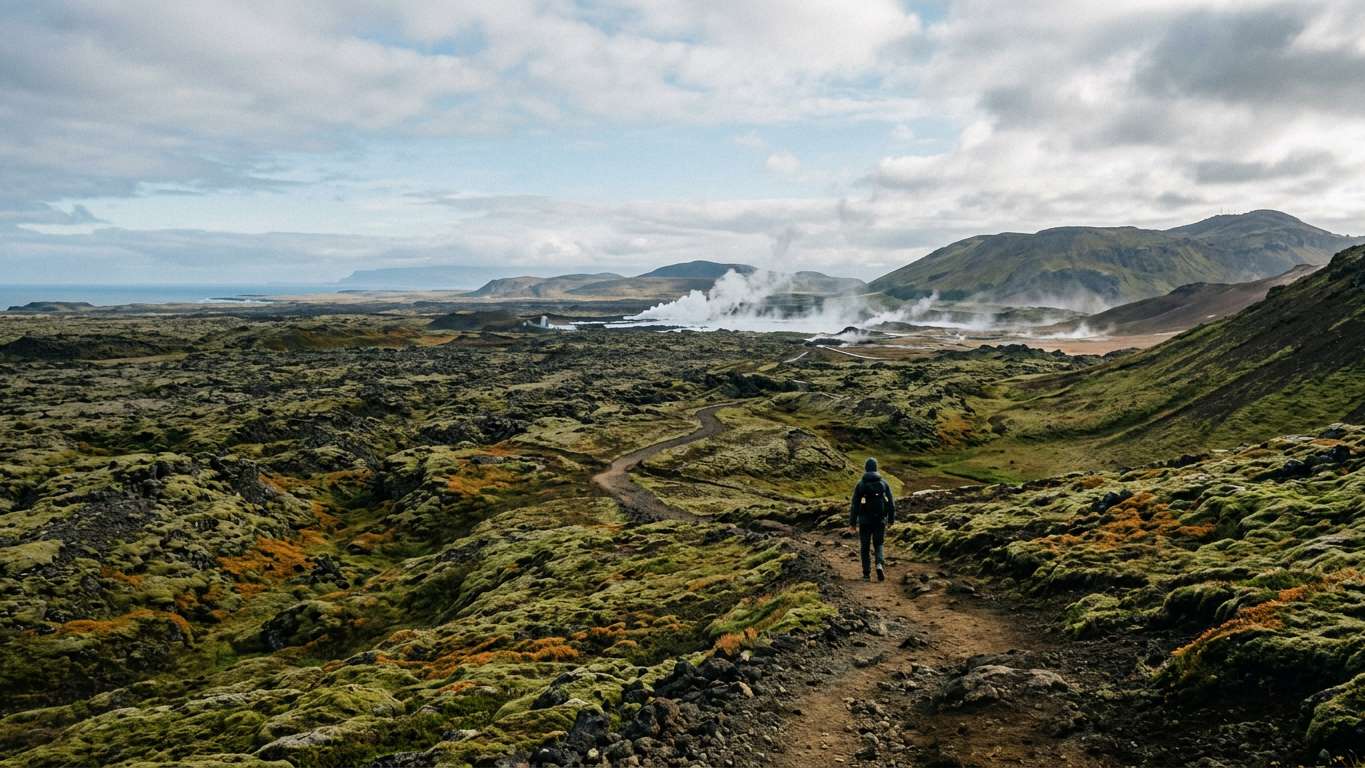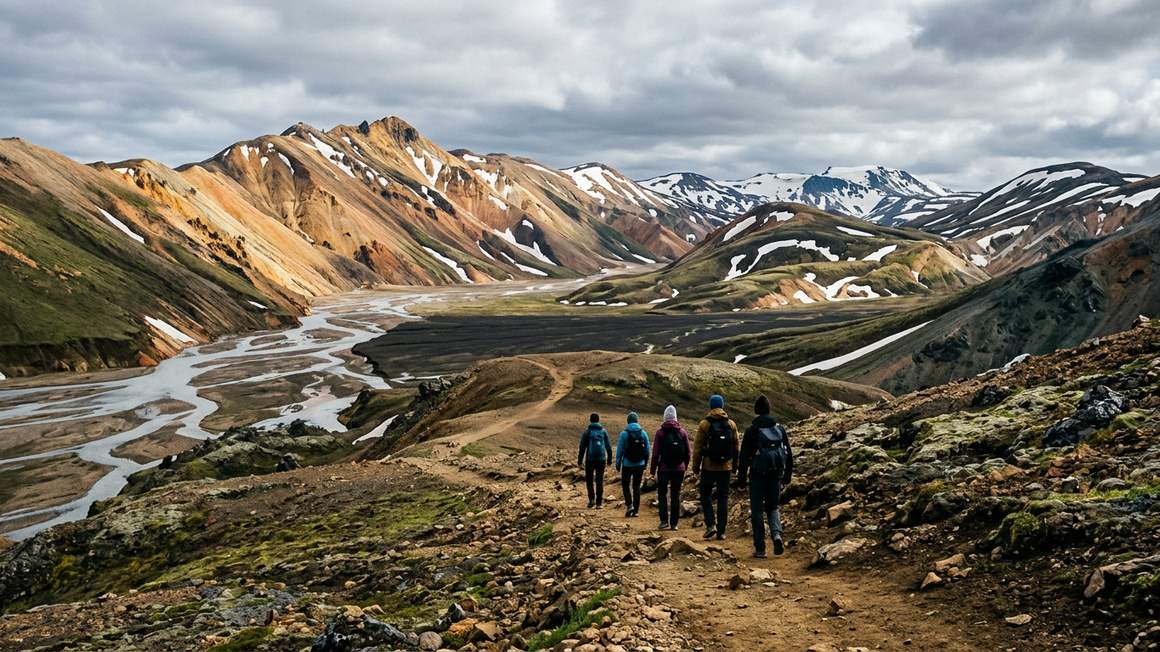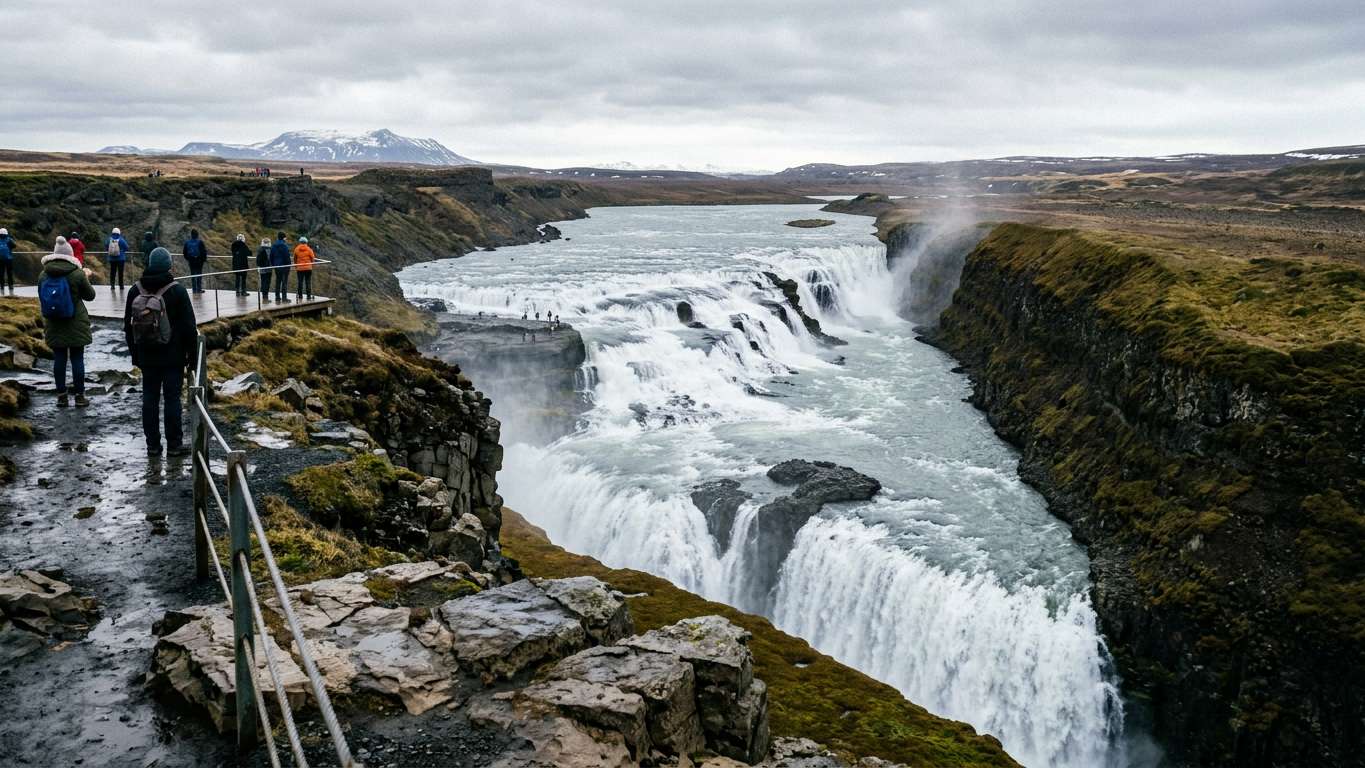
- The route is about 300 kilometres. It includes Thingvellir (40 kilometres northeast of Reykjavík), the Haukadalur geothermal area with Strokkur and Geysir, and Gullfoss waterfall
- Strokkur erupts every 5 to 10 minutes to heights of up to 35 metres. Geysir erupts infrequently but can reach 60 metres
- Common additional stops include Kerid volcanic crater, Bruarfoss and Faxi waterfalls, Hveragerdi, Skalholt cathedral and the Silfra snorkelling site
The three primary stops
Thingvellir National Park sits about 40 kilometres northeast of Reykjavík. The park lies in a rift valley marking the boundary between the North American and Eurasian tectonic plates. It was founded in 1930 and designated a World Heritage Site in 2004.
The Althingi gathered here annually from 930 until 1798 for two weeks of law and politics. Thingvallavatn, Iceland's largest natural lake, borders the park to the south. The Silfra fissure on the lake's northern shore is a popular diving and snorkelling location.
The Haukadalur geothermal area contains Geysir and Strokkur. Geysir lies about 50 metres north of Strokkur. It can hurl boiling water up to 60 metres, though eruptions are now infrequent. Strokkur erupts to heights of up to 35 metres every few minutes. Around thirty smaller geysers and hot pools surround the two main features. The site was officially protected by the Ministry for the Environment and Natural Resources in 2020.
Gullfoss sits in the canyon of the Hvítá river in southwest Iceland. About a kilometre above the falls, the river turns west and flows down a wide curved three-step staircase. It then plunges in two stages, 11 metres and 21 metres, into a crevice 32 metres deep. The crevice is about 20 metres wide and 2.5 kilometres long. Water flow averages 141 cubic metres per second in summer and 80 cubic metres per second in winter. The falls became a permanent conservation site in 1979.
Golden Circle tours from Reykjavík
More on GetYourGuide Top ratedBestsellerDay trip · 10 hoursFrom Reykjavik: Golden Circle, Kerid, & Secret Lagoon Tour★ 4.8 6 554 reviews✓ Free cancellation✓ Pickup availableBooked 15 times yesterdayfrom €115 per personSee availability →
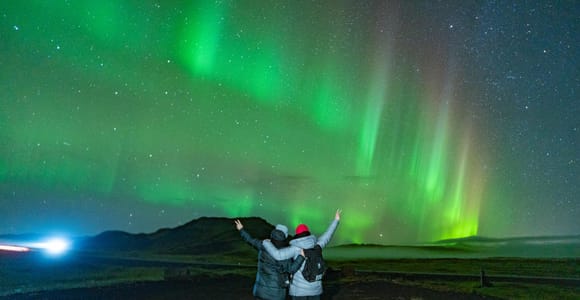 Day trip · 12 hoursReykjavík: Golden Circle & Northern Lights with Hot Cocoa★ 4.5 40 reviews✓ Free cancellation✓ Pickup availableBooked 5 times yesterdayfrom €127 per personSee availability →
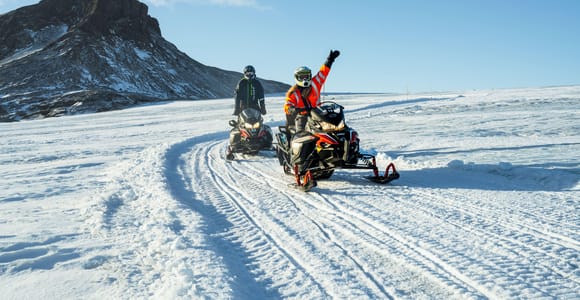 Day trip · 10 hoursFrom Reykjavik: Golden Circle and Snowmobiling Tour★ 4.8 216 reviews✓ Free cancellation✓ Pickup availablefrom €315 per personSee availability →
Common additional stops
Many itineraries add Kerid crater, Bruarfoss and Faxi waterfalls, or the town of Hveragerdi. Skalholt cathedral is another common stop. Nesjavellir and Hellisheiðarvirkjun geothermal power plants also appear on some routes.
Some tours combine the Golden Circle with the Secret Lagoon for a geothermal bathing stop. Plan your stops based on the time you have and your interests.
- Thingvellir is a UNESCO World Heritage Site with geological, historical and cultural significance
- Strokkur erupts every 5 to 10 minutes, making it reliable to observe
- Tours handle transport and timing, while self-drive gives you flexibility to adjust stops
- The route covers three distinct sites in southwest Iceland's uplands
- Weather can change rapidly in Iceland's uplands
- Geysir erupts infrequently and may not perform on the day you visit
- The route is heavily visited, especially in summer
Route map and distances
The loop is about 300 kilometres from Reykjavík and back. Thingvellir is about 40 kilometres northeast of the capital. The route continues to Haukadalur, then to Gullfoss before looping back to Reykjavík.
Check road.is before you go for current road conditions. Weather in Iceland's uplands can change quickly.
Self-drive or guided tour
Self-drive gives you control over timing and stops. You can spend more time at Thingvellir or adjust your itinerary as needed.
Guided tours handle transport and provide commentary. Some include pickups from Reykjavík hotels. Small group tours offer a more personal experience, while bus tours are another option.
Private tours let you adjust the itinerary and pace. Combination tours add activities like snorkelling at Silfra or a visit to the Secret Lagoon.
Compare prices, reviews and free-cancellation options before you book.
Check availability →Planning your visit
Thingvellir, the Haukadalur geothermal area and Gullfoss each merit time to explore properly. Budget time at the Geysir area to watch Strokkur erupt a few times.
Add time for any additional sites you want to visit. Check tour details on booking sites for guided tour schedules. In winter, check sunset times and plan accordingly.
Golden Circle itinerary options
| Itinerary type | Stops | Who it suits |
|---|---|---|
| Classic three-stop | Thingvellir, Geysir, Gullfoss | First-time visitors on a tight schedule |
| Extended circuit | Add Kerid, Bruarfoss, Faxi | Travellers with more time and interest in variety |
| Golden Circle with lagoon | Three main stops plus Secret Lagoon | Those wanting relaxation after sightseeing |
| Activity add-on | Three stops plus Silfra snorkelling or other activities | Adventure-focused visitors |
Match your itinerary to your time and interests. Book activities in advance during peak season.
When to visit
Summer brings long daylight hours, while winter offers shorter days and potential snow or ice. Weather in Iceland's uplands can change rapidly regardless of the season.
Check road.is and safetravel.is before you go, especially in winter. Dress in layers and waterproof clothing at any time of year.
Spring and autumn offer moderate conditions. The route sees more visitors in summer than in other seasons.
Compare prices, reviews and free-cancellation options before you book.
Check availability →Combining the Golden Circle with other routes
Some itineraries pair the Golden Circle with the South Coast. Multi-day tours often include the Golden Circle before heading to other areas of Iceland.
The Reykjanes Peninsula is another option to explore. You can also add a northern lights tour in the evening if you visit during winter.
Day trips from Reykjavík cover the Golden Circle with return to the capital by evening. Plan your schedule based on how many days you have in Iceland.
The Golden Circle offers three distinct geological and historical sites in a single loop of about 300 kilometres. Tours simplify logistics, while self-drive gives you flexibility over timing and additional stops.
More tours to compare
More on GetYourGuide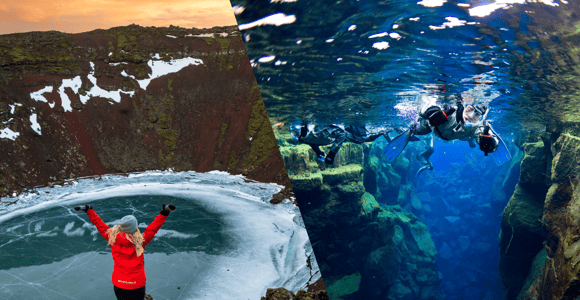 Day trip · 10 hoursReykjavík: Golden Circle and Silfra Snorkeling Combo Tour★ 4.6 169 reviews✓ Free cancellation✓ Pickup availablefrom €260 per personSee availability →
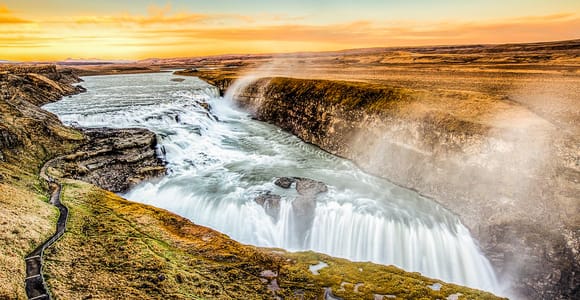 BestsellerDay trip · 7 - 8.5 hoursReykjavik: Golden Circle Full-Day Tour with Kerid Crater★ 4.8 27 830 reviews✓ Free cancellation✓ Pickup availableBooked 77 times yesterdayfrom €79 per personSee availability →
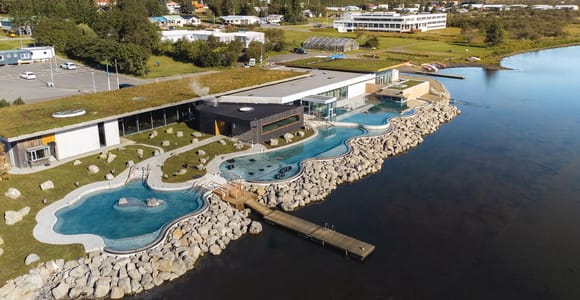 Entry ticket · 2 hoursFontana Geothermal Baths - Classic Entry Ticket★ 4.4 181 reviews✓ Free cancellationAvailable today and tomorrowfrom €41 per personSee availability →
Frequently asked questions
What are the three main stops on the Golden Circle?
The three primary stops are Thingvellir National Park, the Haukadalur geothermal area (Geysir and Strokkur) and Gullfoss waterfall. Other common stops include Kerid crater, Bruarfoss, Faxi and Skalholt cathedral.
How long is the Golden Circle route?
The Golden Circle is a loop of about 300 kilometres from Reykjavík into southwest Iceland's uplands and back. Check tour details for specific itinerary durations.
How often does Strokkur erupt?
Strokkur erupts every 5 to 10 minutes to heights of up to 35 metres. Geysir erupts infrequently but can reach 60 metres when active.
Is Thingvellir National Park free to visit?
Thingvellir National Park was founded in 1930 and became a UNESCO World Heritage Site in 2004. Check current details before your visit.