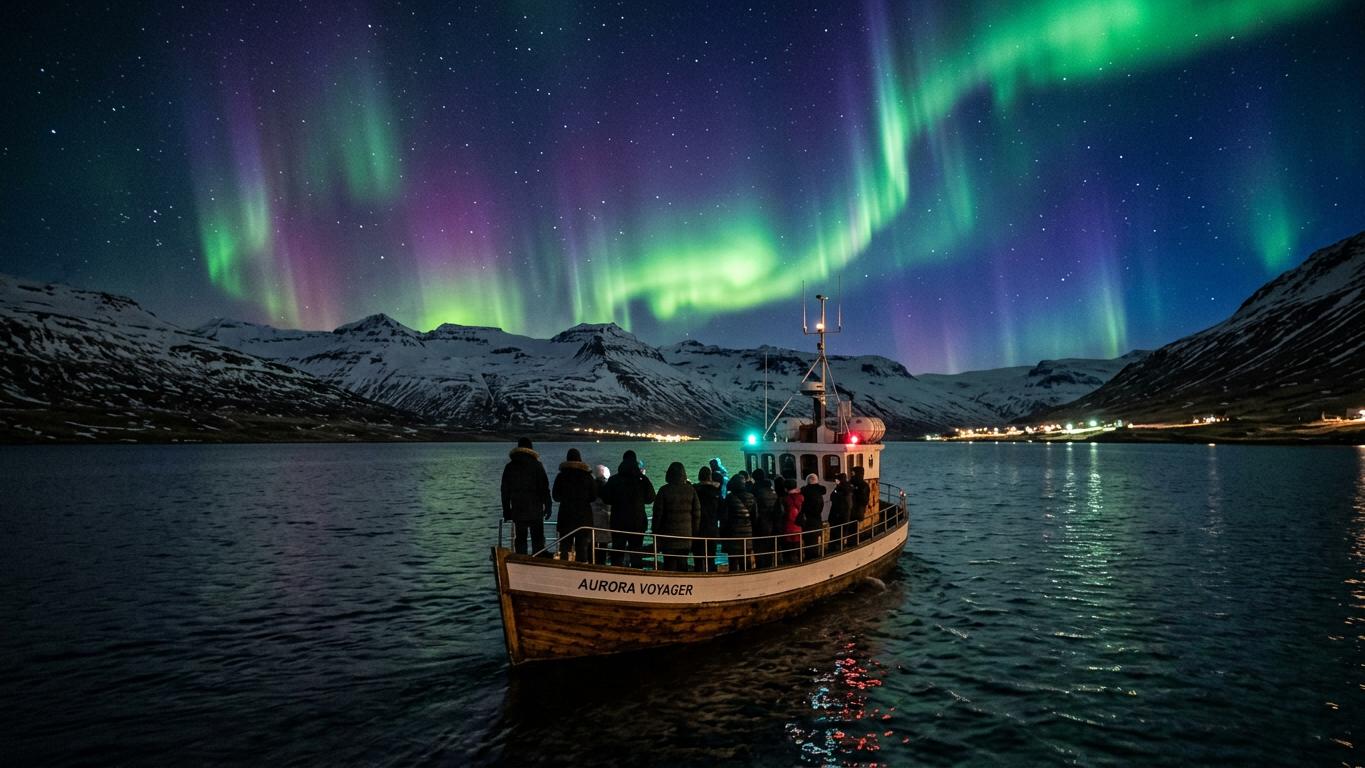
- Tours depart from Reykjavík harbour and sail into Faxaflói bay in southwest Iceland
- The bay has few islands and boats travel away from coastal light sources
- Winter conditions bring gales and wind, typical of Reykjavík's coastal location
- Check safetravel.is before departure for weather and sea conditions
Sailing Routes in Faxaflói Bay
Boats depart from Reykjavík harbour and sail into Faxaflói, the bay between Snæfellsnes and Reykjanes peninsulas. The bay has few islands and those present are close to land, leaving open water for viewing.
From the harbour, you can see Akranes peninsula to the northeast. Snæfellsjökull sits about 120 km distant on clear nights. The small island Viðey lies just north of Reykjavík in Kollafjörður. You can visit it by taking a ferry from Reykjavík harbour.
Captains navigate away from the city's light pollution. The route varies based on cloud cover and sea conditions each night.
Many visitors combine boat tours with whale watching from Reykjavík during daylight hours. For warmth after a cold cruise, Sky Lagoon sits near the harbour with ocean views.
Northern Lights Boat Tours from Reykjavík
More on GetYourGuide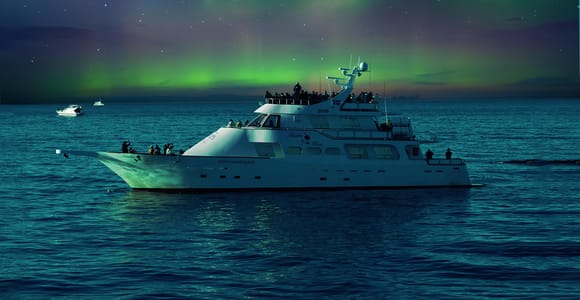 Top ratedWater activity · 2 hoursReykjavik: Northern Lights Yacht Tour★ 4.4 1 381 reviews✓ Free cancellation✓ Pickup availableAvailable today and tomorrowfrom €93 per personSee availability →
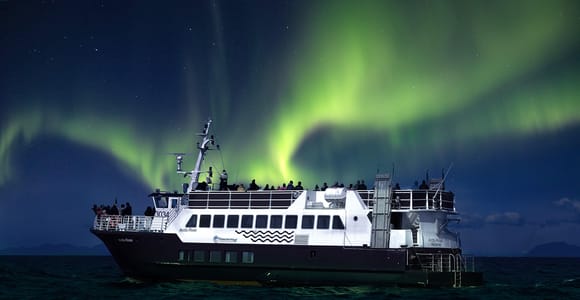 Water activity · 2 hoursFrom Reykjavik: Northern Lights Sightseeing Cruise★ 4.3 461 reviews✓ Free cancellation✓ Pickup availableAvailable today and tomorrowfrom €88 per personSee availability →
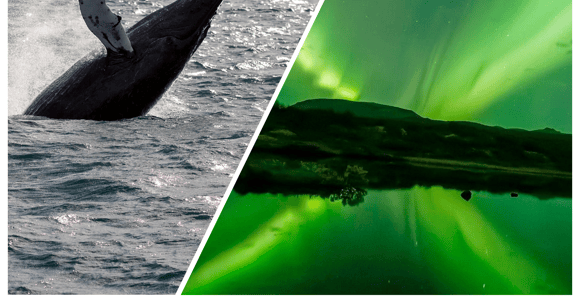 Water activity · 6 hoursReykjavik: Whale Watching & Northern Lights on Two Cruises★ 4.4 138 reviews✓ Free cancellationAvailable tomorrowfrom €174 per personSee availability →
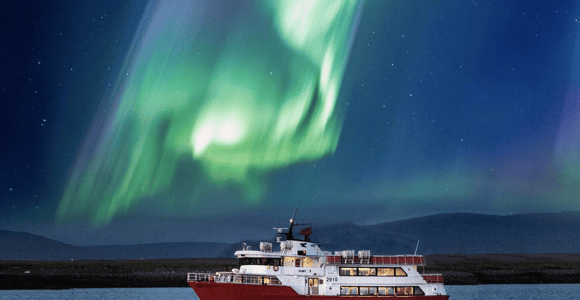 Water activity · 2.5 hoursReykjavík: Northern Lights & City Cruise★ 4.3 112 reviews✓ Free cancellationAvailable today and tomorrowfrom €48 per personSee availability →
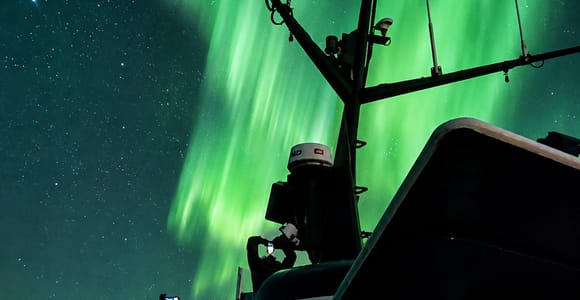 Water activity · 2 hoursFrom Reykjavik: Northern Lights Cruise with Hot Chocolate★ 4.1 90 reviews✓ Free cancellationfrom €82 per personSee availability →
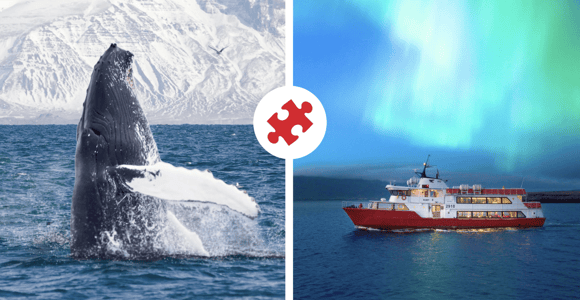 Water activity · 10 hoursReykjavik: Whale Watching and Northern Lights Cruise Combo★ 5.0 1 reviews✓ Free cancellationAvailable tomorrowfrom €186 per personSee availability →
Winter Weather and Sea Conditions
Reykjavík's coastal location makes it prone to wind. Gales are common in winter, precisely when aurora viewing season runs.
Between 2 December and 10 January, daylight drops to less than five hours, creating longer viewing windows. Temperatures very rarely drop below −15 °C, but wind chill on open water feels much colder.
The city receives around 1,300 annual hours of sunshine and averages 147 days of rain exceeding 1 mm per year. Rain and cloud cover block aurora visibility.
Check safetravel.is before departure. ICE-SAR, a volunteer organization with over 4,500 members, provides search and rescue services day and night year-round.
| Condition | Land Tours | Boat Tours |
|---|---|---|
| Light pollution | Higher near roads and towns | Lower on open water |
| Wind exposure | Sheltered spots available | Full exposure at sea |
| Mobility | Limited repositioning | Can chase clear skies |
| Cancellation risk | Weather dependent | Weather and sea state dependent |
- Sea routes reduce light pollution compared to land-based viewing spots
- Faxaflói bay offers wide open sky with minimal obstructions
- Tours operate from central Reykjavík harbour with ferry access
- Boats can reposition during the cruise to chase clearer skies
- Combines aurora viewing with a coastal cruise experience
- Gales are common in winter when aurora season peaks
- Sea conditions can cause seasickness for sensitive passengers
- Temperatures rarely drop below −15 °C but wind chill is significant
- Check tour operator policies on cancellations due to sea conditions
- Northern lights are never guaranteed on any single sailing
What Happens if the Lights Do Not Appear
Northern lights are never guaranteed. Solar activity, cloud cover, and precipitation all affect visibility on any given night.
Each tour operator sets its own rebooking policy. Check the specific policy before booking, as terms vary significantly between providers.
Some operators offer standby rebooking if aurora activity is too weak. Check the tour details before booking.
Travellers staying several nights in Reykjavík often book for their first or second evening. This allows time to rebook if conditions are poor.
Consider pairing boat tours with land-based options like northern lights tours from Reykjavík for multiple viewing chances. Winter itineraries often combine aurora hunting with other Iceland winter tours during daylight hours.
Comparing Boat Tours to Land-Based Options
Boats escape Reykjavík's urban light pollution more effectively than coaches driving to nearby viewing spots. The bay offers wide sky visibility without hills or buildings.
Land tours can stop at sheltered locations when wind picks up. Boats remain exposed to full wind and sea spray throughout the sailing.
Seasickness affects some passengers even in moderate swells. Land tours eliminate this risk entirely.
For visitors who prefer small groups, Iceland small group tours offer land-based aurora viewing with fewer passengers. Private aurora tours provide dedicated guides and flexible routes.
Compare prices, reviews and free-cancellation options before you book.
Check availability →Planning Around Reykjavík's Location and Daylight
Reykjavík sits at 64°08′ N, making it the world's northernmost capital of a sovereign state. This latitude places it within the auroral oval during geomagnetic activity.
From 20 May to 24 July, daylight is essentially permanent. The sun never dips more than 5° below the horizon. Aurora tours do not operate during this period.
Day length drops sharply in winter. The December to January window provides the longest dark hours for viewing.
Summers are cold, with temperatures between 10 and 15 °C and rarely exceeding 20 °C. Winter boat tours require significant layering against wind chill.
The highest recorded temperature in Reykjavík was 25.7 °C on 30 July 2008. The lowest was −24.5 °C on 21 January 1918, though such extremes are rare.
Combining Harbour Tours with Other Reykjavík Activities
Reykjavík harbour serves as the departure point for multiple tour types. Daytime options include whale watching cruises and puffin tours in summer.
The island Viðey can be visited by taking a ferry from Reykjavík harbour. It offers walking trails and the Imagine Peace Tower memorial.
After a cold evening at sea, many visitors head to Iceland's hot springs. Sky Lagoon is close to the harbour, while Blue Lagoon requires a transfer.
For those arriving by cruise ship, Reykjavík shore excursions can be timed around evening aurora sailings. Walking tours of the city fill daylight hours before departure.
Perlan museum, Lava Show, and FlyOver Iceland provide backup plans if conditions prevent sailing.
Compare prices, reviews and free-cancellation options before you book.
Check availability →Practical Considerations for Boat Departures
Dress in multiple layers with waterproof outer shells. Wind chill on open water is significantly harsher than on land at the same temperature.
Bring seasickness medication if you are prone to motion sickness. Even moderate swells feel stronger on smaller vessels.
Check your booking confirmation for the operator's communication method regarding cancellations due to sea conditions.
Check tour operator websites for availability and booking advice during peak winter months.
Check aurora forecast resources before departure. KP index and cloud cover predictions help set realistic expectations.
For visitors with limited mobility, land tours may be easier to board and disembark. Boat boarding often involves gangways and uneven surfaces.
Northern lights boat tours offer darker skies than land-based viewing near Reykjavík. They expose you to full winter wind and sea conditions. Choose a boat tour if reducing light pollution is your priority and you can tolerate cold, potentially rough sailings.
Frequently asked questions
When is it dark enough in Reykjavík for northern lights boat tours?
Daylight drops to less than five hours between 2 December and 10 January, providing the longest viewing windows. From 20 May to 24 July, daylight is essentially permanent and aurora tours do not operate.
How far from Reykjavík harbour do northern lights boats sail?
Boats sail into Faxaflói bay, which stretches between Snæfellsnes and Reykjanes peninsulas. Snæfellsjökull is visible about 120 km away on clear nights. Check tour details for specific routes.
What weather should I expect on a winter boat tour?
Gales are common in winter due to Reykjavík's coastal location. Temperatures very rarely drop below −15 °C, but wind chill on open water feels much colder. Check safetravel.is before departure.
Can boat tours guarantee I will see the northern lights?
No. Northern lights are never guaranteed on any tour. Solar activity, cloud cover, and precipitation all affect visibility each night.