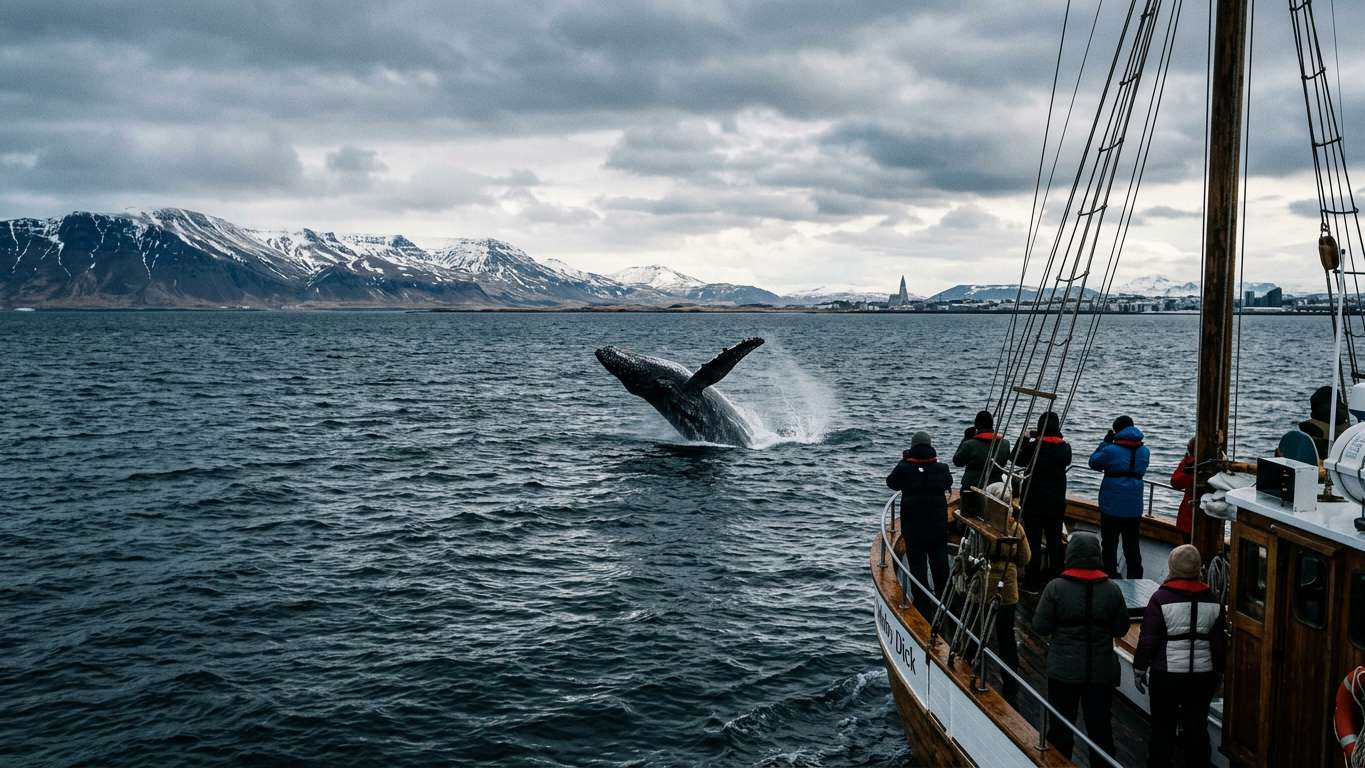
- Tours depart from Reykjavik Old Harbour into Faxafloi bay in southwest Iceland
- You can choose between classic boat tours and faster RIB speedboat experiences
- Check tour schedules as conditions vary throughout the year
- The island Videy sits just north of Reykjavik in Kollafjordur and can be visited by ferry
Where Tours Sail in Faxafloi Bay
Tours depart from Reykjavik Old Harbour and sail into Faxafloi, the bay separating Snaefellsnes and Reykjanes peninsulas. Reykjavik is situated on the southern shore of Faxafloi within the minor fjord Kollafjordur.
From the water you can see the peninsula of Akranes to the northeast. On clear days Snaefellsjokull appears at a distance of about 120 kilometres. Faxafloi Bay has few islands and the ones it does have are close to land.
The small island Videy sits just north of Reykjavik in Kollafjordur. It has been uninhabited since 1943 and you can visit by taking a ferry from Reykjavik harbour. The Reykjavik area coastline is characterized by peninsulas, coves, straits, and islands.
Mount Esja rises to 914 metres as the highest peak in the vicinity of Reykjavik. Many visitors combine whale watching with other day trips from Reykjavik or stop on shore excursions when cruise ships dock.
Whale Watching Tours from Reykjavik
More on GetYourGuide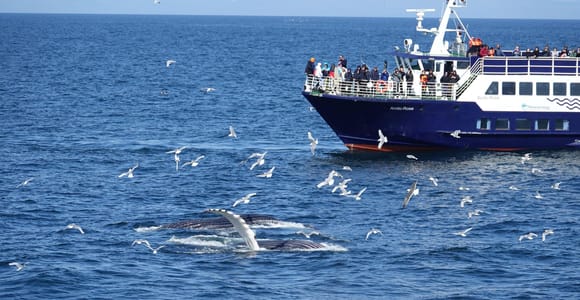 Top ratedBestsellerWater activity · 3 hoursReykjavík: Whale Watching and Marine Life Cruise★ 4.5 11 874 reviews✓ Free cancellation✓ Pickup availableBooked 43 times yesterdayfrom €89 per personSee availability →
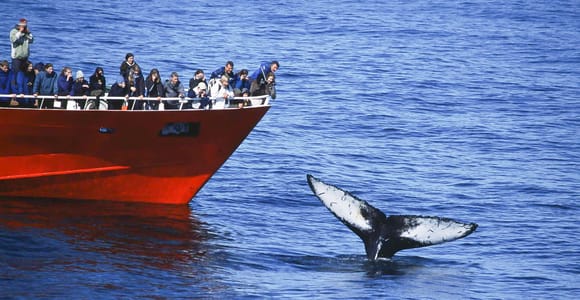 Water activity · 3 hoursReykjavik: the Original 3-Hour Whale Watching Tour★ 4.4 1 325 reviews✓ Free cancellationAvailable tomorrowfrom €92 per personSee availability →
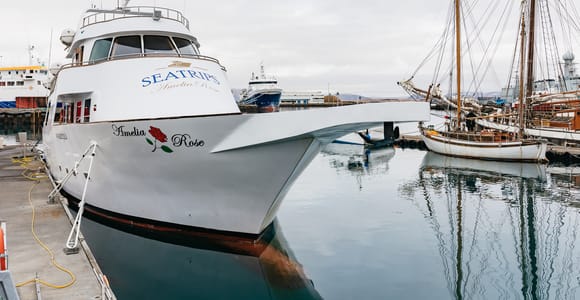 Water activity · 3 hoursReykjavík: Whale Watching Cruise on the Amelia Rose Yacht★ 4.5 3 213 reviews✓ Free cancellation✓ Pickup availableAvailable tomorrowfrom €99 per personSee availability →
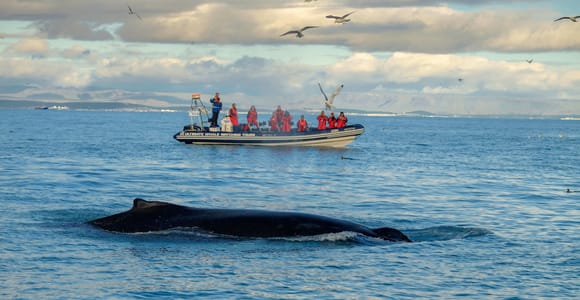 Day trip · 2 hoursReykjavik: Whale and Puffin Watching RIB Boat Tour★ 4.7 494 reviews✓ Free cancellationfrom €170 per personSee availability →
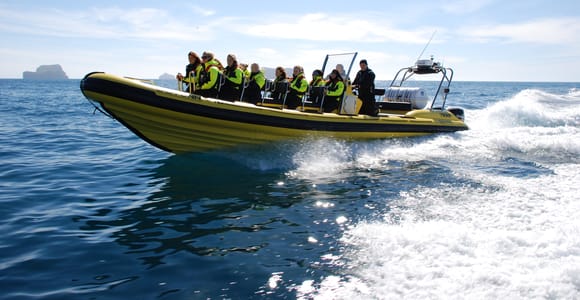 Water activity · 2 hoursReykjavik: Whale Watching by RIB Speedboat★ 4.6 871 reviews✓ Free cancellationfrom €170 per personSee availability →
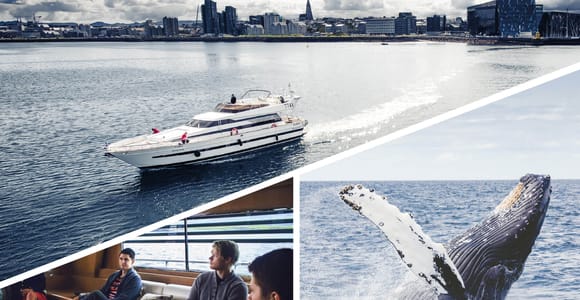 Water activity · 3 hoursReykjavik: Whale Watching and Dolphin Watching Yacht Cruise★ 4.5 797 reviews✓ Free cancellationAvailable today and tomorrowfrom €90 per personSee availability →
Classic Boat vs RIB Speedboat Options
Classic boat tours use larger vessels with enclosed cabin areas and outdoor viewing decks. These boats carry more passengers and provide shelter from wind and spray. Check tour details for onboard facilities.
RIB speedboat tours use rigid inflatable boats that carry smaller groups and move faster across the water. You sit on the outer edges of the boat with no cabin protection. These tours cover more distance in less time but expose you fully to weather and sea spray.
| Feature | Classic Boat | RIB Speedboat |
|---|---|---|
| Group size | Larger groups | Smaller groups |
| Speed | Moderate pace | Faster travel |
| Shelter | Enclosed cabin available | No shelter |
| Comfort | More seating options | Bench seating only |
| Weather exposure | Protected areas | Full exposure |
Check tour details for clothing and equipment provided. Both options sail from the same harbour area and enter the same waters in Faxafloi bay.
Families with young children often choose classic boats for the facilities and shelter. Those seeking a more active experience prefer RIB speedboats. Check age and height requirements before booking RIB tours as restrictions may apply.
- Central departure point from the Old Harbour in the capital city
- Tours sail into Faxafloi bay between Snaefellsnes and Reykjanes peninsulas
- RIB speedboat option available for faster, smaller group experiences
- Evening departures available during summer months when daylight extends past midnight
- Check tour schedules for departure availability
- Weather in Reykjavik changes quickly with 147 days of rain annually
- Winter temperatures rarely drop below -15°C but wind chill affects comfort at sea
- Summer temperatures stay between 10 and 15°C, requiring warm layers even in August
- Daylight drops to under five hours between 2 December and 10 January
Seasonal Daylight and Departure Times
Evening whale watching tours run during summer months when Reykjavik experiences near-permanent daylight. From 20 May to 24 July the sun never gets more than 5° below the horizon. Late departures let you sail in extended twilight conditions.
Day length drops to less than five hours between 2 December and 10 January. Check departure schedules for availability during different seasons and weather conditions.
Reykjavik has a subpolar oceanic climate with temperatures that very rarely drop below -15°C in winter. Summers are cold with temperatures fluctuating between 10 and 15°C, rarely exceeding 20°C. The city receives around 1,300 annual hours of sunshine.
Weather can change rapidly throughout the year. The city averages 147 days of rain annually. Wind chill at sea makes conditions feel colder than land temperatures suggest. Check departure schedules and weather forecasts before your planned date.
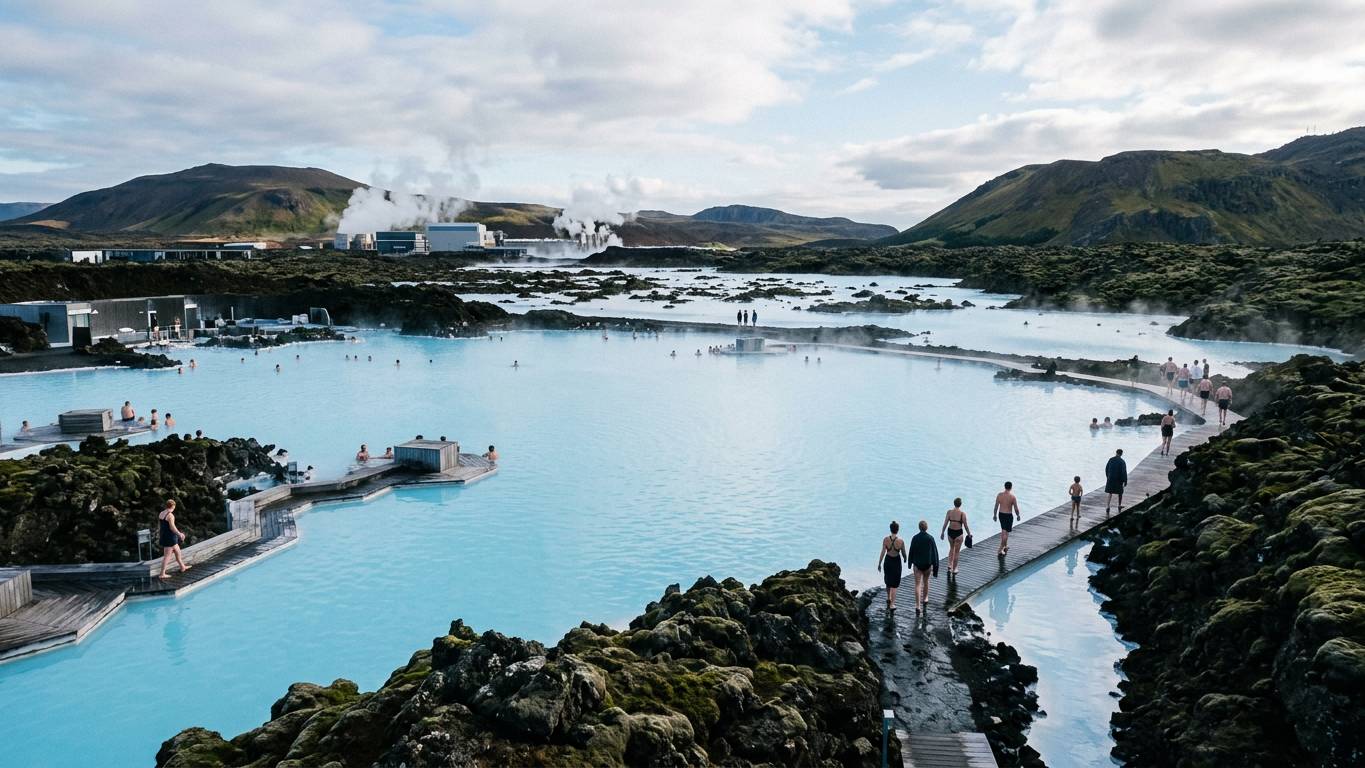
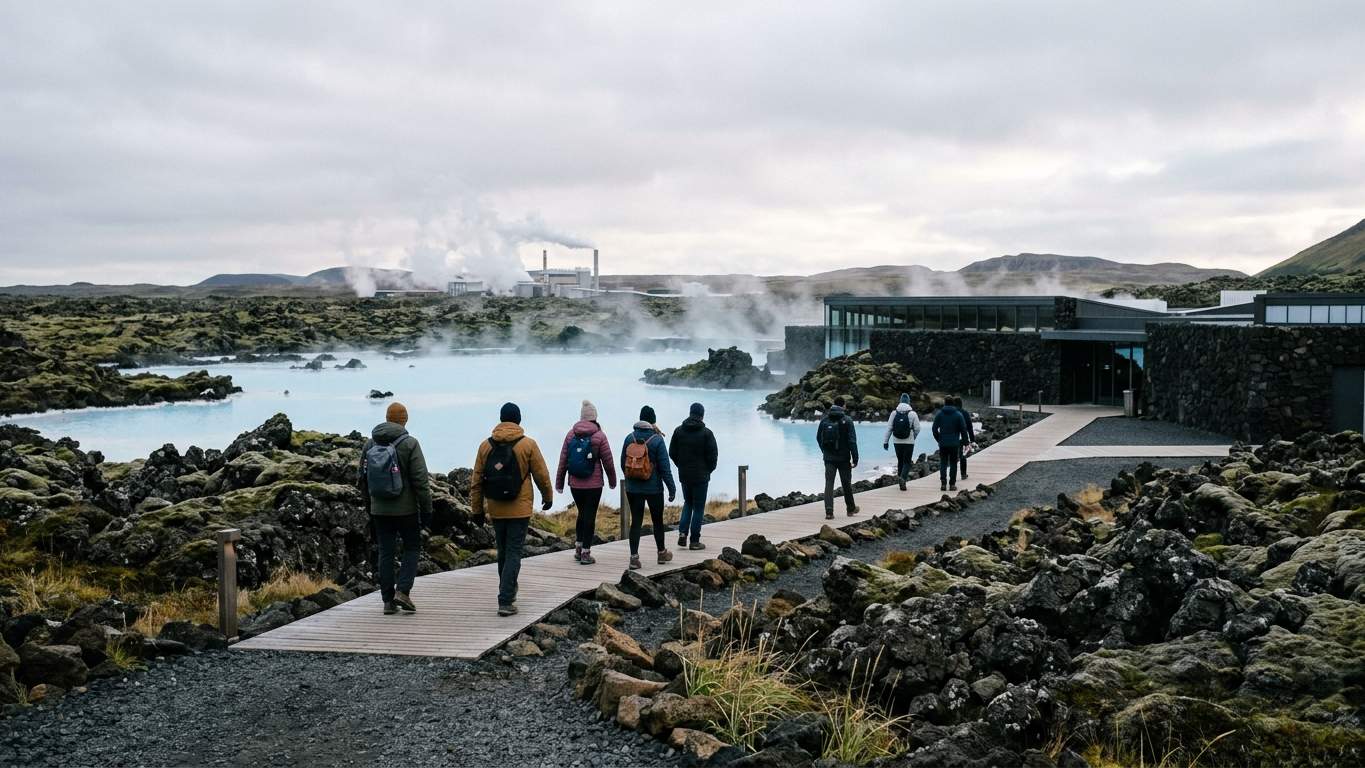
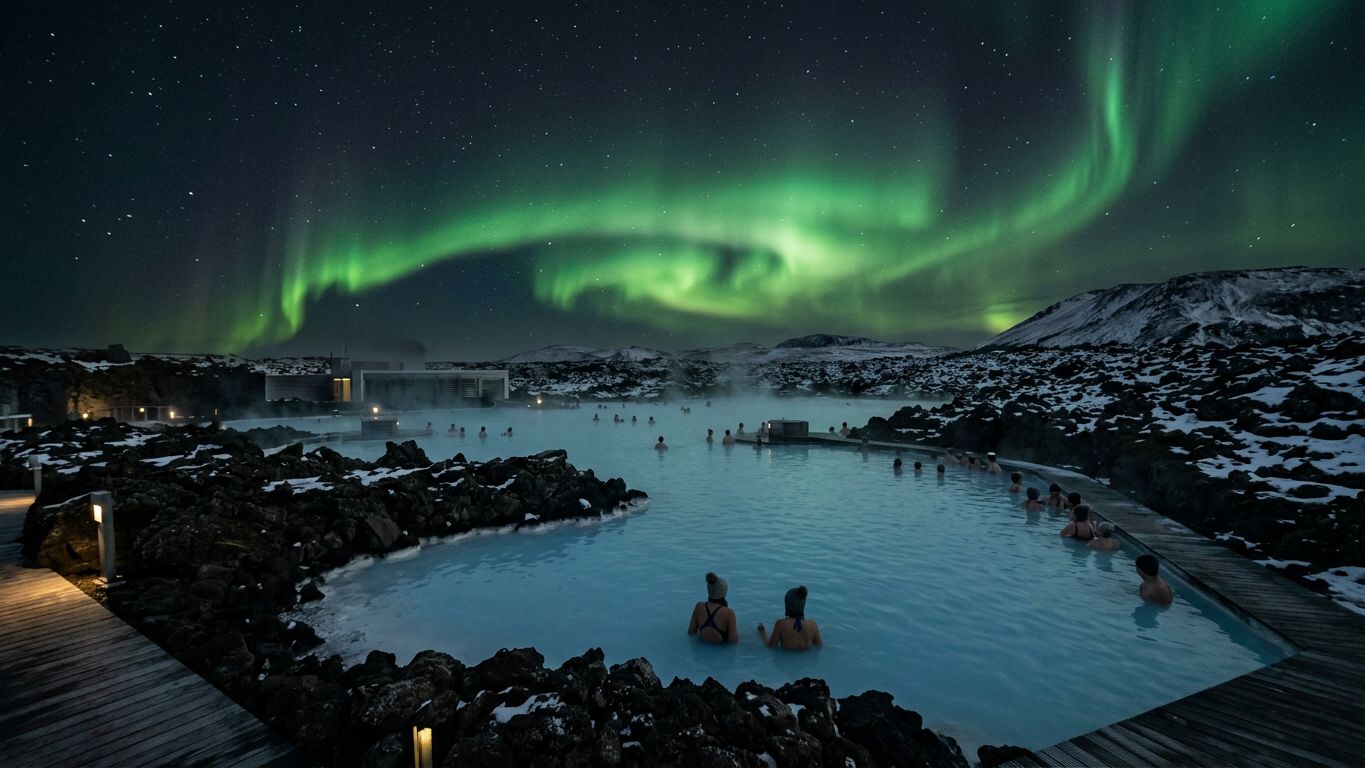
Some visitors plan whale watching alongside Blue Lagoon visits or Golden Circle tours on the same day.
What to Wear and Bring
Dress in multiple layers regardless of season or tour type. Temperatures at sea feel colder than on land due to wind and spray. Start with thermal base layers and add fleece or wool mid-layers.
Bring a waterproof and windproof outer layer even on calm days. Weather in Reykjavik changes quickly and conditions at sea differ from harbour conditions. Wear warm socks and closed waterproof shoes with good grip on wet surfaces.
A warm hat and gloves protect against wind chill throughout the year. Sunglasses help in bright conditions, particularly during summer months when daylight extends for 20 hours or more. Seasickness medication should be taken before departure if you are prone to motion sickness.
Check tour details for clothing and equipment provided. Bringing your own warm clothing remains essential.
Leave large bags at your accommodation as storage space on boats may be limited. Bring only small essentials like phones and cameras in waterproof cases or bags. Many visitors combine harbour tours with Reykjavik walking tours on the same day. Others add visits to Lava Show and FlyOver Iceland nearby.
Compare prices, reviews and free-cancellation options before you book.
Check availability →January to April Season Conditions
Winter whale watching from January through April operates in the coldest and darkest months. The lowest-ever recorded temperature in Reykjavik was -24.5°C, recorded on 21 January 1918. Day length remains under five hours until mid-January.
February and March see gradual increases in daylight but temperatures stay cold. Check tour schedules for departure availability during winter months.
April marks the transition toward spring with longer days. Iceland is warmed by the Gulf Stream despite being just south of the Arctic Circle. Iceland has a temperate climate.
Winter clothing requirements are strict during these months. Multiple warm layers, waterproof outer shells, and thermal accessories are necessary for any departure.
August to December Season Conditions
August marks late summer with temperatures between 10 and 15°C and extended daylight still present. The highest temperature recorded in Reykjavik was 25.7°C, reported on 30 July 2008. September brings shorter days and dropping temperatures as autumn begins.
October and November see rapid decreases in daylight. Rain becomes more frequent across Faxafloi bay.
December brings the darkest days with daylight dropping below five hours by month start. Check tour schedules for departure availability during winter months.
| Month | Daylight Pattern | Typical Conditions |
|---|---|---|
| August | 16-18 hours | Cool summers |
| September | 13-15 hours | Autumn transition |
| October | 10-12 hours | Shorter days |
| November | 6-8 hours | Early winter, frequent rain |
| December | 4-5 hours | Darkest month |
Late-year tours may appeal to visitors combining whale watching with other activities during the same trip. Others include stops at Sky Lagoon or explore Reykjanes Peninsula attractions nearby.
Compare prices, reviews and free-cancellation options before you book.
Check availability →Combining with Other Reykjavik Activities
The Old Harbour area clusters multiple attractions within walking distance. You can visit Perlan museum or join a Reykjavik food tour before or after your departure. Many tours leave time for other activities on the same day.
Whale watching combines easily with Golden Circle itineraries as the harbour sits close to departure points for inland tours. Blue Lagoon transfers from the city pass near Keflavik Airport, which is situated 50 kilometres west-southwest of Reykjavik.
The British built Reykjavik Airport during World War II. It remains in service today, mostly for short-haul flights to domestic destinations and Greenland. This domestic airport sits closer to the harbour than Keflavik, making connections to Akureyri tours or Husavik whale watching convenient.
Visitors staying multiple days often split time between harbour-based activities and longer excursions. South coast tours, Snaefellsnes Peninsula trips, and glacier hikes all depart from Reykjavik. Small group tours and private tours provide flexible scheduling around whale watching bookings.
Whale watching from Reykjavik Old Harbour offers both classic boat comfort and RIB speedboat excitement in Faxafloi bay. Check tour details for schedules and what to expect during different seasons.
Frequently asked questions
When does whale watching season run in Reykjavik?
Check tour schedules for departure availability throughout the year. Daylight drops to less than five hours between 2 December and 10 January, limiting departure windows during the darkest months.
What is the difference between classic and RIB whale watching tours?
Classic boats offer larger vessels with enclosed cabins and shelter from weather. RIB speedboats carry smaller groups, move faster, and provide no cabin protection, exposing you fully to wind and spray.
Are evening whale watching tours available in Reykjavik?
Evening tours run during summer months when Reykjavik has near-permanent daylight. From 20 May to 24 July the sun never gets more than 5° below the horizon. Late departures let you sail in extended twilight.
What should I wear for winter whale watching in Reykjavik?
Wear multiple thermal layers, waterproof and windproof outer shells, warm hat, gloves, and waterproof shoes. Temperatures rarely drop below -15°C in winter but wind chill at sea makes conditions feel much colder than on land.
Can I combine whale watching with other Reykjavik activities?
Tours from Old Harbour leave time for same-day activities including Perlan museum, Lava Show, food tours, and Golden Circle excursions. The harbour sits close to departure points for inland tours and near Blue Lagoon transfer routes.