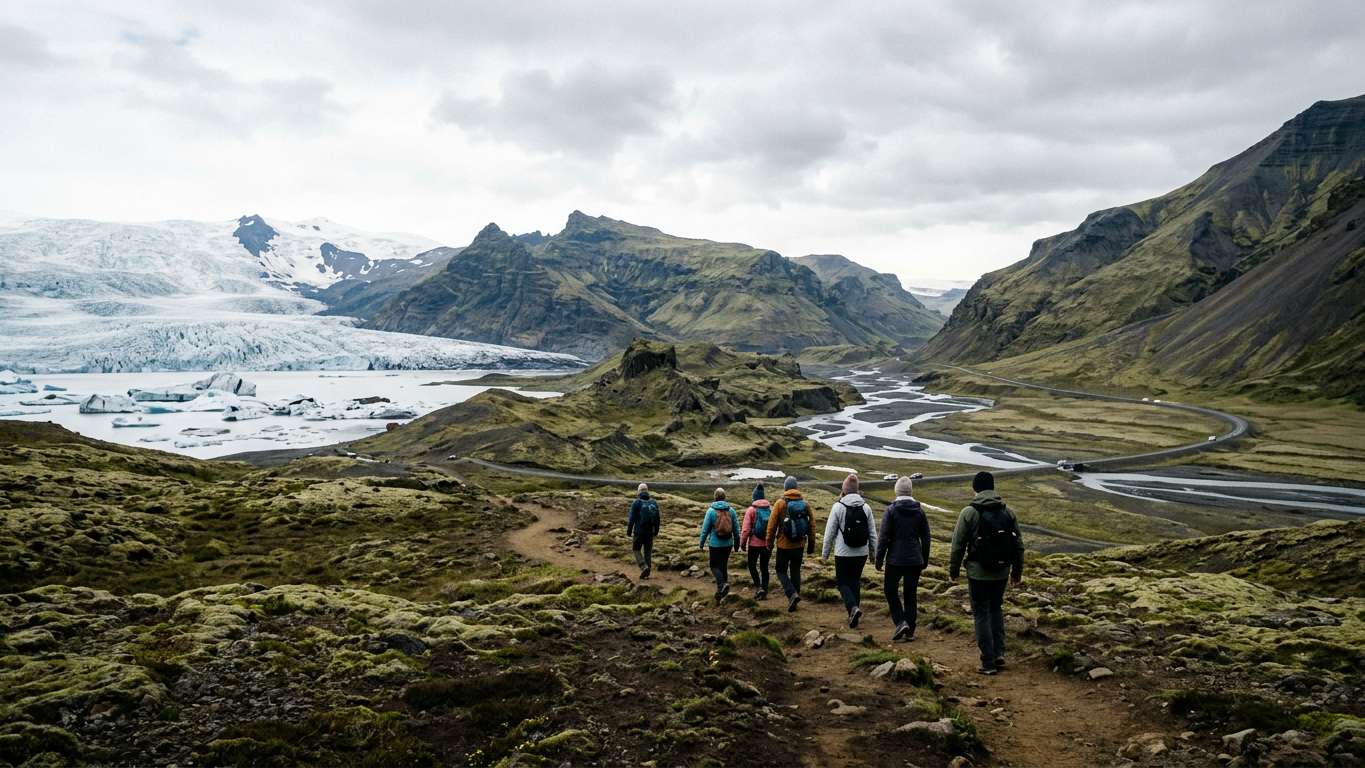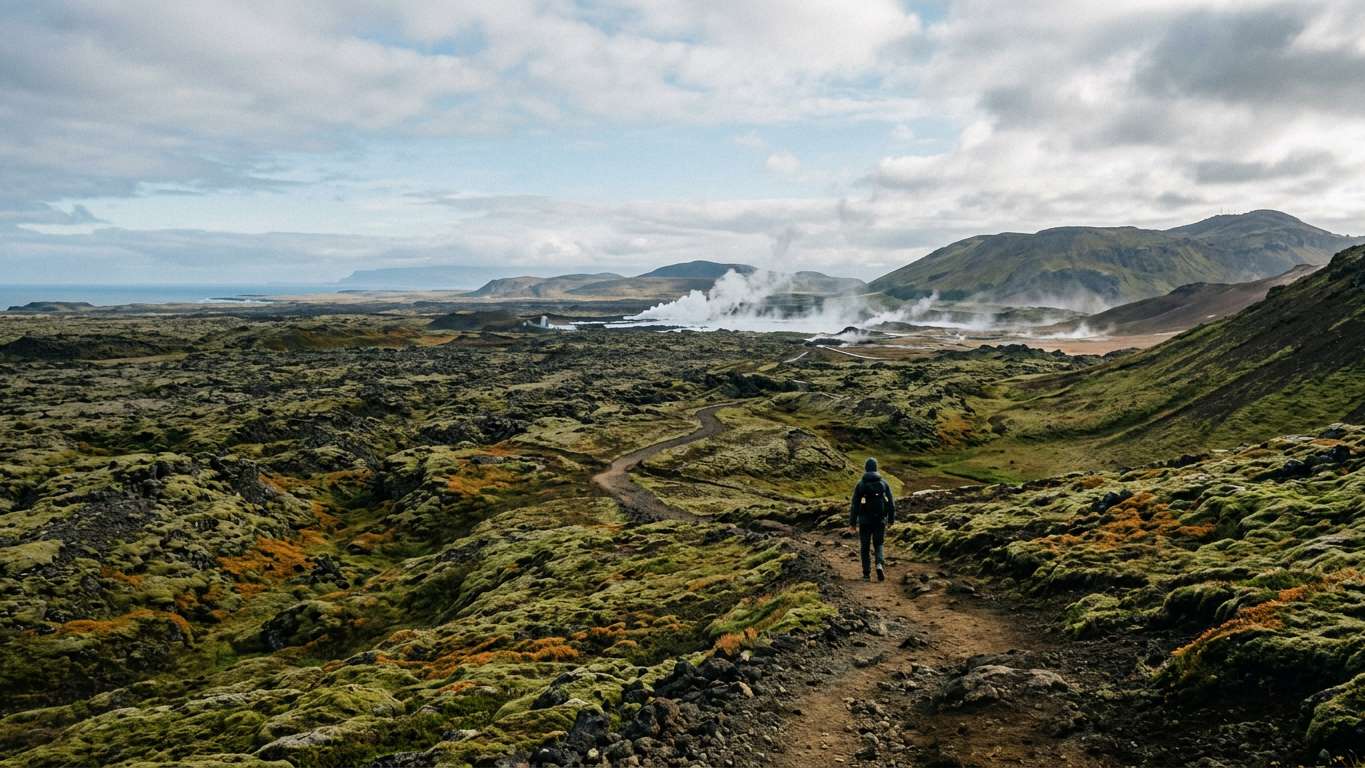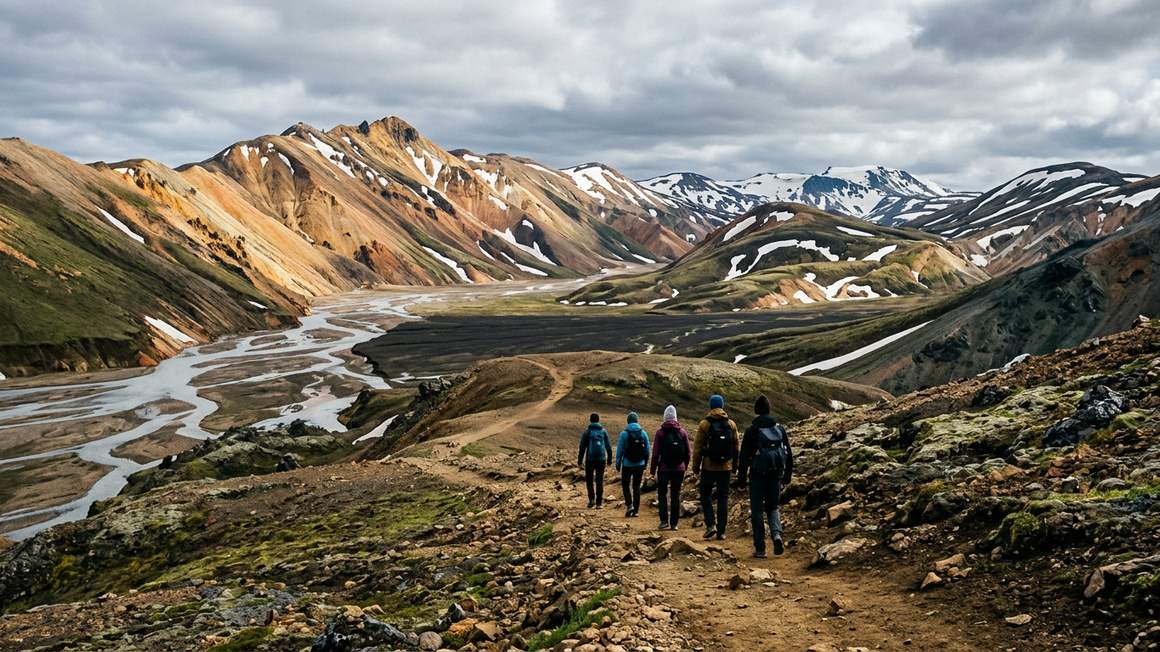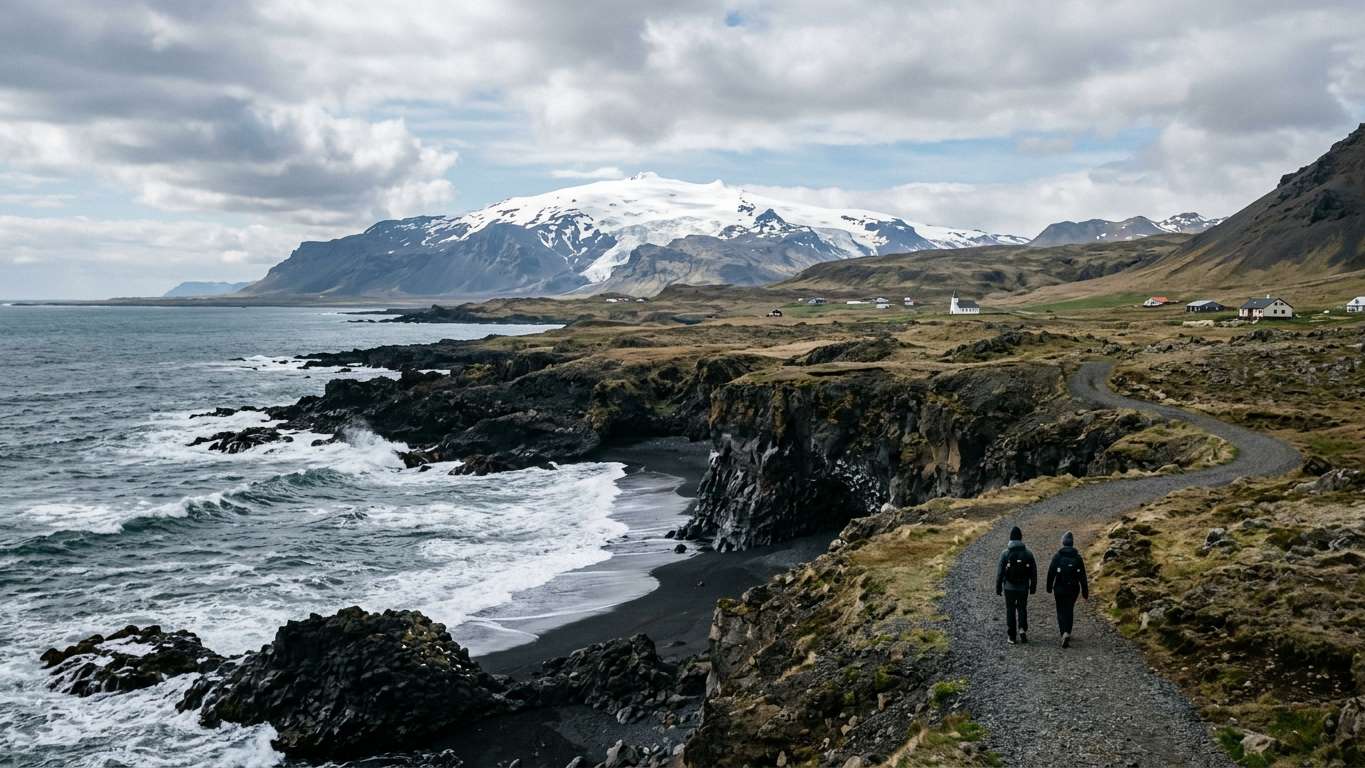
- Snæfellsjökull volcano rises 1,446 metres at the western tip. On clear days it can be seen from Reykjavík, 120 kilometres away.
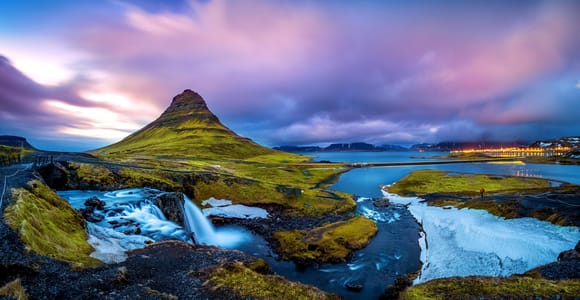
- Kirkjufell is a 463-metre nunatak near Grundarfjörður, shaped by glaciers during the Ice Age
- The peninsula hosts 323 species of flowering plants and ferns, plus puffins on the western coast outside winter
- Snæfellsjökull National Park became a UNESCO biosphere reserve in 2025
Snæfellsjökull Volcano and National Park
Snæfellsjökull is at the western tip of the peninsula and has a height of 1,446 metres. The volcano is the highest mountain on the peninsula and has a glacier at its peak. On clear days the volcano can be seen from Reykjavík, a distance of about 120 kilometres.
The area surrounding Snæfellsjökull has been designated one of the four national parks by the government of Iceland. In 2025 UNESCO designated Snæfellsjökull National Park as a biosphere reserve. The peninsula has a volcanic origin, with the Snæfellsnes volcanic belt down its centre.
Within Snæfellsjökull National Park fox hunting has been banned since 2001. On the peninsula 323 species of flowering plants and ferns have been identified. Check tour details on GetYourGuide for specific stops and viewpoints.
The Golden Circle and south coast tours focus on different volcanic features, while Snæfellsnes covers the western volcanic belt.
Snæfellsnes Peninsula Day Tours
More on GetYourGuide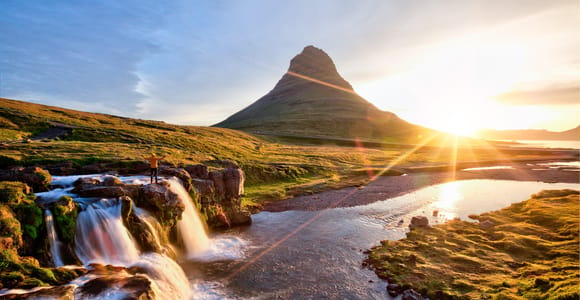 Top ratedDay trip · 11 hoursFrom Reykjavik: Snæfellsnes Full-Day Tour with Homemade Meal★ 4.8 532 reviews✓ Free cancellation✓ Pickup availablefrom €200 per personSee availability →
 Day trip · 11 hoursReykjavik: Small-Group Snæfellsnes Day Trip★ 4.8 270 reviews✓ Free cancellation✓ Pickup availablefrom €139 per personSee availability →
 Day trip · 12 hoursReykjavik: Snaefellsnes Peninsula Day Trip with Guide✓ Free cancellationfrom €196 per personSee availability →
Kirkjufell Mountain Near Grundarfjörður
Kirkjufell is a 463 m high hill on the north coast of Iceland's Snæfellsnes peninsula, near the town of Grundarfjörður. Kirkjufell is a nunatak, a mountain that protruded above the glaciers surrounding it during the Ice Age. Kirkjufell contains volcanic rock but is not itself a volcano.
Climbing Kirkjufell is possible during the summer and fall, generally taking around three hours. The steep sections of the climb become dangerous when wet or in bad weather. Kirkjufell has recorded fatalities due to falls in 1945, 2017, 2018, and 2022.
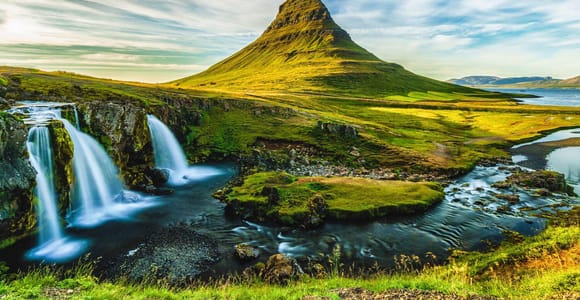
Most day tours stop for photographs at the base rather than climbing. The shape and waterfall foreground make it a recognisable photography location. If you plan to climb independently, check weather forecasts and turn back if conditions deteriorate.
- The volcano and glacier can be seen from Reykjavík on clear days, building anticipation before you arrive
- A volcanic belt runs through the centre, creating diverse lava formations and coastal features
- Puffins are found on the western peninsula outside winter
- Fox hunting has been banned in the national park since 2001, protecting wildlife
- Coastal villages like Arnarstapi and Grundarfjörður offer fishing-village character between natural sites
- Kirkjufell's climb takes around three hours in summer and fall and becomes dangerous when wet or in bad weather
- The mountain has recorded fatalities in 1945, 2017, 2018, and 2022 due to falls
- Puffins are not present in winter, limiting wildlife viewing outside nesting season
- Weather on the peninsula can close roads or reduce visibility, so check road.is and safetravel.is before you go
Coastal Villages and Fishing Communities
Arnarstapi is a local fishing village on the Snæfellsnes peninsula. Grundarfjörður is a small town on the Snæfellsnes peninsula. Both villages provide stopping points between natural sites.
The peninsula's coast features lava fields meeting the sea, creating arches and basalt columns. Check tour details on GetYourGuide for specific village stops and facilities.
Unlike Vík on the south coast, these villages are smaller and less developed for tourism. They serve as working fishing communities first.
Wildlife and Plant Life
Puffins tend to be found on the western peninsula and are not present in winter. On the peninsula 323 species of flowering plants and ferns have been identified. The varied terrain and coastal influence support this diversity.
Within Snæfellsjökull National Park fox hunting has been banned since 2001. Seabirds occupy the cliffs along the coast. Marine life around the peninsula includes seals and occasionally whales offshore.
If puffins are a priority, check tour details on GetYourGuide for specific stops. For dedicated puffin viewing, consider puffin tours that focus on colonies with boat access.
Compare prices, reviews and free-cancellation options before you book.
Check availability →Planning a Day Tour from Reykjavík
The Snæfellsnes peninsula is situated to the west of Borgarfjörður, in western Iceland. Check tour details on GetYourGuide for departure times and return schedules.
Roads can close due to weather. Check road.is and safetravel.is before you go. The peninsula is exposed to Atlantic weather, so dress in layers and bring waterproofs. Comfortable footwear helps for stops along the route.
Check tour availability on GetYourGuide. If you prefer flexibility, self-drive tours let you adjust timing at each stop. For a structured experience with commentary, day trips from Reykjavík include Snæfellsnes among other options.
Comparing Snæfellsnes with Other Day Trips
| Tour | Distance from Reykjavík | Main Features | Wildlife |
|---|---|---|---|
| Snæfellsnes Peninsula | 120 km to volcano | Volcano, glacier, Kirkjufell, fishing villages | Puffins (not winter), arctic fox |
| Golden Circle | Closer to city | Þingvellir, Geysir, Gullfoss | Limited |
| South Coast | Moderate distance | Waterfalls, black sand beach, glacier views | Puffins at Dyrhólaey (seasonal) |
| Reykjanes Peninsula | Nearest to airport | Volcanic craters, lava fields, geothermal areas | Seabirds at cliffs |
Snæfellsnes offers varied terrain in a single peninsula. The Golden Circle concentrates geological and historical sites closer to Reykjavík. The south coast emphasises waterfalls and coastal drama. Reykjanes combines volcanic features with proximity to the airport.
If you have multiple days, consider combining Snæfellsnes with Blue Lagoon on the return route. You could also pair it with whale watching from Reykjavík on separate days.
Compare prices, reviews and free-cancellation options before you book.
Check availability →Small Group and Private Options
Small group tours limit numbers for easier stops and questions. Private tours let you adjust the itinerary and spend more time at preferred sites. Bus tours accommodate larger groups with fixed schedules.
Private options suit families or groups wanting flexibility with Kirkjufell photography or village exploration. Small groups balance structure with personal attention. Choose based on your preference for independence versus social interaction.
Check tour details on GetYourGuide for what each format covers. Check cancellation terms before booking, as weather can affect accessibility.
The Snæfellsnes peninsula packs a volcano, glacier, coastal formations, and fishing villages into one western Iceland route. Snæfellsjökull at 1,446 metres and Kirkjufell at 463 metres provide recognisable landmarks. The 323 plant species and puffins found outside winter add natural variety. Check road.is and safetravel.is for conditions and review cancellation policies on GetYourGuide.
More tours to compare
More on GetYourGuide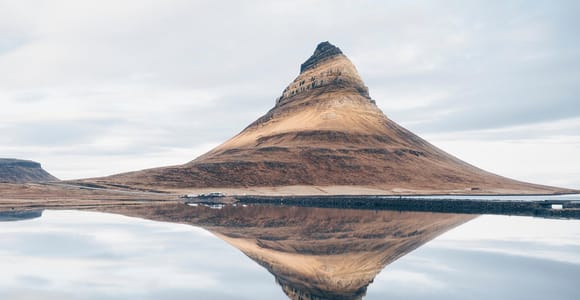 Day trip · 5 hoursFrom Grundarfjordur: Snaefellsnes Peninsula Half-Day Tour★ 4.5 172 reviews✓ Free cancellationfrom €193 per personSee availability →
 Day trip · 12 hoursFrom Reykjavík: Snæfellsnes, Kirkjufell & Saxhóll Crater✓ Free cancellation✓ Pickup availablefrom €120 per personSee availability →
 Day trip · 11 hoursReykjavik: Snaefellsnes & Mt. Kirkjufell Guided Minibus Tour★ 4.8 805 reviews✓ Free cancellation✓ Pickup availablefrom €148 per personSee availability →
Frequently asked questions
Can you see Snæfellsjökull volcano from Reykjavík?
Yes, the volcano can be seen on clear days from Reykjavík, a distance of about 120 kilometres. Weather often limits visibility, so clear days are not guaranteed.
Is it safe to climb Kirkjufell mountain?
Climbing Kirkjufell is possible during the summer and fall, generally taking around three hours. The steep sections become dangerous when wet or in bad weather. Kirkjufell has recorded fatalities due to falls in 1945, 2017, 2018, and 2022.
When can you see puffins on the Snæfellsnes peninsula?
Puffins tend to be found on the western peninsula and are not present in winter. Check tour details on GetYourGuide for specific stops at puffin sites.
What is Snæfellsjökull National Park known for?
The area surrounding Snæfellsjökull has been designated one of the four national parks by the government of Iceland. In 2025 it was designated as a biosphere reserve by UNESCO. The park protects 323 species of plants and ferns and has banned fox hunting since 2001.
How long does a Snæfellsnes day tour take?
Check tour details on GetYourGuide for departure times and duration. The distance and multiple stops affect timing. Check road.is and safetravel.is for conditions before you go.