- Vatnajökull is Iceland's largest ice cap at 7,700 km². Ice averages 380 m thick and reaches 950 m at its deepest point.
- Check safetravel.is for current conditions before booking.
- Tour departure points are located near Jökulsárlón and Skaftafell in the south-east. This requires either a trip from Reykjavík or a stay along the south coast.
Understanding Vatnajökull and Its Ice Caves
Vatnajökull is the largest ice cap in Iceland, covering 7,700 km² in the south-east of the country. The ice averages 380 m thick and reaches a maximum depth of 950 m. Around 30 outlet glaciers flow from the main ice cap.
The glacier sits within Vatnajökull National Park. The park was established on 7 June 2008. It became a World Heritage Site on 5 July 2019.
Several volcanoes sit beneath Vatnajökull. Eruptions from these volcanoes have led to the development of large pockets of water beneath the ice. These pockets may cause a jökulhlaup (glacial lake outburst flood).
Iceland's highest peak, Hvannadalshnjúkur at 2,109.6 m, rises on the southern edge of Vatnajökull near Skaftafell. The ice cap reaches over 2,000 m above sea level at its highest point. The glacier base drops 300 m below sea level in some areas.
Vatnajökull Ice Cave Tours
More on GetYourGuide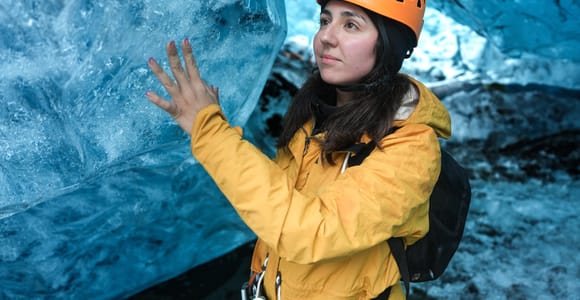 Top ratedGuided tour · 3 hoursJökulsárlón: Vatnajökull Ice Cave Guided Tour★ 4.2 2 189 reviews✓ Free cancellationAvailable tomorrowfrom €147 per personSee availability →
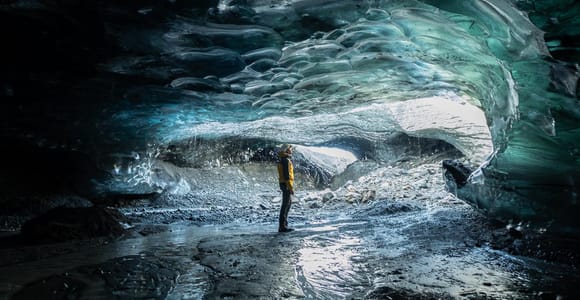 Guided tour · 3 hoursJökulsárlón: The Original Ice Cave Tour on Vatnajökull★ 4.5 1 217 reviews✓ Free cancellationfrom €152 per personSee availability →
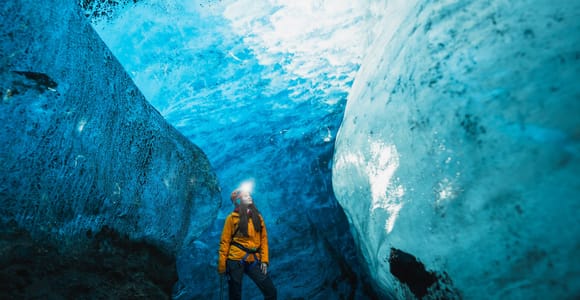 Day trip · 4 hoursSkaftafell: Blue Ice Cave & Glacier Hike on Vatnajökull★ 4.6 943 reviews✓ Free cancellationfrom €140 per personSee availability →
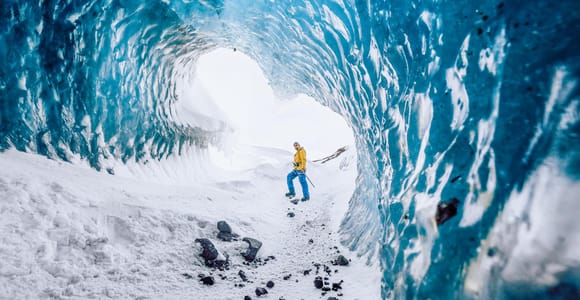 BestsellerDay trip · 4 hoursSkaftafell: Ice Cave Tour and Glacier Hike★ 4.6 2 021 reviews✓ Free cancellationfrom €140 per personSee availability →
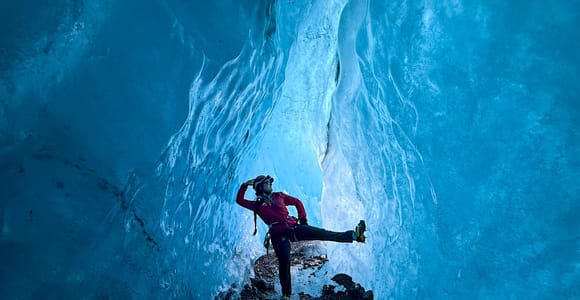 Day trip · 3 - 4.5 hoursSkaftafell: Blue Ice Glacier Hike & Winter Ice Cave Option★ 4.7 600 reviews✓ Free cancellationfrom €92 per personSee availability →
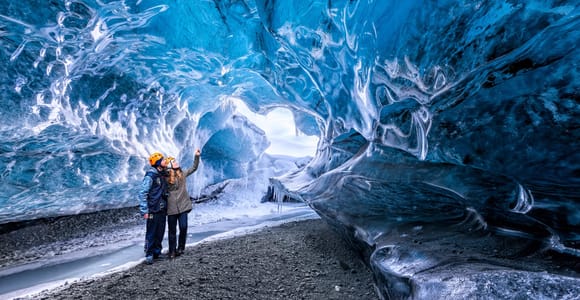 Guided tour · 3 hoursFrom Jökulsárlón: Crystal Blue Ice Cave Super Jeep Tour★ 4.5 629 reviews✓ Free cancellationAvailable tomorrowfrom €150 per personSee availability →
Crystal Ice Cave vs Katla Ice Cave
Check individual tour details to understand what each experience offers. The Katla ice cave is a tunnel in Mýrdalsjökull glacier.
| Feature | Vatnajökull Ice Caves | Katla Ice Cave |
|---|---|---|
| Location | South-east near Jökulsárlón | South coast near Vík |
| Access stability | Changes yearly, weather-dependent | Fixed tunnel location |
Check tour availability and reviews before booking. Neither guarantees specific ice colours on any given day.
Travellers based in Reykjavík and visiting only south coast attractions may find Katla more practical. Those making the longer journey to Jökulsárlón can combine a visit with boat tours and Diamond Beach.
- Access to ice caves beneath the largest and most voluminous ice cap in Europe
- Tours depart from the Vatnajökull National Park area, a UNESCO World Heritage Site inscribed in 2019
- Check tour listings on GetYourGuide for available options
- Jökulsárlón, Diamond Beach and other south coast highlights are in the same region
- The glacier sits within a national park that spans 14% of Iceland and includes visitor facilities at Skaftafell
- Check tour availability before planning your visit
- Travel from Reykjavík requires either an early start or an overnight stay along the south coast
- Cave locations and access change each season depending on ice conditions - check before you go
- Weather in the south-east can close roads and cancel tours with little notice
- Tours require specialist vehicles and guides - you cannot enter ice caves independently
When and Where Ice Cave Tours Operate
Check safetravel.is and road.is before your visit, as conditions change throughout the season.
Tour departure points are located near Jökulsárlón glacier lagoon and Skaftafell in the south-east. The Skaftafell visitor centre is open all year round. Most of the national park's highland area is inaccessible during winter. The first rangers arrive when the relevant highland roads are opened, soon after the middle of June. The last rangers leave at the end of September.
Precipitation south of Vatnajökull ranges from 1,000 mm to 3,000 mm annually. Temperatures range between 10°C and 20°C in summer south of the ice cap. In winter south of the ice cap, the thermometer rarely falls below -10°C. The temperature is often well above freezing point. Temperatures on the southern part of the ice cap can reach -20°C or -30°C in winter.
Check GetYourGuide for multi-day tour options from Reykjavík. These trips include stops at Seljalandsfoss, Reynisfjara, and other landmarks. Alternatively, base yourself near Vík or Höfn and join tours from there.
What to Expect on a Vatnajökull Ice Cave Tour
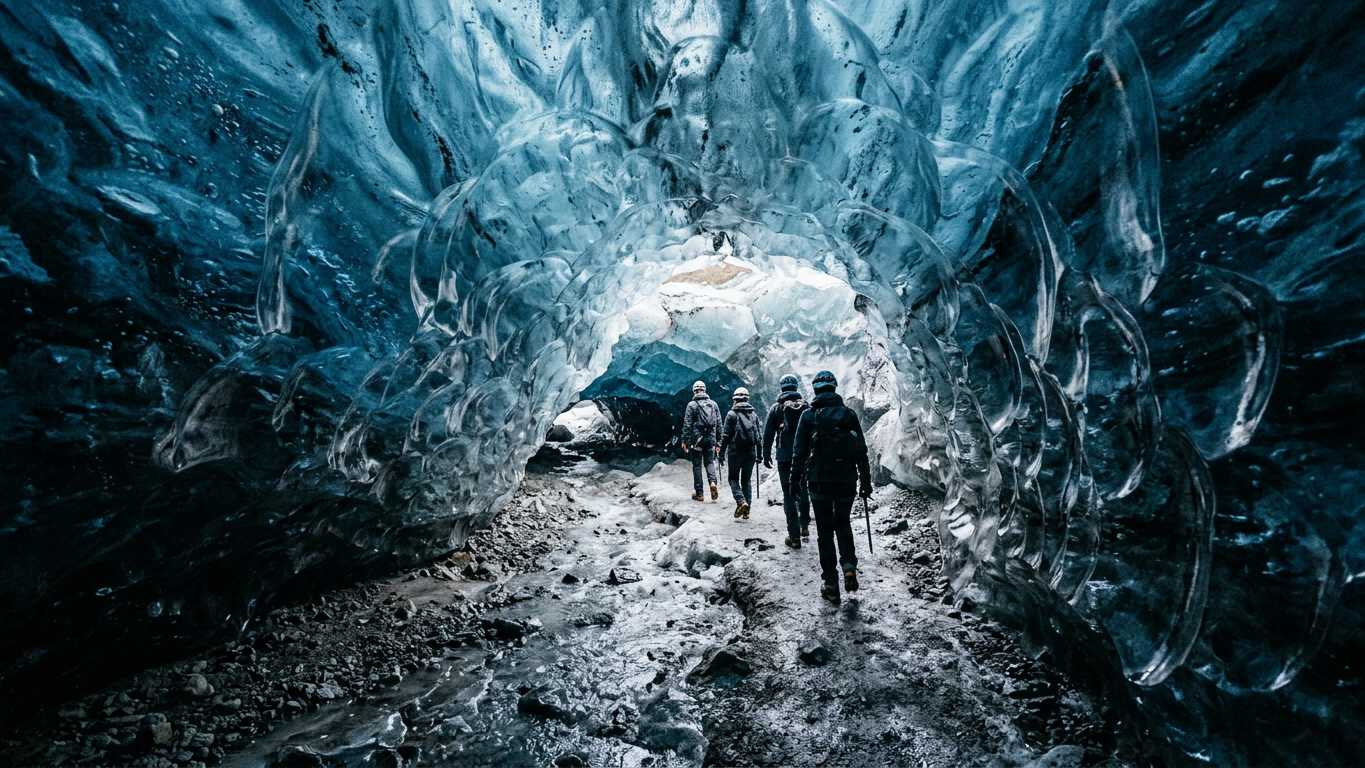
Tours use modified vehicles to reach staging areas near the glacier. From there, you walk to the cave entrance. The walk duration varies depending on which cave is accessible that season.
Inside the cave, guides explain ice formation and glacier dynamics. Cave sizes and shapes differ each year.
Check your specific tour details for equipment requirements. Dress in layers and bring waterproof outerwear. Ice caves are cold, dark, and wet. The glacier surface can be slippery even before entering the cave itself.
Tours do not operate in unsafe conditions. Weather closures happen with limited notice. Road conditions between Reykjavík and the south-east can also prevent travel. Check current forecasts and allow flexible dates if possible.
Some travellers combine ice cave visits with glacier hiking on Vatnajökull's outlet glaciers. Others pair the experience with snowmobile tours on the ice cap itself.
Compare prices, reviews and free-cancellation options before you book.
Check availability →Multi-Day Tours from Reykjavík
Multi-day tours from Reykjavík spread the journey to Vatnajökull across several days. Check what is included before booking.
Check tour listings for itinerary details. Many tours cover the main south coast waterfalls and Reynisfjara black sand beach before reaching the Jökulsárlón area. Some extend east to Fjáðrárgljúfur canyon.
Departures run as coach tours, small group minibus tours, or private guided tours. Group size affects vehicle type and flexibility. Private options allow custom stop durations and photo breaks.
Some operators offer self-drive tour packages with pre-booked slots. You drive independently and meet the tour at the designated time. This requires confidence in winter driving conditions.
Multi-day tours sometimes include northern lights viewing if conditions allow. Northern lights are never guaranteed, so check the operator's policy if no aurora appears.
Combining Ice Caves with Other Vatnajökull Activities
Vatnajökull National Park now covers 14,967 km². The park spans 14% of Iceland and encompasses all of Vatnajökull glacier and extensive surrounding areas.
Skaftafell, in the Southern Territory, offers hiking trails and a staffed visitor centre. A visitor centre and a campsite are located in Skaftafell. Information centres in co-operation with the national park are run in Höfn, Hoffell, Hólmur and Skálafell. Most of the national park's highland area is inaccessible during winter. The first rangers arrive when the relevant highland roads are opened, soon after the middle of June. The last rangers leave at the end of September.
Glacier hikes on Vatnajökull's outlet glaciers, such as those near Skaftafell, run on lower sections. Sólheimajökull lies further west and is often combined with day trips from Reykjavík, though it sits outside Vatnajökull itself.
The park's highland roads open after mid-June. From mid-June to mid-August, rangers guide daily interpretive walks at Skaftafell.
Jökulsárlón glacier lagoon sits at the edge of Vatnajökull. Check boat tour availability when planning your visit.
Compare prices, reviews and free-cancellation options before you book.
Check availability →Planning Your Vatnajökull Ice Cave Visit
Check tour availability on GetYourGuide. Check cancellation policies and rebooking options in case weather forces a closure.
If travelling from Reykjavík, decide whether to join a tour or drive independently. Independent travel requires winter driving experience and awareness of road closures. The Ring Road is usually passable, but storms can close sections temporarily.
Check safetravel.is and road.is the day before travel. Road conditions change quickly. Allow extra travel time and carry emergency supplies if driving.
Combine your visit with other south coast highlights to justify the journey. Jökulsárlón, Diamond Beach, Skaftafell, and Reynisfjara all lie along the route. Skógafoss and Seljalandsfoss add minimal detour time.
Consider your base location. Staying near Vík or Kirkjubæjarklaustur reduces driving on your tour day. Höfn sits closer to Jökulsárlón but is further from Reykjavík. Reykjavík-based bus tours handle logistics but lock you into fixed schedules.
Pack layers, waterproof clothing, sturdy boots, and gloves. Bring a headlamp or torch. Cameras perform poorly in cold, wet environments, so protect your equipment.
Vatnajökull tours visit ice caves beneath 7,700 km² of glacial ice in the south-east. They require a long journey or tour from Reykjavík. Check tour details on GetYourGuide before booking.
Frequently asked questions
Where is the blue ice cave in Iceland?
Ice caves form beneath Vatnajökull glacier in south-east Iceland. Tour departure points are near Jökulsárlón glacier lagoon and Skaftafell. Vatnajökull covers 7,700 km² and is the largest ice cap in the country.
What is the difference between Katla ice cave and crystal ice cave?
Check individual tour details to understand what each experience offers. Vatnajökull is in the south-east near Jökulsárlón. Katla is a tunnel in Mýrdalsjökull glacier on the south coast. Cave locations beneath Vatnajökull change each season.
Can you visit Vatnajökull ice caves in summer?
Check safetravel.is for current conditions before booking any tour. Vatnajökull National Park offers activities including glacier hikes. From mid-June to mid-August, rangers guide daily interpretive walks at Skaftafell.
How thick is the ice in Vatnajökull glacier?
Vatnajökull ice averages 380 m thick. The maximum thickness reaches 950 m. The ice cap rises over 2,000 m above sea level at its highest point. The glacier base sits 300 m below sea level in some locations.