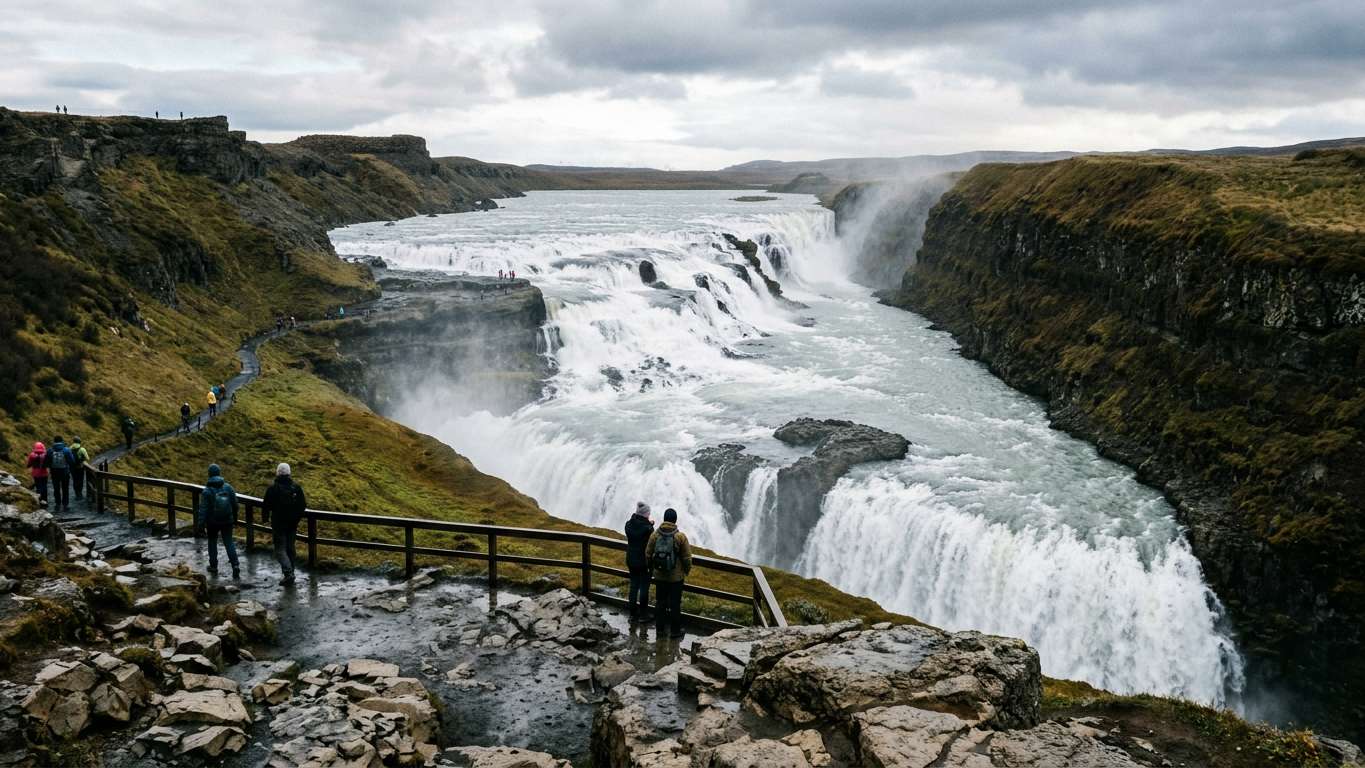
- The waterfall flows down a three-step staircase before plunging in two stages into a 32-metre-deep crevice
- Summer flow averages 141 cubic metres per second, dropping to 80 in winter
- Gullfoss is included in Golden Circle tours from Reykjavík alongside Þingvellir and Geysir
- The site became a permanent conservation area in 1979
Understanding the Two-Stage Drop
The Hvítá river turns sharply west about a kilometre above Gullfoss. The water then flows down a curved three-step staircase before plunging in two distinct stages.
The first stage drops 11 metres and the second falls 21 metres. Together they send water into a crevice 32 metres deep, 20 metres wide, and 2.5 kilometres long.
The crevice runs perpendicular to the river flow. This creates the unusual effect of water disappearing into the earth rather than flowing away downstream.
| Feature | Measurement |
|---|---|
| First stage drop | 11 metres |
| Second stage drop | 21 metres |
| Crevice depth | 32 metres |
| Crevice width | 20 metres |
| Crevice length | 2.5 kilometres |
Gullfoss Waterfall Tours & Golden Circle Packages
More on GetYourGuide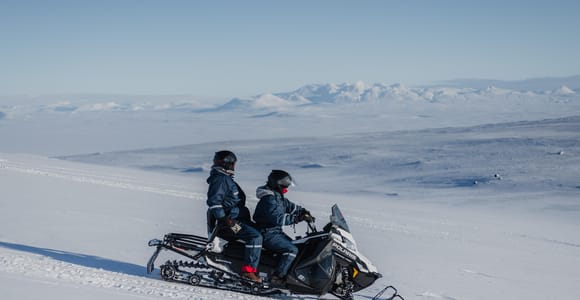 Top ratedDay trip · 4 hoursFrom Gullfoss: Langjökull Glacier Snowmobile Tour★ 4.7 336 reviews✓ Free cancellationAvailable today and tomorrowfrom €240 per personSee availability →
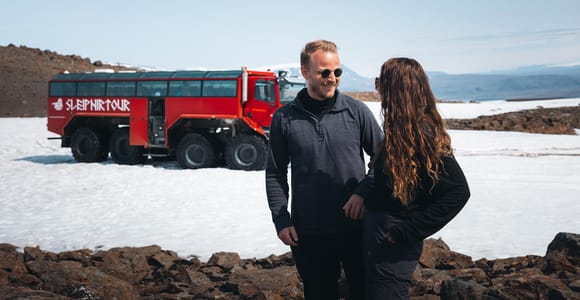 Guided tour · 3.5 hoursGullfoss: Langjökull Glacier Tour by Sleipnir Monster Truck★ 4.8 174 reviews✓ Free cancellationfrom €137 per personSee availability →
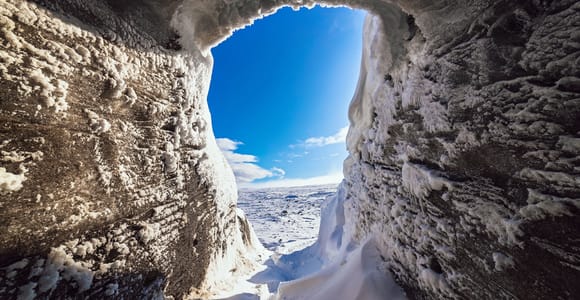 Day trip · 4 hoursFrom Gullfoss: Langjökull Ice Cave and Snowmobile Tour★ 4.2 142 reviews✓ Free cancellationfrom €258 per personSee availability →
Summer and Winter Flow Rates
Flow at Gullfoss changes between seasons. Summer averages 141 cubic metres per second while winter drops to 80 cubic metres per second.
The highest recorded flood reached 2,000 cubic metres per second. This demonstrates the raw power the Hvítá river can unleash during extreme conditions.
Check safetravel.is for current conditions before visiting.
- Two viewing angles show different perspectives of the 32-metre drop
- Golden Circle tours combine Gullfoss with Geysir and Þingvellir
- The crevice extends 2.5 kilometres perpendicular to the river flow
- Average summer flow of 141 cubic metres per second creates powerful spray
- Check safetravel.is for current conditions before you go
- Mist from the waterfall can soak clothing in windy conditions
- The site draws crowds as part of popular Golden Circle tours
Gullfoss on the Golden Circle Route
Gullfoss forms part of the Golden Circle alongside Thingvellir National Park and Geysir Iceland. The route also includes the other geysers of Haukadalur. The Golden Circle is a popular day excursion for tourists in Iceland.
The waterfall is located in the canyon of the Hvítá river in southwest Iceland. It lies between the municipalities of Bláskógabyggð and Hrunamannahreppur.
Gullfoss is included in Golden Circle tour options and day trips from Reykjavik.
Snowmobile and Glacier Extensions
Some tours combine Gullfoss with Iceland snowmobile tours on nearby Langjokull glacier. The glacier also hosts Into the Glacier Iceland, an artificial ice tunnel carved into the ice cap.
Check tour details on GetYourGuide for available packages and booking information.
Compare prices, reviews and free-cancellation options before you book.
Check availability →Conservation Status Since 1979
Gullfoss became a permanent conservation site in 1979. This protects the waterfall and surrounding canyon from development or alteration.
The protection ensures the Hvítá river continues to flow freely through the canyon. The site remains accessible to visitors while preserving the natural landscape around the falls.
Comparing Golden Circle Waterfalls
| Waterfall | Total Drop | Stages | Flow Type |
|---|---|---|---|
| Gullfoss | 32 metres | Two (11m + 21m) | Into crevice |
| Seljalandsfoss | - | Single | Over cliff |
| Skogafoss | - | Single | Wide curtain |
Gullfoss differs from south coast tours Iceland waterfalls through its two-stage drop into a perpendicular crevice. Seljalandsfoss and Skogafoss fall straight down cliff faces without the curved staircase approach.
Compare prices, reviews and free-cancellation options before you book.
Check availability →Planning Your Visit
Gullfoss is included in Golden Circle tours from Reykjavík. The Golden Circle is a popular day excursion for tourists in Iceland.
Dress in waterproof layers. Spray from the waterfall can reach viewing areas in windy conditions.
Iceland small group tours and Iceland bus tours both cover the Golden Circle with Gullfoss included. Check safetravel.is and road.is for current conditions before departure.
Gullfoss delivers a unique two-stage drop into a perpendicular crevice that sets it apart from single-fall waterfalls. The Golden Circle route includes Gullfoss alongside Þingvellir and Geysir.
More tours to compare
More on GetYourGuide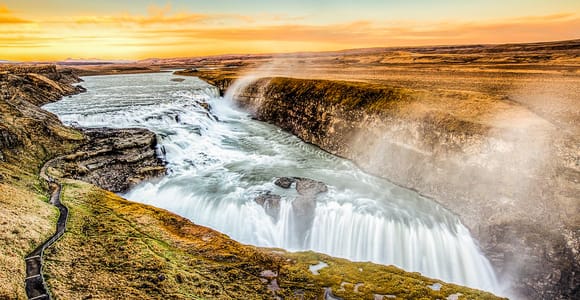 BestsellerDay trip · 7 - 8.5 hoursReykjavik: Golden Circle Full-Day Tour with Kerid Crater★ 4.8 27 830 reviews✓ Free cancellation✓ Pickup availableAvailable tomorrowfrom €79 per personSee availability →
 BestsellerDay trip · 10 hoursFrom Reykjavik: Golden Circle, Kerid, & Secret Lagoon Tour★ 4.8 6 554 reviews✓ Free cancellation✓ Pickup availablefrom €115 per personSee availability →
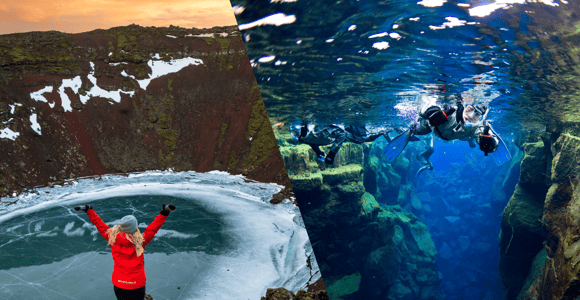 Day trip · 10 hoursReykjavík: Golden Circle and Silfra Snorkeling Combo Tour★ 4.6 169 reviews✓ Free cancellation✓ Pickup availablefrom €260 per personSee availability →
Frequently asked questions
How deep does Gullfoss drop?
The waterfall drops in two stages of 11 metres and 21 metres into a crevice 32 metres deep. The crevice extends 2.5 kilometres perpendicular to the river flow.
What is the water flow at Gullfoss?
Summer flow averages 141 cubic metres per second. Winter flow drops to 80 cubic metres per second. The highest recorded flood reached 2,000 cubic metres per second.
Is Gullfoss part of the Golden Circle?
Yes, Gullfoss forms part of the Golden Circle together with Þingvellir, Geysir, and the other geysers of Haukadalur. The Golden Circle is a popular day excursion for tourists in Iceland.
Can you visit Gullfoss in winter?
Winter flow rates average 80 cubic metres per second. Check safetravel.is and road.is for current conditions before travelling.