- Fagradalsfjall erupted in 2021, 2022 and 2023 after 6,000 years of dormancy, creating accessible hiking terrain on the Reykjanes Peninsula
- Eruption site access changes frequently due to volcanic gases and new activity. Always check safetravel.is before you go.
- Tours range from helicopter flights to guided hikes and lava tunnel exploration
Fagradalsfjall Eruption Site Tours
Fagradalsfjall erupted three times between 2021 and 2023 after 6,000 years of dormancy. The 2021 eruption started at approximately 20:45 local time on 19 March 2021. It continued until 18 September 2021. By 16 September 2021, after 181 days of eruption, it became the longest eruption of the 21st century in Iceland. The highest lava fountain was measured at 460 metres.
The volcanic system covers an area 5 kilometres wide and 16 kilometres long. The highest summit in the area is Langhóll at 385 metres. Lava had accumulated 100 metres deep around the volcano by around three months after the eruption started.
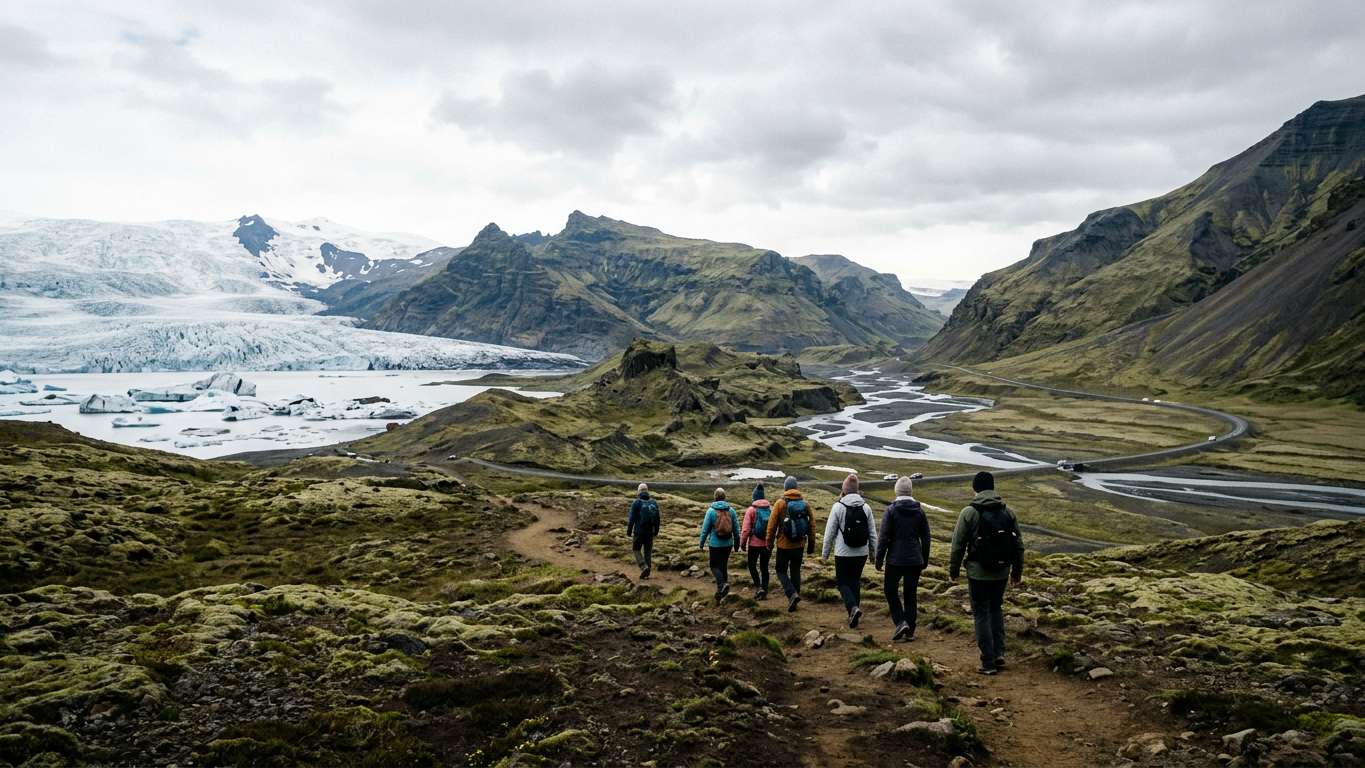
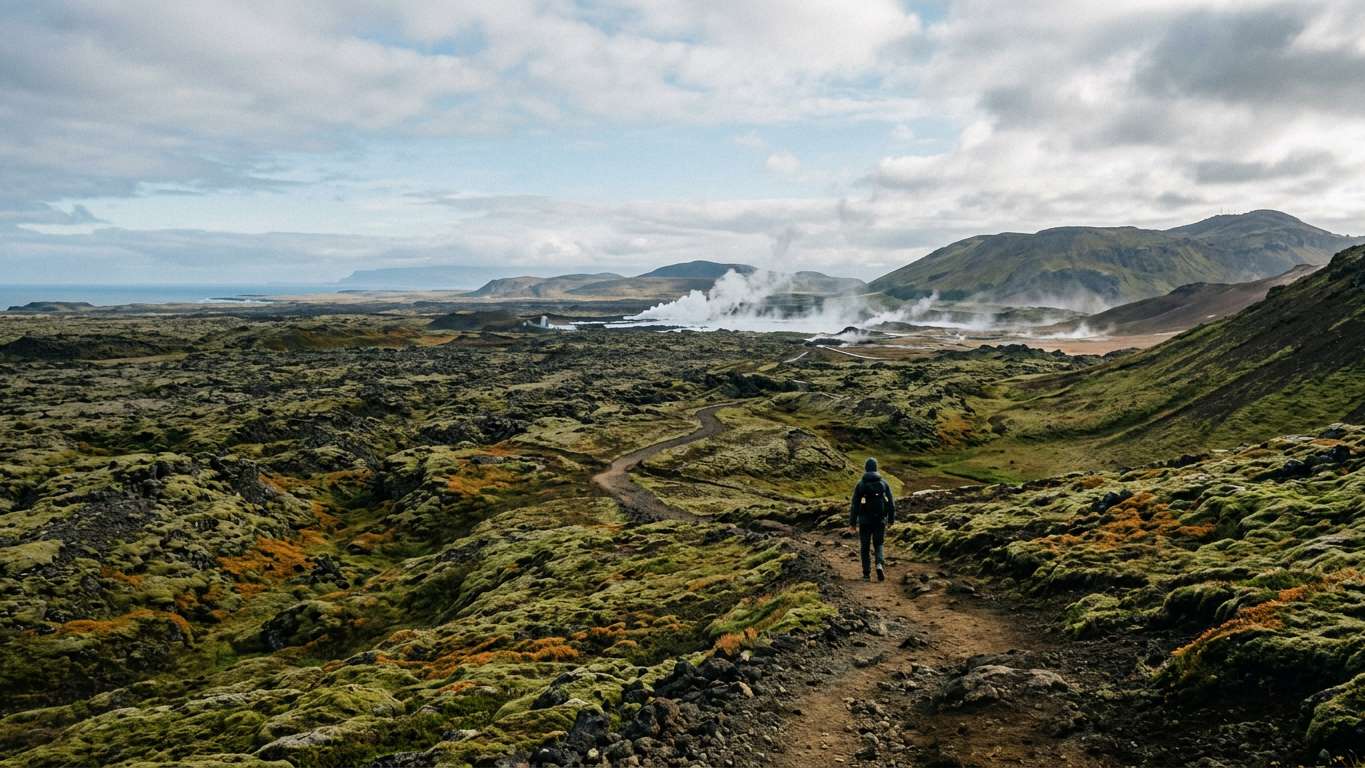
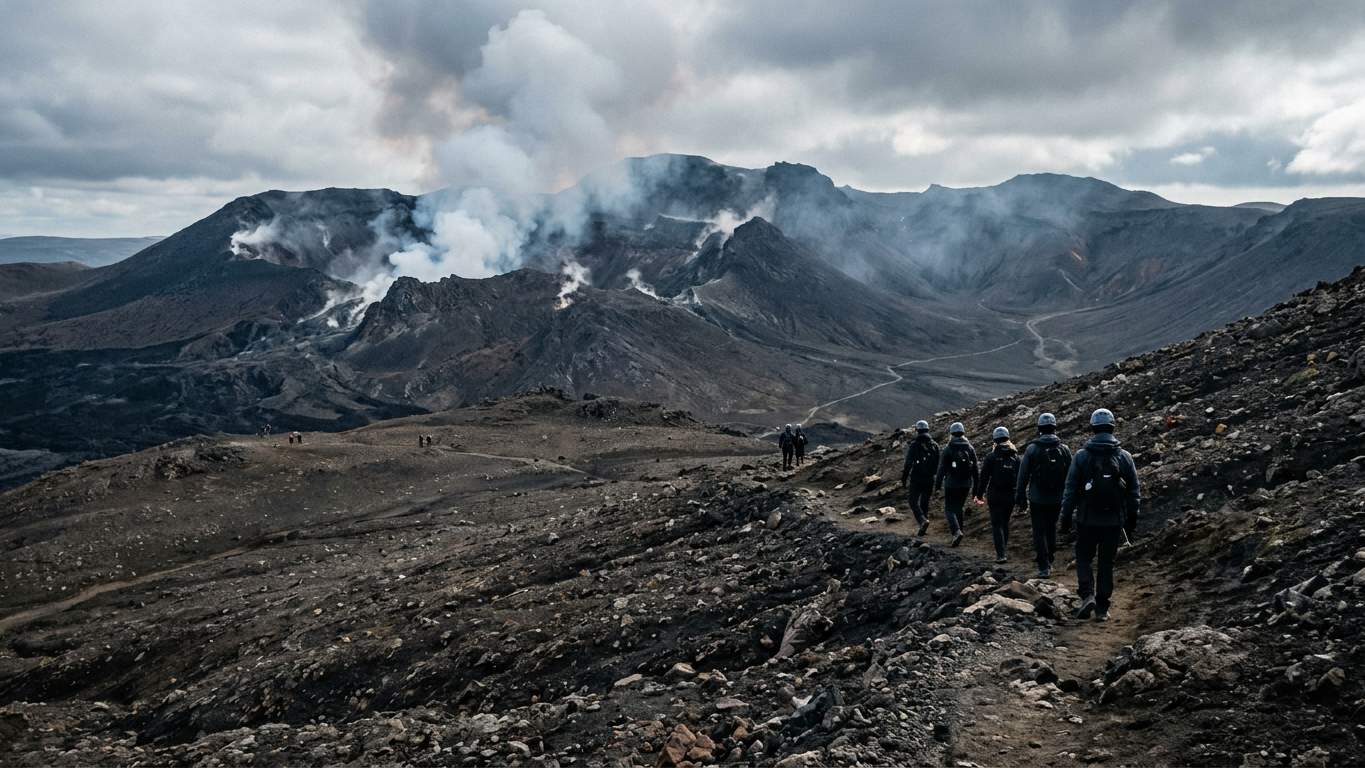
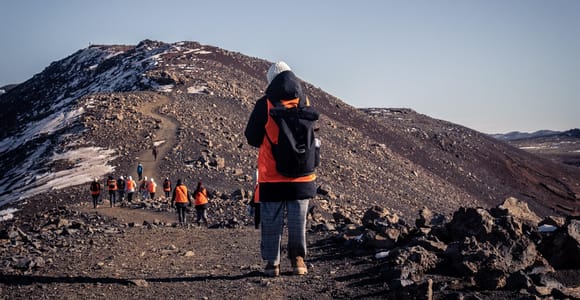
Guided hikes lead to viewpoints overlooking the cooled lava fields. The terrain is rough basalt with uneven surfaces and sharp edges. Trails cross solidified lava flows where you can see crust formations, gas vents and colour variations in the rock.
A second eruption began on 3 August 2022 and ceased on 21 August 2022. Over 1,830 people visited the volcano on the first day of the 2022 eruption. A third eruption appeared near Litli-Hrútur on 10 July 2023 and ended on 5 August 2023.
Check current access conditions on safetravel.is before booking. High levels of volcanic gases such as carbon dioxide and carbon monoxide made parts of the area inaccessible. National Geographic experts predicted that the March 2021 eruption may mark the start of decades of volcanic activity.
Volcano Tours From Reykjavík
More on GetYourGuide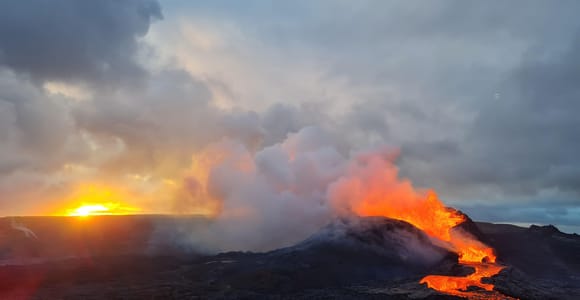 Top ratedDay trip · 4 - 6 hoursFrom Reykjavík: Fagradalsfjall Volcano Hike with Geologist★ 4.8 882 reviews✓ Free cancellationfrom €139 per personSee availability →
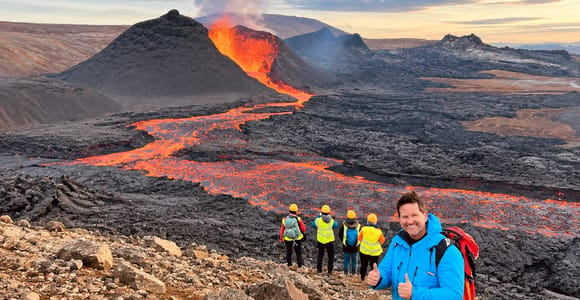 Day trip · 4 - 6 hoursFagradalsfjall Volcano Hike: The Original Local Experience★ 4.9 740 reviews✓ Free cancellationfrom €137 per personSee availability →
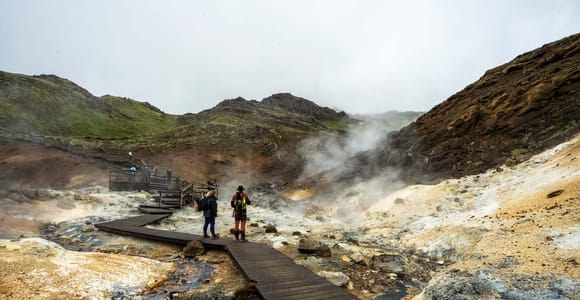 Day trip · 7 hoursReykjavík: Volcanoes, Grindavík, Hot Springs, & Lava Tour★ 4.8 179 reviews✓ Free cancellation✓ Pickup availablefrom €111 per personSee availability →
Helicopter Tours Over Active Volcanic Zones
Helicopter flights provide aerial views of recent eruption sites without the physical demands of hiking. Tours depart from Reykjavík and reach Fagradalsfjall, which is around 40 kilometres from the capital.
Flights circle the crater rim where the highest lava fountain was measured at 460 metres. You see the extent of lava fields and the initial fissure vent that was 600 to 700 metres long. Steam rises from cooling rock.
Helicopter tours also cover the broader Reykjanes Peninsula. Views include geothermal areas, the Bridge Between Continents over the Álfagjá rift valley, and coastal lava formations. The rift valley is 60 feet wide and 20 feet deep near Grindavík. The Bridge Between Continents was built in 2002.
The Reykjanes Peninsula is marked by active volcanism under its surface and large lava fields, allowing little vegetation. This creates stark views from the air.
Check tour details before booking. Some operators combine helicopter flights with landings at safe viewing points away from eruption zones.
- Fagradalsfjall is only 40 kilometres from Reykjavík, making it one of the most accessible recent eruption sites
- The Reykjanes Peninsula offers multiple volcano experiences in one area, from lava fields to geothermal zones
- Helicopter tours provide aerial views of recent eruption sites
- The 2021 eruption lasted 181 days and became Iceland's longest eruption of the 21st century
- Guided hikes offer close views of cooled lava flows and formations
- High levels of volcanic gases such as carbon dioxide and carbon monoxide can make parts of eruption areas inaccessible
- Access to specific sites closes without notice due to new seismic activity or eruptions
- Weather on the exposed Reykjanes Peninsula changes rapidly, affecting visibility and trail conditions
- Hikes to eruption sites cross rough lava terrain
Visiting Dormant Craters
Some tours visit dormant craters that have been geologically stable for centuries, not recent eruption sites. These differ entirely from visiting recent eruption sites like Fagradalsfjall.
Tours include surface walks around crater rims. The areas are remote, requiring transport from Reykjavík. Check tour details before booking.
These experiences visit dormant geological features, not active or cooling lava zones.
Lava Tunnel Exploration
Lava tunnels formed when the surface of a flowing lava stream cooled and hardened while molten rock continued moving underneath. When the eruption stopped, the liquid drained out, leaving tubular caves.
Guided tunnel tours involve walking through these underground passages. You see lava stalactites, mineral colours on the walls, and sections where the roof collapsed to create skylights.
Tunnels stay at a constant cool temperature. Paths are uneven with low ceilings in some sections. Tours provide helmets and torches.
The Reykjanes Peninsula has several accessible lava tunnels formed by eruptions centuries ago. These are separate from the recent Fagradalsfjall eruptions, which are still cooling.
Tunnel tours often combine with other Reykjanes Peninsula attractions, including geothermal areas and coastal viewpoints. The Reykjanes Peninsula had nearly 800 years of volcanic inactivity before 2020.
Compare prices, reviews and free-cancellation options before you book.
Check availability →Access Rules and Safety Considerations
Eruption site access closes without notice due to new seismic activity, toxic gas emissions, or unstable ground. In November 2023, seismic activity around Grindavík prompted the town's evacuation and declaration of a state of emergency.
Always check safetravel.is and road.is before departure. Safetravel is run by ICE-SAR, the Icelandic Association for Search and Rescue. ICE-SAR is a non-profit, volunteer-based organization with over 4,500 volunteers available day and night year-round.
High levels of volcanic gases such as carbon dioxide and carbon monoxide made parts of the area inaccessible during eruptions. Carbon dioxide and carbon monoxide are colourless and odourless but deadly in concentrated pockets. Gases lingered after eruptions stopped.
The Icelandic Meteorological Office initially advised people not to go near Fagradalsfjall due to the 2022 eruption. The alert level was lowered from Orange to Yellow on 18 October 2021. This followed no lava having erupted since 18 September.
Weather on the Reykjanes Peninsula changes rapidly. Dress in layers and bring waterproofs. Mobile coverage is patchy in remote areas. Inform someone of your plans if hiking independently.
Tour Types and Terrain Comparison
| Tour Type | Terrain | Physical Demand | Viewing Distance |
|---|---|---|---|
| Helicopter flight | Aerial only | None | Overhead perspective |
| Guided hike to Fagradalsfjall | Rough lava, steep sections | Check tour details | Close to cooled flows |
| Lava tunnel walk | Underground, uneven floor | Check tour details | Inside historical formations |
| Dormant crater visit | Surface and rim walks | Check tour details | Inside dormant crater |
Helicopter tours suit those with limited time or mobility concerns. Hikes to eruption sites require sturdy footwear. Lava tunnels involve stooping and uneven surfaces but no steep climbs.
All guided options include transport from Reykjavík or meeting points. Check tour details before booking.
Some tours combine volcano visits with other attractions. Golden Circle extensions add Thingvellir, Geysir and Gullfoss. South Coast tours pair eruption sites with waterfalls and black sand beaches.
Check tour availability and refund policies for closures caused by volcanic activity or poor visibility.
What to Expect at Recent Eruption Sites
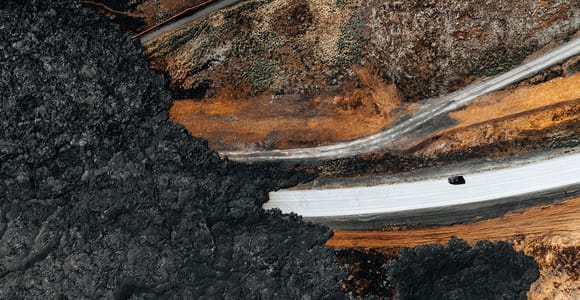
Cooled lava fields at Fagradalsfjall show crust patterns, rope-like formations called pahoehoe, and jagged chunks known as a'a. The surface is black to grey with rust-coloured oxidation in some areas.
Steam vents release heat from lava layers cooling beneath the surface. Ground temperature varies. Some areas remain too hot to touch months after an eruption stops. Guides point out safe zones.
The rim of the volcano had risen to a height of 334 metres above sea level by September 2021. Viewpoints look into the crater where lava fountains once erupted. The initial fissure vent was 600 to 700 metres long.
Vegetation is sparse across the Reykjanes Peninsula. The Reykjanes Peninsula is marked by active volcanism under its surface and large lava fields, allowing little vegetation. You walk over barren rock with distant views of mountains, ocean and geothermal plumes.
Guided hikes explain the eruption sequence, lava chemistry, and monitoring systems. Check tour details for what is included.
Combine volcano hikes with stops at geothermal areas or the Bridge Between Continents. The bridge was built in 2002 to span the Álfagjá rift valley. Day trips from Reykjavík often include multiple Reykjanes sites in one itinerary.
Transport and Group Options
Most volcano tours include pickup from Reykjavík hotels or central meeting points. Fagradalsfjall is around 40 kilometres from Reykjavík.
Small group tours limit numbers for easier communication with guides. Private tours allow flexible pacing and personalised commentary. Bus tours accommodate larger groups.
Super jeep tours access rougher tracks closer to eruption sites when roads are open. Check road.is for current conditions. Helicopter tours bypass road access issues entirely.
Self-drive visitors can reach some Reykjanes sites via paved roads. Check current parking and access conditions before you go.
Tours departing from Reykjavík often combine volcano visits with other attractions. Multi-day tours add accommodation and cover the Golden Circle, South Coast, or Snæfellsnes Peninsula. Shore excursions fit cruise schedules with direct port pickup.
Compare prices, reviews and free-cancellation options before you book.
Check availability →Combining Volcano Tours With Other Experiences
Volcano tours pair well with geothermal experiences. Blue Lagoon is on the Reykjanes Peninsula. Sky Lagoon is closer to Reykjavík with ocean views.
Glacier activities contrast with volcanic landscapes. Glacier hikes and ice cave visits show the other side of Iceland's geology. Into the Glacier at Langjökull involves tunnelling into ice, while volcano tours explore lava and rock.
Golden Circle tours include Thingvellir National Park, where the North American and Eurasian tectonic plates diverge. The rift valley there connects geologically to the Reykjanes volcanic zone.
Lava Show in Reykjavík demonstrates molten rock in a controlled indoor setting. Perlan museum has exhibits on volcanic and glacial geology. Both add context before or after visiting eruption sites.
Winter visitors can add northern lights tours in the evening. The Reykjanes Peninsula has low light pollution away from towns. Summer options include whale watching from Reykjavík or horse riding across lava fields.
Volcano tours in Iceland offer rare access to recent eruption sites. Fagradalsfjall awakened after 6,000 years, just 40 kilometres from Reykjavík. The main trade-off is between close-up hikes over rough lava terrain and quicker helicopter flights that keep you airborne. Always check safetravel.is before departure, as volcanic gases and new seismic activity close access without warning.
More tours to compare
More on GetYourGuide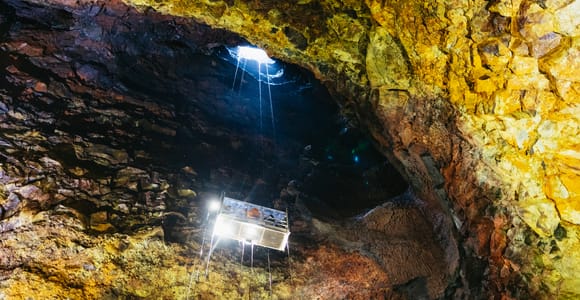 Day trip · 4 - 6 hoursReykjavik: Thrihnukagigur Volcano Guided Hiking Day Trip★ 4.9 719 reviews✓ Free cancellation✓ Pickup availablefrom €395 per personSee availability →
 BestsellerDay trip · 9 hoursReykjavík: Volcano Eruption Site and Reykjanes Hiking Tour★ 4.7 1 207 reviews✓ Free cancellation✓ Pickup availablefrom €121 per personSee availability →
 Day trip · 6 hoursFrom Reykjavik: Volcanic Peninsula & Grindavik Minibus Tour★ 4.7 114 reviews✓ Free cancellation✓ Pickup availablefrom €99 per personSee availability →
Frequently asked questions
How long did the Fagradalsfjall eruption last?
The 2021 eruption started at approximately 20:45 local time on 19 March 2021. It continued emitting fresh lava sporadically until 18 September 2021. By 16 September 2021, after 181 days of eruption, it became the longest eruption of the 21st century in Iceland. Two shorter eruptions followed in 2022 and 2023.
Can you hike to the Fagradalsfjall volcano from Reykjavík?
Fagradalsfjall is around 40 kilometres from Reykjavík. Most visitors use guided tours or drive to trailheads, then hike to reach viewpoints over rough lava terrain.
Are eruption sites on the Reykjanes Peninsula always open?
No. High levels of volcanic gases such as carbon dioxide and carbon monoxide make parts of the area inaccessible. Always check safetravel.is and road.is before you go.
How high did lava fountains reach during the Fagradalsfjall eruption?
On 28 April 2021, lava fountains from the main crater reached a height of 250 metres. The highest lava fountain was measured at 460 metres.
Is Fagradalsfjall the only volcano tour option in Iceland?
No. Tours also visit lava tunnels formed by older eruptions and offer helicopter flights over the Reykjanes volcanic zone. Some visit dormant craters at other locations.