- Silfra lies in Þingvellir National Park, a UNESCO world heritage site 45 to 60 minutes from Reykjavik
- Three main dive sites exist: Silfra Hall (maximum 45 metres), Silfra Cathedral (100 metres long), and Silfra Lagoon (120 metres, used as exit)
- The water is glacial meltwater from Langjökull that filters through underground lava for decades before emerging
- Þingvellir National Park sets requirements for diving and snorkelling, so check the rules before booking
Where Silfra sits and how to reach it
Silfra is located inside Þingvallavatn Lake within Þingvellir National Park, a UNESCO world heritage area. The drive from Reykjavik takes 45 to 60 minutes heading east.
The fissure formed where the Mid-Atlantic Ridge surfaces above water. The North American and Eurasian tectonic plates meet here and drift about 2 cm farther apart every year.
Many Silfra diving tours include transport from Reykjavik as part of day trips from Reykjavik. If you drive independently, factor in time to change into equipment and complete park entry procedures.
Silfra Diving Tours
More on GetYourGuide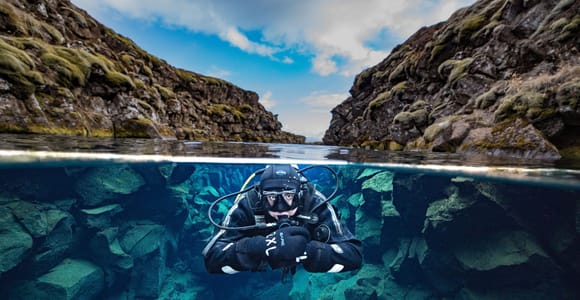 Top ratedGuided tour · 3 - 5 hoursSilfra: Diving Between Tectonic Plates★ 4.5 88 reviews✓ Free cancellation✓ Pickup availablefrom €246 per personSee availability →
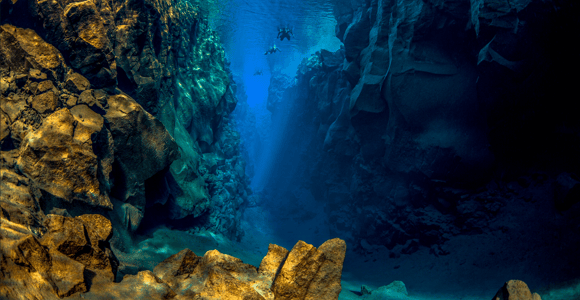 Guided tour · 3 - 5.5 hoursReykjavík: Silfra Fissure Snorkeling between Two Continents★ 4.7 2 440 reviews✓ Free cancellation✓ Pickup availableBooked 9 times yesterdayfrom €117 per personSee availability →
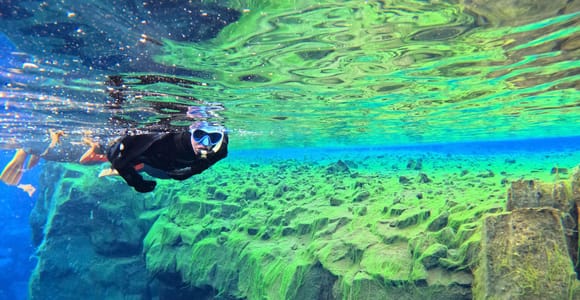 BestsellerGuided tour · 3 hoursSilfra: Fissure Snorkeling Tour with Underwater Photos★ 4.9 3 413 reviews✓ Free cancellationBooked 7 times yesterdayfrom €126 per personSee availability →
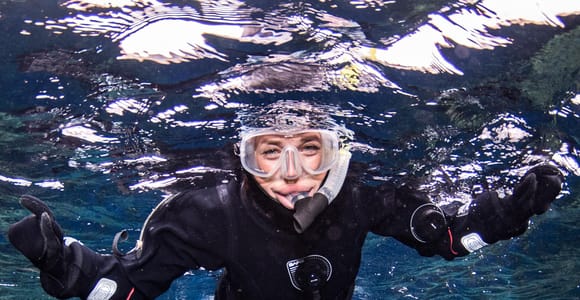 Guided tour · 2.5 - 6 hoursSilfra: Snorkeling Tour Between Tectonic Plates★ 4.8 995 reviews✓ Free cancellation✓ Pickup availableBooked 5 times yesterdayfrom €122 per personSee availability →
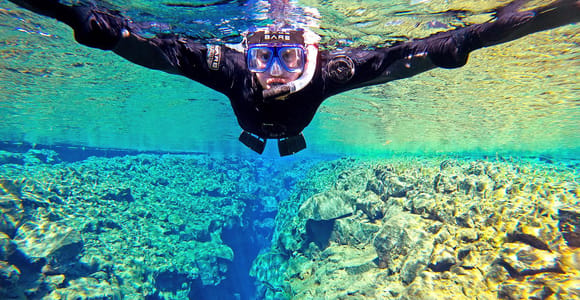 Guided tour · 3 hoursSilfra: Half-Day Snorkeling Day Trip with Underwater Photos★ 4.8 1 234 reviews✓ Free cancellationBooked 4 times yesterdayfrom €119 per personSee availability →
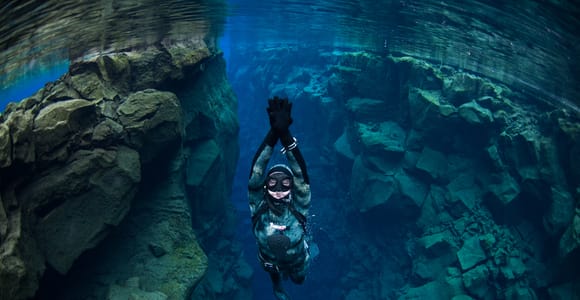 Guided tour · 3 hoursThingvellir: Silfra Freedive Adventure with a Guide★ 4.8 46 reviews✓ Free cancellationfrom €193 per personSee availability →
The three dive sites at Silfra
Silfra offers three distinct underwater sections, each with different depth and layout characteristics.
| Site | Length / Depth | Feature |
|---|---|---|
| Silfra Hall | Maximum 45 metres | Multiple underwater cave systems |
| Silfra Cathedral | 100 metres long | Visibility almost from end to end through the fissure |
| Silfra Lagoon | 120 metres long | Exit point for divers and snorkellers |
Silfra descends to a maximum depth of 63 metres, but reaching that depth requires technical diving skills.
The Toilet, a narrow tunnel dropping to 16 metres, is no longer open to divers. The practice of going through the Toilet is no longer allowed due to the instability of the tunnel.
- You dive in a crack formed by continental drift in a UNESCO world heritage area
- Water clarity is exceptional due to decades of underground filtration
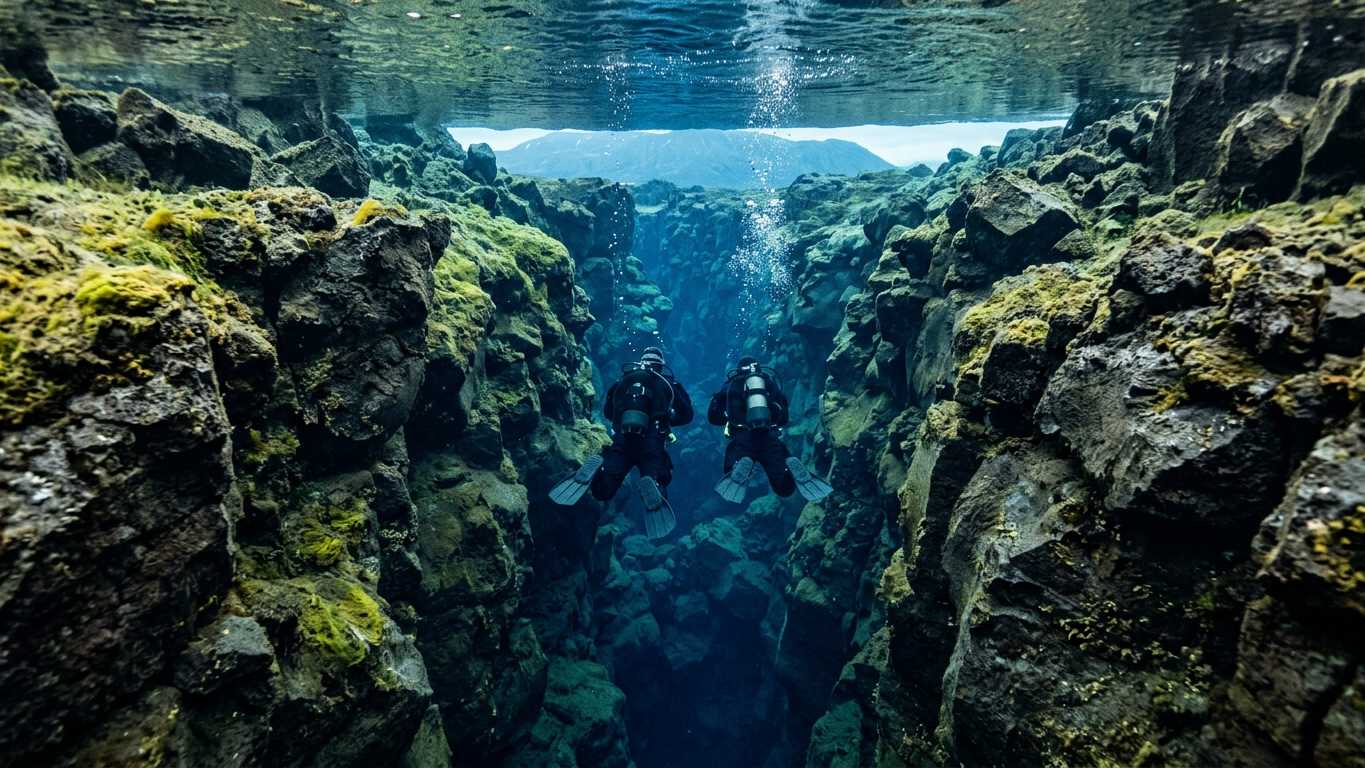
- Silfra Cathedral offers visibility almost from end to end through the 100-metre fissure
- The lagoon section provides a calm 120-metre exit zone at the end of the dive
- Arctic char sometimes appear during their mating season in August and September
- Water temperature between 2 and 4°C requires full drysuit diving, which some divers find uncomfortable
- Þingvellir National Park enforces diving requirements that may exclude less experienced divers
- The maximum depth reaches 63 metres, but most divers stay shallower to avoid technical diving conditions
- The Toilet tunnel (16 metres) is no longer accessible due to instability
Water temperature and drysuit diving
The water temperature remains between 2 and 4°C throughout the year. A drysuit can be used to dive comfortably in this temperature.
Check with tour providers about experience requirements before booking.
The water originates as meltwater from Langjökull, Iceland's second largest glacier, about fifty kilometres north of Þingvallavatn Lake. It percolates through the aquifer for thirty to a hundred years before emerging from the fissure springs.
This filtration process produces exceptionally clear water.
Certification and park requirements
It is allowed to dive and snorkel in Silfra but there are some requirements. Check the current requirements on the park's official website before booking.
Tour operators must follow park guidelines. Confirm details with your chosen tour provider when you enquire.
If you fall short of the stated requirements, Silfra snorkelling is an alternative.
Compare prices, reviews and free-cancellation options before you book.
Check availability →Silfra diving compared with snorkelling
Diving and snorkelling at Silfra both take place in the same fissure. The experience differs in depth access.
| Activity | Depth access | Equipment | Typical requirements |
|---|---|---|---|
| Diving | Below surface to depth limit | Drysuit, scuba gear | Check current park rules |
| Snorkelling | Surface only | Drysuit, mask, snorkel | Check current park rules |
Divers can explore Silfra Hall and the deeper sections of Silfra Cathedral. Snorkellers stay on the surface but still see the fissure walls and the clarity of the water below.
Both activities use drysuits due to the 2 to 4°C water temperature. The lagoon serves as the exit point for both groups.
Diving allows you to see the cave systems in Silfra Hall and descend into the Cathedral. Snorkelling covers less vertical range.
Wildlife and seasonal conditions
Arctic char occasionally venture into Silfra during their mating season in August and September.
The water temperature remains between 2 and 4°C year-round. Check road.is and safetravel.is before your trip, especially in winter when snow or ice may affect access.
Winter diving at Silfra can combine with northern lights Iceland viewing in the evening. Many visitors add Golden Circle Iceland stops on the same day. Thingvellir National Park, Geysir Iceland and Gullfoss waterfall lie close together.
Compare prices, reviews and free-cancellation options before you book.
Check availability →Practical tips for your Silfra dive
Wear warm base layers under your drysuit. The air inside the suit insulates you, but thin or damp clothing reduces that effect.
Check what equipment is included when you book.
Plan a full day if you combine Silfra with other stops. Transport and changing time add to the total duration of your visit.
Iceland small group tours often combine Silfra with nearby attractions. Iceland private tours offer more flexible schedules if you want longer at each site.
Bring a waterproof bag for electronics and dry clothes for after the dive. The park has basic facilities.
Silfra diving offers access to underwater cave systems and a 100-metre fissure between tectonic plates. The water is filtered for decades through underground lava. The water temperature stays between 2 and 4°C, making a drysuit necessary.
Frequently asked questions
How deep is Silfra for diving?
Silfra descends to a maximum depth of 63 metres, but diving that deep requires technical skills. Silfra Hall reaches about 45 metres.
What is the water temperature at Silfra?
The water temperature stays between 2 and 4°C year-round. The water is glacial meltwater from Langjökull. It percolates through the aquifer for thirty to a hundred years before emerging from the fissure springs.
Can you dive Silfra without a drysuit?
The water temperature of 2 to 4°C can be comfortably dived using a drysuit. Check tour details for equipment information.
Where is Silfra located?
Silfra is in Þingvallavatn Lake inside Þingvellir National Park, a UNESCO world heritage site. It sits 45 to 60 minutes east of Reykjavik by car.
What are the main dive sites at Silfra?
The three main sites are Silfra Hall, Silfra Cathedral and Silfra Lagoon. Hall reaches 45 metres with cave systems. Cathedral is 100 metres long. Lagoon is 120 metres long and used as the exit point.