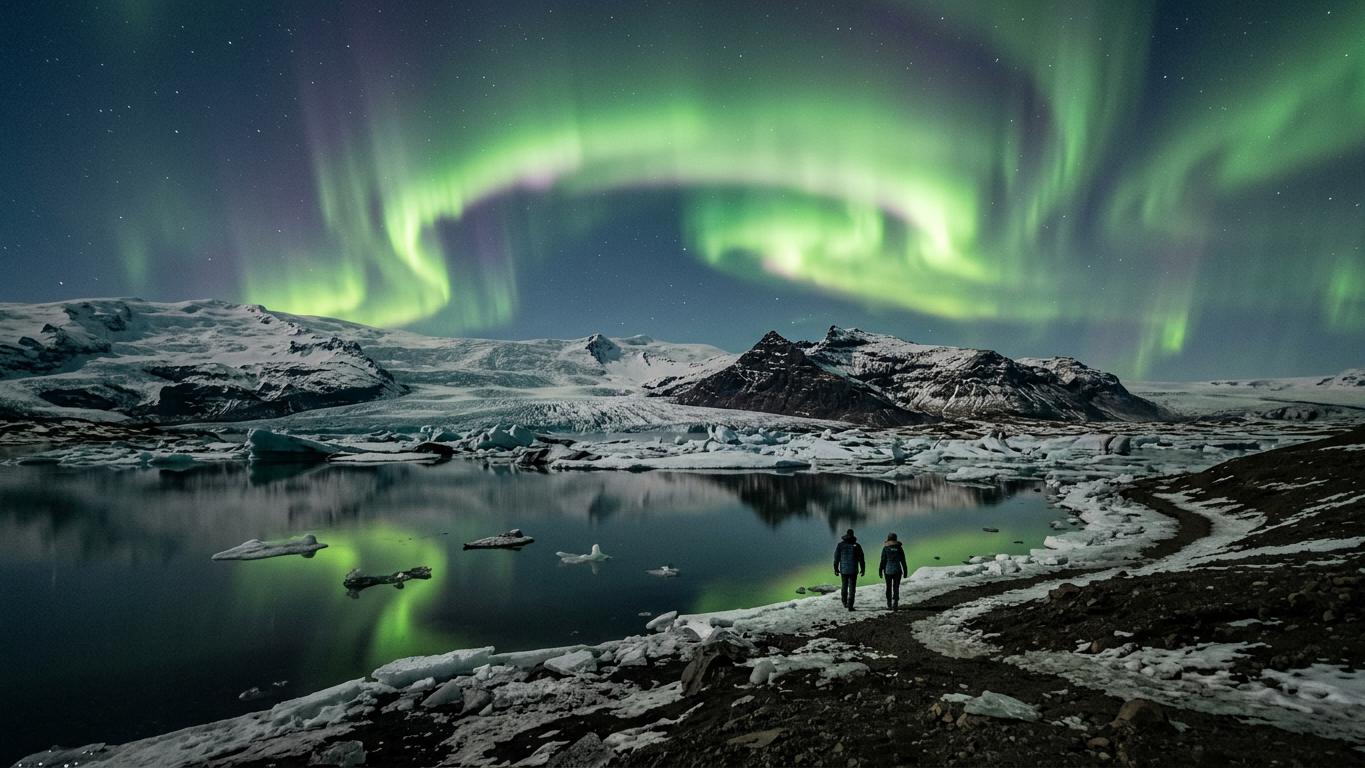
- Aurora viewing requires dark skies and clear weather, with forecasts rating activity from 0 to 9 at midnight
- Green displays at 100 km altitude are most common, caused by oxygen emissions taking 0.7 seconds to glow
- Geomagnetic storms expand the auroral oval, making displays visible further south than Iceland's usual viewing zone
What causes the northern lights
An aurora is a natural light display caused by charged particles from the Sun. These particles collide with atoms in Earth's upper atmosphere. The collisions excite oxygen and nitrogen, which then emit light of different colours such as green, red and purple. The phenomenon occurs above 80 km altitude, with most displays peaking around 100 km.
In the Arctic regions the display is called the northern lights or aurora borealis. Iceland, along with Alaska, Canada, Greenland, Scandinavia and northern Russia, sits within the viewing area for this phenomenon.
Auroras are most commonly observed in the auroral zone. This band is approximately 660 km wide in latitude, centred on 67° north. A geomagnetic storm causes the auroral ovals to expand, bringing the aurora to lower latitudes. On rare occasions the aurora borealis can be seen as far south as the Mediterranean. Displays have reached East Asia and the southern states of the US.
Northern Lights Tours in Iceland
More on GetYourGuide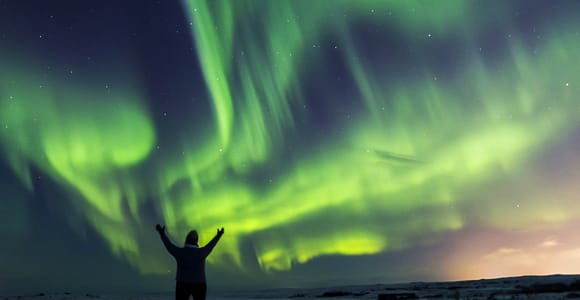 Top ratedDay trip · 4 hoursFrom Reykjavik: Northern Lights Bus Tour with Hot Cocoa★ 4.3 15 350 reviews✓ Free cancellation✓ Pickup availableAvailable today and tomorrowfrom €76 per personSee availability →
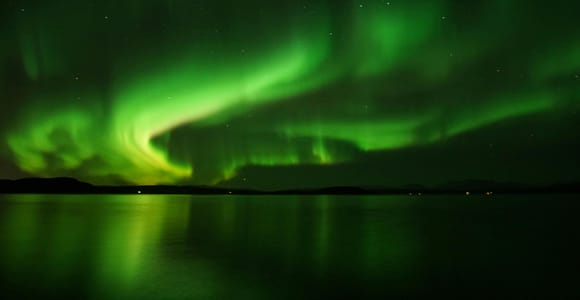 Day trip · 3.5 hoursReykjavik: Northern Lights Adventure Tour with Hot Chocolate★ 4.3 796 reviews✓ Free cancellation✓ Pickup availablefrom €65 per personSee availability →
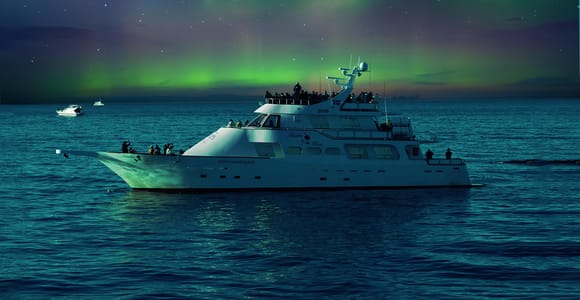 Water activity · 2 hoursReykjavik: Northern Lights Yacht Tour★ 4.4 1 381 reviews✓ Free cancellation✓ Pickup availableAvailable today and tomorrowfrom €93 per personSee availability →
Altitude and colour science
Auroras result from emissions of photons in Earth's upper atmosphere, above 80 km. Research found no auroras below 70 km and only 6.5 per cent above 150 km. A maximum in the height distribution occurs around 100 km. The rapid decrease in atomic oxygen concentration below 100 km creates the abrupt-looking end of curtain lower edges.
At lower altitudes the 557.7 nm emission dominates. A fairly high concentration of atomic oxygen makes green auroras the most common. Oxygen can take 0.7 seconds to emit the 557.7 nm green light. It takes up to two minutes for the red 630.0 nm emission. Green is the most common colour, then comes pink, followed by pure red, then yellow and finally pure blue.
The spectacle of Aurora Borealis requires dark and partly clear skies. Even strong solar activity produces no visible display if clouds cover the sky or daylight drowns the glow.
- Iceland lies close to the auroral zone where displays are most frequent
- Forecasts track solar activity and darkness hours for planning
- Tours drive away from urban areas to find clearer skies
- Displays can last 1 to 3 hours during substorm events
- Green, pink, red, yellow and blue colours appear depending on altitude and gas type
- Clouds can block the view even when auroral activity is high
- Urban light pollution reduces visibility
- Displays require both solar activity and local darkness
Aurora forecast and activity scale
The forecast of auroral activity at midnight uses a scale of 0 to 9. This rating predicts the strength of geomagnetic disturbances that drive aurora displays. Higher numbers indicate stronger solar storms and a greater chance of visible lights across a wider area.
Large geomagnetic storms are most common during the peak of the 11-year sunspot cycle. They also occur during the three years after the peak. Planning around these cycles improves your chances, but individual storms can occur at any time. Check aurora forecasts for Iceland before heading out.
The timing of sunset, darkness, sunrise and moonrise shown on forecasts are valid for Reykjavik. Locations elsewhere in Iceland experience different darkness windows. Darkness is essential because auroras are always present but invisible in daylight.
How auroras change through the night
Auroras change with time. Over the night they begin with glows and progress toward coronas, although they may not reach them. Quiet arcs can transform into active curtains and bands within minutes. The phenomenon of pulsating auroras has periods of 2 to 20 seconds, creating rhythmic brightness changes.
Auroras often undergo global changes in a process called auroral substorm. Displays change in a few minutes from quiet arcs to active patterns. After 1 to 3 hours they gradually change back. Substorms are triggered by shifts in the solar wind and Earth's magnetic field, not by local weather.
| Display type | Appearance | Duration |
|---|---|---|
| Glow | Faint diffuse light on horizon | Continuous or intermittent |
| Arc | Smooth band across sky | Variable |
| Corona | Rays converging overhead | Brief |
| Pulsating patches | Rhythmic brightening and fading | 2 to 20 seconds per cycle |
Compare prices, reviews and free-cancellation options before you book.
Check availability →Viewing from Reykjavik and tour options
Urban light pollution can make faint auroras difficult to see from city centres. Street lights, buildings and vehicle traffic create a glow that washes out dim displays. Tours drive outside urban areas to locations with darker skies.
Tours check weather forecasts and cloud maps in real time to find clearer conditions. Northern lights tours in Iceland typically depart in the evening. This allows time to reach darker areas and wait for displays.
Some tours offer boat departures from Reykjavik harbour, which move away from shore lights. Others combine aurora hunting with geothermal lagoon visits or Golden Circle sightseeing earlier in the day.
Darkness and moon phases
Aurora displays occur year round but are only visible when the sky is dark. Iceland experiences midnight sun in summer, making aurora viewing impossible during that period. Check darkness hours before planning your visit.
Longer nights during winter provide more viewing time. Choosing when to visit Iceland for northern lights involves balancing darkness hours against weather patterns.
A bright moon can wash out faint auroras, similar to light pollution. New moon periods offer the darkest skies, but even a full moon will not block strong displays. Check lunar calendars alongside aurora forecasts for the clearest viewing conditions.
Tour policies and planning
Northern lights are never guaranteed. Solar activity, clouds and visibility all vary independently. Many tours offer rebooking options if no aurora appears, but policies differ by operator. Check the rebooking terms before booking.
Some tours allow rebooking if you do not see the lights. Others offer different options. Read the cancellation and rebooking section on each tour listing carefully. Frequently asked questions cover what to expect if clouds block the display.
Plan a buffer of several nights if seeing the aurora is your main goal. Booking multiple day trips from Reykjavik or a multi-day tour increases your chances across several evenings. Weather and solar activity can change quickly.
Combining aurora viewing with other activities
Many visitors pair aurora hunting with daytime excursions. Golden Circle tours visit Thingvellir National Park, Geysir and Gullfoss waterfall before evening aurora chases. South coast tours combine Reynisfjara beach and Skogafoss waterfall with night time viewing.
Ice cave tours, glacier hikes and snowmobile excursions fill the daylight hours. Geothermal hot springs such as Sky Lagoon and Secret Lagoon offer warm soaking after cold nights outdoors. Iceland winter tours bundle several activities across multiple days.
| Daytime activity | Evening pairing | Location benefit |
|---|---|---|
| Golden Circle | Aurora hunt near Thingvellir | Low light pollution areas |
| South coast waterfalls | Aurora viewing near Vik | Dark skies away from urban centres |
| Glacier hike | Aurora from rural lodging | Remote areas with clear horizons |
| Geothermal lagoon | Evening aurora watch nearby | Facilities outside city limits |
Compare prices, reviews and free-cancellation options before you book.
Check availability →What to check before you go
Review aurora forecasts and darkness times regularly. Conditions change rapidly. Dress in warm layers and waterproof outer clothing, as standing outdoors in winter temperatures is unavoidable.
Book early if travelling in popular months, as small group tours and private tours fill quickly. Read each tour's inclusions, pickup locations and what happens if conditions prevent viewing. Choosing where to see northern lights in Iceland depends on your base and willingness to travel.
If driving independently, check road.is and safetravel.is for current conditions. Winter roads can close without notice. Allow extra time for slower driving and unplanned stops.
Iceland's position near the auroral zone offers frequent displays. Weather conditions require careful planning. Tours that seek clearer skies and offer rebooking options can help. No night guarantees a show.
More tours to compare
More on GetYourGuide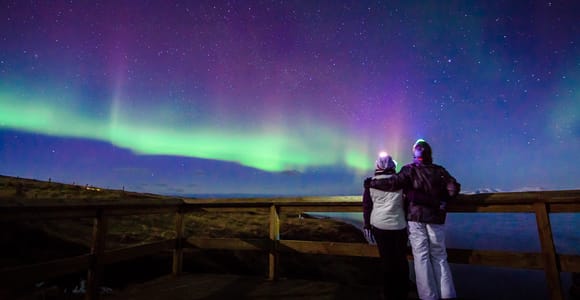 Day trip · 4 hoursSmall-Group Premium Northern Lights Tour from Reykjavik★ 4.4 3 221 reviews✓ Free cancellation✓ Pickup availableAvailable today and tomorrowfrom €95 per personSee availability →
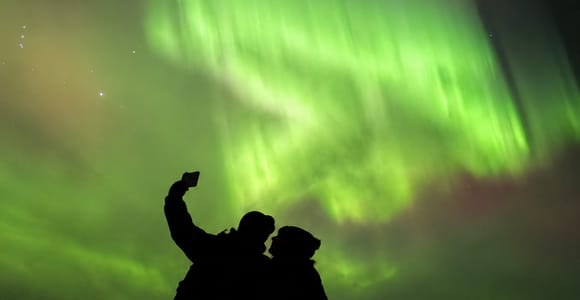 Guided tour · 4 hoursPremium Northern Lights Tour:Photo Coco Treats & Artic Magic✓ Free cancellation✓ Pickup available✓ Skip the lineAvailable tomorrowfrom €114 per personSee availability →
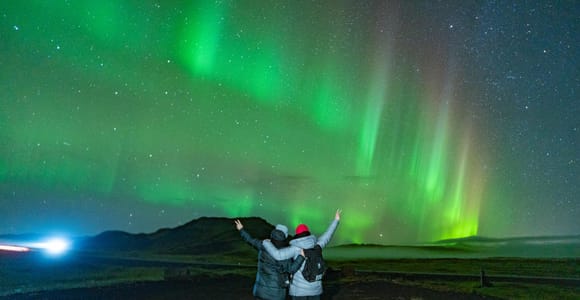 Day trip · 12 hoursReykjavík: Golden Circle & Northern Lights with Hot Cocoa★ 4.5 40 reviews✓ Free cancellation✓ Pickup availableAvailable tomorrowfrom €127 per personSee availability →
Frequently asked questions
Can you see the aurora borealis in Iceland?
Yes, Iceland lies close to the auroral zone centred at 67° north, where aurora displays are most frequent. Dark skies and clear weather are required for viewing.
When to see aurora borealis in Iceland?
Aurora displays require darkness. Check darkness hours and weather forecasts before your visit.
What is the Iceland aurora forecast scale?
The forecast of auroral activity at midnight uses a scale of 0 to 9. Higher numbers indicate stronger geomagnetic storms and greater chances of visible lights.
Why is green the most common aurora colour?
At lower altitudes the 557.7 nm emission from oxygen dominates, producing green light. A fairly high concentration of atomic oxygen and higher eye sensitivity in green make this the most common colour.
How long do northern lights last in Iceland?
Auroras change with time and may last from minutes to several hours. Substorms typically last 1 to 3 hours before displays gradually fade back to quiet arcs or disappear.